The 11th Big Data Forum for Life and Health Sciences
The 11th Big Data Forum for Life and Health Sciences ( 2026/10/13 - 2026/10/15)
Biological research has entered the era of big data, including a wide variety of omics data and covering a broad range of health data. Such big data is generated at ever-growing rates and distributed throughout the world with heterogeneous standards and diverse limited access capabilities. However, the promise to translate these big data into big knowledge can be realized only if they are publicly shared. Thus, providing open access to omics & health big data is essential for expedited translation of big data into big knowledge and is becoming increasingly vital in advancing scientific research and promoting human healthcare and precise medical treatment.
It is our great pleasure to announce that the 11th Big Data Forum for Life and Health Sciences will be held on October 13-15, 2026. A few renowned biomedical data scientists have agreed to give speeches. Likely, you are also cordially invited to share your work and participate in this exciting event.
Venue: Conference Hall, China National Center for Bioinformation, No.1 Beichen West Road, Chaoyang District, Beijing, China
Free registration with limited seats by August 31, 2026 for international attendants. Travel and accommodation expenses are to be borne by the individual.
Contact: conference@cncb.ac.cn
参会报名Registration: https://docs.qq.com/form/page/DWFZ2VkVvc3dhWUZ5

Previous Conferences
- The 10th Big Data Forum for Life and Health Sciences, 2025
- The 9th Big Data Forum for Life and Health Sciences, 2024
- The 8th Big Data Forum for Life and Health Sciences, 2023
- The 7th Big Data Forum for Life and Health Sciences, 2022
- The 6th Big Data Forum for Life and Health Sciences, 2021
- The 5th Big Data Forum for Life and Health Sciences, 2020
- The 4th Big Data Forum for Life and Health Sciences, 2019 (Invited speakers: Peer Bork, Janusz M.Bujnicki, Weihua Chen,...)
- The 3rd Big Data Forum for Life and Health Sciences, 2018 (Invited speakers: Luonan Chen, Frank Eisenhaber, Michael Galperin,...)
- The 2nd Big Data Forum for Life and Health Sciences, 2017 (Invited speakers: Alex Bateman, Runsheng Chen, Chris Sander,...)
- The 1st Big Data Forum for Life and Health Sciences, 2016 (Invited speakers: Domenica D'Elia, Erik Bongcam-Rudloff, Jun Yu,...)
Invited Speakers

Prof.
Petrovsky National Research Center of Surgery
Russia
Petrovsky National Research Center of Surgery
Russia

Prof.
Beijing Institute of Technology
China
Beijing Institute of Technology
China

Professor
Head of Protein Sequence Resources
EMBL-EBI
United Kingdom
Head of Protein Sequence Resources
EMBL-EBI
United Kingdom

Dr.
Scientific Head
Global Biodata Coalition
UK
Scientific Head
Global Biodata Coalition
UK

Prof.
Institute of Automation, Chinese Academy of Sciences
China
Institute of Automation, Chinese Academy of Sciences
China

Prof.
School of Life Sciences, Sun Yat-sen University
China
School of Life Sciences, Sun Yat-sen University
China

Prof.
Ruijin Hospital, Shanghai Jiao Tong University of Medicine
China
Ruijin Hospital, Shanghai Jiao Tong University of Medicine
China
Professor
Saint-Petersburg Pasteur Institute
Russia
Saint-Petersburg Pasteur Institute
Russia

Professor
European Nucleotide Archive Team Leader
EMBL-EBI
UK
European Nucleotide Archive Team Leader
EMBL-EBI
UK

Ph.D candidate
National Institute of Genetics
Japan
National Institute of Genetics
Japan

Prof.
Agricultural Genomics Institute at Shenzhen, Chinese Academy of Agricultural Sciences
China
Agricultural Genomics Institute at Shenzhen, Chinese Academy of Agricultural Sciences
China

Mr.
National Primate Research Center of Thailand-Chulalongkorn University (NPRCT-CU) and Faculty of Science, Chulalongkorn University
Thailand
National Primate Research Center of Thailand-Chulalongkorn University (NPRCT-CU) and Faculty of Science, Chulalongkorn University
Thailand

Professor
University of Montpellier
France
University of Montpellier
France

Associate Prof.
Kunming Institute of Zoology, Chinese Academy of Sciences
China
Kunming Institute of Zoology, Chinese Academy of Sciences
China

Prof.
Changhai Hospital, Shanghai
China
Changhai Hospital, Shanghai
China

Prof.
School of Life Sciences, Peking University
China
School of Life Sciences, Peking University
China

Dr.
HUN-REN Research Centre for Natural Sciences
Hungary
HUN-REN Research Centre for Natural Sciences
Hungary
Professor
National Institute of Genetics
Japan
National Institute of Genetics
Japan

Prof.
Faculty of Medicine, Chulalongkorn University
Thailand
Faculty of Medicine, Chulalongkorn University
Thailand
Prof.
Head of Laboratory of Metagenomics Research
Saint-Petersburg Pasteur Institute
Russia
Head of Laboratory of Metagenomics Research
Saint-Petersburg Pasteur Institute
Russia

Associate Prof.
South China Sea Institute of Oceanology, Chinese Academy of Sciences
China
South China Sea Institute of Oceanology, Chinese Academy of Sciences
China

Member of the Brazilian Academy of Sciences (ABC)
Head of the Bioinformatics Laboratory
National Laboratory for Scientific Computing (LNCC)
Brazil
Head of the Bioinformatics Laboratory
National Laboratory for Scientific Computing (LNCC)
Brazil

Dr.
Faculty of Science, Mahidol University
Thailand
Faculty of Science, Mahidol University
Thailand

Professor
Fudan University and International Human Phenome Institutes
China
Fudan University and International Human Phenome Institutes
China
Professor
China National Center for Bioinformation
China
China National Center for Bioinformation
China

Prof.
Institute of Neuroscience, Chinese Academy of Sciences
China
Institute of Neuroscience, Chinese Academy of Sciences
China

Dr.
HUN-REN Research Centre for Natural Sciences
Hungary
HUN-REN Research Centre for Natural Sciences
Hungary

CNCB
China

Dr.
HUN-REN Research Centre for Natural Sciences
Hungary
HUN-REN Research Centre for Natural Sciences
Hungary

Dr.
HUN-REN Research Centre for Natural Sciences
Hungary
HUN-REN Research Centre for Natural Sciences
Hungary
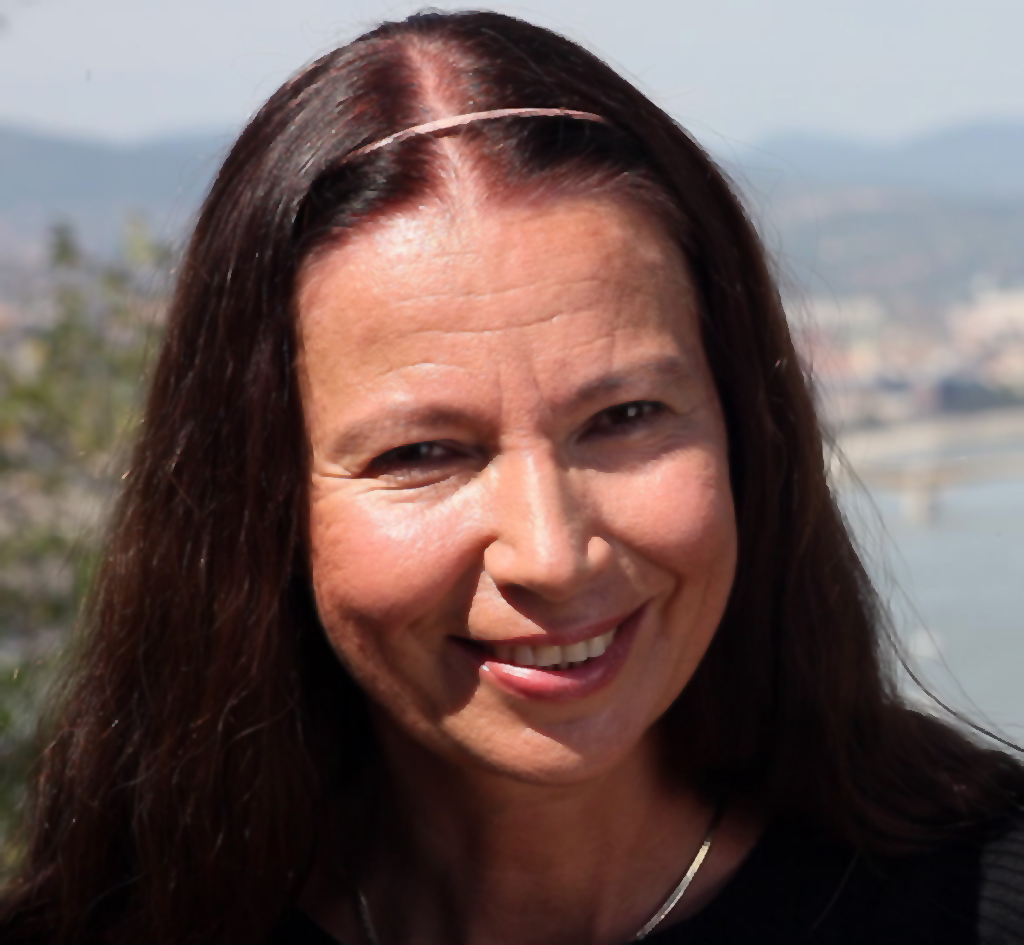
Corr. Member of the Hungarian Academy of Sciences, Member of Academia Europaea
Scientific Advisor, Institute of Molecular Life Sciences
HUN-REN Research Centre for Natural Sciences
Hungary
Scientific Advisor, Institute of Molecular Life Sciences
HUN-REN Research Centre for Natural Sciences
Hungary

Prof.
School of Life Sciences, Northwestern Polytechnical University
China
School of Life Sciences, Northwestern Polytechnical University
China

Prof.
Department of Automation, Tsinghua University
China
Department of Automation, Tsinghua University
China

Prof.
Academy of Mathematics and Systems Science, Chinese Academy of Sciences.
China
Academy of Mathematics and Systems Science, Chinese Academy of Sciences.
China

Professor
Peking Univeristy
China
Peking Univeristy
China

Prof.
Zhongshan Ophthalmic Center
China
Zhongshan Ophthalmic Center
China

Dr.
National Center for Genetic Engeneering and Biotechnology (BIOTEC), NSTDA
Thailand
National Center for Genetic Engeneering and Biotechnology (BIOTEC), NSTDA
Thailand

Prof.
China National Center for Bioinformation
China
China National Center for Bioinformation
China

Professor
Zhejiang University Medical Center
China
Zhejiang University Medical Center
China

Prof.
Shandong Provincial Hospital, Shandong First Medical University
China
Shandong Provincial Hospital, Shandong First Medical University
China

Prof.
Peking University - Yunnan Baiyao International Research Center
China
Peking University - Yunnan Baiyao International Research Center
China

Prof.
Institute of Biomedical Sciences, Fudan University
China
Institute of Biomedical Sciences, Fudan University
China

Prof.
Academy for Advanced Interdisciplinary Studies, Peking University
China
Academy for Advanced Interdisciplinary Studies, Peking University
China

Prof.
Academy of Mathematics and Systems Science, Chinese Academy of Sciences.
China
Academy of Mathematics and Systems Science, Chinese Academy of Sciences.
China

Prof.
ANSO
China
ANSO
China

Associate Prof.
School of Life Science, Tsinghua University
China
School of Life Science, Tsinghua University
China

Prof.
Institute of Zoology, Chinese Academy of Sciences
China
Institute of Zoology, Chinese Academy of Sciences
China

Prof.
Inner Mongolia University
China
Inner Mongolia University
China
Agenda
| 10/13 星期二 09:00 ~ 12:00 | |
| Session 1: Data integration and curation, chaired by Zheng Wang and Lina Ma | |
| 09:00 - 09:10 |
Opening Remarks
|
| 09:10 - 09:30 |
TBD
Guy Cochrane, Global Biodata Coalition
|
| 09:30 - 09:50 |
TBD
Shizhuan Zhang, ANSO
|
| 09:50 - 10:10 |
ENA: Evolving a Global Archive for the Next Era of Life Science Data
Mar Gonzalez-Porta, EMBL-EBI
|
| 10:10 - 10:30 |
Genomic Information Infrastructure for Healthy Longevity in Dogs and Cats
Yasukazu Nakamura, National Institute of Genetics
|
| 10:30 - 10:50 |
Group Photo & Tea Break
|
| 10:50 - 11:10 |
Panning for Q: Target Enrichment of Coxiella Genomes from Complex Metagenomic Backgrounds
Dmitrii Polev, Saint-Petersburg Pasteur Institute
|
| 11:10 - 11:30 |
Genetic target discovery for ageing-related diseases: a computational medicine approach
Hai Fang, Ruijin Hospital, Shanghai Jiao Tong University of Medicine
|
| 11:30 - 11:50 |
Decoding Disease Heterogeneity and Multimorbidity for Precision Nutrition
Gengjie Jia, Agricultural Genomics Institute at Shenzhen, Chinese Academy of Agricultural Sciences
|
| 11:50 - 12:10 |
CNCB Biodata Resources
Shuhui Song, China National Center for Bioinformation
|
| 10/13 星期二 13:30 ~ 17:30 | |
| Session 2: AI algorithms and models, chaired by Shengquan Chen and Yajing Hao | |
| 13:30 - 14:10 |
Keynote
talk: Designing Gene Regulatory Programs with AI
Xiaowo Wang, Department of Automation, Tsinghua University
|
| 14:10 - 14:30 |
AI cohort discovery for aging and healthcare
Jinzhuo Wang, Peking Univeristy
|
| 14:30 - 14:40 |
Intelligent Literature Curation and Multi-Source Q&A Agents
Bixia Tang, CNCB
|
| 14:40 - 14:50 |
From Codon Usage to Data-Centric Biological AI: Exploring Applications of Large-Scale Sequence Resources from DDBJ
Ziyi He, National Institute of Genetics
|
| 14:50 - 15:10 |
Towards a Novel Diagnostic Tool: MicroRNA and Microbiota Profiling for Tuberculosis Staging in Cynomolgus Macaques and Animal Health Assessment
Sunchai Payungporn, Faculty of Medicine, Chulalongkorn University
|
| 15:10 - 15:30 | Tea Break |
| 15:30 - 15:50 |
TBD
Qiangfeng Zhang, School of Life Science, Tsinghua University
|
| 15:50 - 16:10 |
Deep-learning-enhanced Polyadenylation Analyses of 3′-tag scRNA-seq Data
Li Yang, Institute of Biomedical Sciences, Fudan University
|
| 16:10 - 16:30 |
AI-Driven Multi-Omics Data Integration:
From Primate Cell Atlases to Precision Intervention
Yidi Sun, Institute of Neuroscience, Chinese Academy of Sciences
|
| 10/14 星期三 09:00 ~ 12:00 | |
| Session 3: Biodiversity and health genomics, chaired by Xuemei Lu and Tianyi Xu | |
| 09:00 - 09:40 |
Keynote
talk: Genetic novelties in animal trait evolution and their implications in biomedical research
Wen Wang, School of Life Sciences, Northwestern Polytechnical University
|
| 09:40 - 10:00 |
TBD
Shujin Luo, School of Life Sciences, Peking University
|
| 10:00 - 10:10 |
Whole-genome and methylome characterization of the long-tailed macaque (Macaca fascicularis): a comprehensive biomedical resource toward a model for genetic and epigenetic research
Vorthon Sawaswong, Faculty of Science, Mahidol University
|
| 10:10 - 10:30 |
TBD
Xuming Zhou, Institute of Zoology, Chinese Academy of Sciences
|
| 10:30 - 10:50 | Tea Break |
| 10:50 - 11:10 |
Building conservation research capacity to protect biodiversity
Pengfei Fan, School of Life Sciences, Sun Yat-sen University
|
| 11:10 - 11:30 |
Coral-symbiotic lifestyles drive the adaptive evolution of coral reef macrofauna
Meng Qu, South China Sea Institute of Oceanology, Chinese Academy of Sciences
|
| 11:40 - 12:00 |
The Butterfly as a Model System: From Genomes to the Genetic Basis of Adaptive Evolution
Xueyan Li, Kunming Institute of Zoology, Chinese Academy of Sciences
|
| 10/14 星期三 13:30 ~ 17:30 | |
| Session 4: China-Hungary Symposium, chaired by Beata G. Vertessy and Shuhui Song | |
| 13:30 - 13:50 |
Disease-related Mutations in the RNA Binding Region of the
Histone Methyltransferase KMT2D
Ágnes Tantos, HUN-REN Research Centre for Natural Sciences
|
| 13:50 - 14:10 |
Ensuring Data Reproducibility for the AI-Omics Era with Reference Materials as a Common Ruler
[Abstract]
For 30 years, the omics field has reported raw instrument responses—fluorescent intensities, fragment counts, peak areas—as surrogates of concentration. This flawed practice of measuring without a ruler results in models that cannot distinguish subtle, true biological signals from large batch effects, laboratory drift, or platform differences—causing them to fail catastrophically across studies. We propose a practical fix at the data generation stage: co‑profile a common reference material with study samples in every batch and report measurements as sample‑to‑reference ratios (SRRs) of instrument responses on a feature-by-feature basis (www.nature.com/collections/ibadeahigd; Shi L et al., Nature Biotechnology 2026). The SRR approach facilitates AI-driven biomedical discovery and patient care by transforming irreproducible omics instrument responses into inherently comparable, AI‑ready data.
Leming Shi, Fudan University and International Human Phenome Institutes
|
| 14:10 - 14:30 |
Transcription Reprogramming Maintains Persistent Antibiotic Tolerance in Mycobacterium smegmatis Without Detectable Resistance Mutations
Judit Tóth, HUN-REN Research Centre for Natural Sciences
|
| 14:10 - 14:30 |
Optimizing Tuberculosis Diagnosis in Cynomolgus Macaques for Breeding Colony
Shihua Zhang, Academy of Mathematics and Systems Science, Chinese Academy of Sciences.
|
| 14:30 - 14:50 |
Optimizing Tuberculosis Diagnosis in Cynomolgus Macaques for Breeding Colony
Saradee Warit, National Center for Genetic Engeneering and Biotechnology (BIOTEC), NSTDA
|
| 14:30 - 14:50 |
Optimizing Tuberculosis Diagnosis in Cynomolgus Macaques for Breeding Colony
Taratorn Kemthong, National Primate Research Center of Thailand-Chulalongkorn University (NPRCT-CU) and Faculty of Science, Chulalongkorn University
|
| 14:50 - 15:10 | Tea Break |
| 15:10 - 15:30 |
Web-Based Platforms for Translational Cancer Data Interpretation and Statistical Decision Support
Otília Menyhárt, HUN-REN Research Centre for Natural Sciences
|
| 15:30 - 15:50 |
Yongchun Zuo, Inner Mongolia University
|
| 15:50 - 16:10 |
Multi-omics and systems biology analyses reveal molecular pathways of recurrent pregnancy loss
András Szilágyi, HUN-REN Research Centre for Natural Sciences
|
| 16:10 - 16:30 |
Tumor Etiology, Tumor Heterogeneity and Implications for Treatment
Jing Li, Changhai Hospital, Shanghai
|
| 10/15 星期四 09:00 ~ 12:00 | |
| Session 5: Population and precision medicine, chaired by Hong Li and Chenxi Tian | |
| 09:00 - 09:40 |
TBD
Ana Tereza Ribeiro de Vasconcelos, National Laboratory for Scientific Computing (LNCC)
|
| 09:40 - 10:00 |
Research on Image-Text Fusion-Based Intelligent Assisted Diagnosis and Treatment of Tumors
Di Dong, Institute of Automation, Chinese Academy of Sciences
|
| 10:00 - 10:10 |
TBD |
| 10:00 - 10:20 |
The Impact of SARS-CoV-2 Genomic Evolution on the COVID-19 Epidemic Process in the North-Western Region of Russia
Anna Gladkikh, Saint-Petersburg Pasteur Institute
|
| 10:20 - 10:30 |
TBD
Sherzod Abdullaev, Petrovsky National Research Center of Surgery
|
| 10:30 - 10:50 |
Co-option of Tumor and Immune Microenvironment at Spatial and Single Cell Resolution
Ruidong Xue, Peking University - Yunnan Baiyao International Research Center
|
| 10:50 - 11:10 | Tea Break |
| 11:10 - 11:30 |
Integrative Multi-omics Reveals Dynamic Regulation of Liver Regeneration and Fibrosis
Jie Wang, Zhongshan Ophthalmic Center
[Speaker introduction]
王杰,中山大学中山眼科中心研究员、国家优秀青年科学基金获得者。王杰博士长期聚焦组织再生的调控机制研究,构建了融合多组学检测、生物信息学分析与实验验证的交叉研究体系。团队开发了调控网络重构、跨物种组学比较等系列算法,确定了同时调控肝脏再生与纤维化的关键分子,揭示了视网膜退化与再生修复的核心调控网络,并初步实现了哺乳动物的部分视网膜再生。代表性论文发表在Science、Nature Communications(2018、2024)、Hepatology(2016、2025)、Clinical Cancer Research、Briefings in Bioinformatics等杂志,其中2篇为ESI高被引论文。 |
| 11:40 - 12:00 |
From Longitudinal Health Data to Risk Stratification: A LLM Empowered Multimodal Clinical Framework for Hepatic Steatosis
Feng Xu, Shandong Provincial Hospital, Shandong First Medical University
[Speaker introduction]
徐峰,获国家级人才项目资助, 山东第一医科大学附属省立医院,教授,医学信息与人工智能学院副院长,泰山学者青年专家。 研究成果:European Respiratory Journal(IF:33.3),Lancet Respiratory Medicine(IF:102.6),Nature Communication(IF:17.7)等国际权威期刊发表SCI论文31篇,累计一作/通讯作者影响因子172.6。 研究方向:人工智能在生物医疗领域应用、复杂疾病病理数据分析、计算生物学、医疗大数据分析 获奖情况:山东省优秀青年学者(海外)、山东第一医科大学拔尖A类人才、山东省立医院优秀青年导师、UBC优秀青年学者奖(加拿大)、新加坡国立大学数学津贴(新加坡)、龙荣轼教授及朱淑濂女士奖学金(中国香港)等。 |
| 10/15 星期四 13:30 ~ 17:30 | |
| Session 6: Single-cell and cancer omics, chaired by Shuai Jiang and Xudong Xing | |
| 13:30 - 14:10 |
Keynote
talk: TBD
[Abstract]
TBD
Alex Bateman, EMBL-EBI
|
| 14:10 - 14:30 |
IMGT: Past Achievements, Present Work, and Future Perspectives in Immunogenetics
Sofia Kossida, University of Montpellier
|
| 14:30 - 14:50 |
TBD
Zexian Zeng, Academy for Advanced Interdisciplinary Studies, Peking University
|
| 14:50 - 15:10 | Tea Break |
| 15:10 - 15:30 |
TBD
Xushen Xiong, Zhejiang University Medical Center
|
| 15:30 - 15:40 |
TBD |
| 15:30 - 15:50 |
TBD
Xudong Xing, China National Center for Bioinformation
|
| 15:40 - 16:00 |
TBD |
| 16:00 - 16:50 |
TBD
Yong Wang, Academy of Mathematics and Systems Science, Chinese Academy of Sciences.
|
| 16:00 - 16:10 |
TBD |
| 16:10 - 16:30 |
TBD |
| 16:10 - 16:30 |
Multimodal Image-guided Surgery Navigation
Danni Ai, Beijing Institute of Technology
|
| 16:30 - 16:40 |
Concluding remarks
|