Difference between revisions of "Os02g0620600"
(→References) |
(→Evolution) |
||
| Line 21: | Line 21: | ||
# Diversity and selective sweep in the OsAMT1;2 genomic region of rice. AMT1;2 transgenic rice plants with enhanced NH4+ permeability show superior growth and higher yield under optimal and suboptimal NH4+ conditions. | # Diversity and selective sweep in the OsAMT1;2 genomic region of rice. AMT1;2 transgenic rice plants with enhanced NH4+ permeability show superior growth and higher yield under optimal and suboptimal NH4+ conditions. | ||
# OsAMT1;2(Os02g0620500)is one of the OsAMT1 family members which contain three genes(OsAMT1;1,OsAMT1;2 and OsAMT1;3). OsAMT1s belong to AMT1 family, containing 11 putative trans-membrane-spanning domains. ('''Figure4''').<ref name="ref1" /> | # OsAMT1;2(Os02g0620500)is one of the OsAMT1 family members which contain three genes(OsAMT1;1,OsAMT1;2 and OsAMT1;3). OsAMT1s belong to AMT1 family, containing 11 putative trans-membrane-spanning domains. ('''Figure4''').<ref name="ref1" /> | ||
| − | [[File:LIZHAO4. | + | [[File:LIZHAO4.png|frame|'''Figure4'''Localization of OsAMT1;2mRNA in rice root tip by in situ hybridization.]] |
# Hydropathy analysis of the deduced amino acid sequence suggests that OsAMT1;1 and OsAMT1;2 contain 10-11 putative trans-membrane domains. Sequence comparison shows that OsAMT1;1 and OsAMT1;2 are closely related to Arabidopsis and tomato ammonium transporters (67-63%,). ('''Figure5''').<ref name="ref5" /> | # Hydropathy analysis of the deduced amino acid sequence suggests that OsAMT1;1 and OsAMT1;2 contain 10-11 putative trans-membrane domains. Sequence comparison shows that OsAMT1;1 and OsAMT1;2 are closely related to Arabidopsis and tomato ammonium transporters (67-63%,). ('''Figure5''').<ref name="ref5" /> | ||
| − | [[File:LIZHAO5. | + | [[File:LIZHAO5.png|frame|'''Figure5''']] |
==Labs working on this gene== | ==Labs working on this gene== | ||
Revision as of 03:46, 10 June 2014
Please input one-sentence summary here.
Contents
Annotated Information
Function
- AmmoniAmmonium transporter probably involved in ammonium uptake from the soil and ammonium uptake and retrieval in the vascular system.um transporter probably involved in ammonium uptake from the soil and ammonium uptake and retrieval in the vascular system.[1]
- OsAMT1;2(Os02g0620500)is one of the OsAMT1 family members which contain three genes(OsAMT1;1,OsAMT1;2 and OsAMT1;3). OsAMT1s belong to AMT1 family, containing 11 putative trans-membrane-spanning domains. Southern blot analysis and screening of the rice genome database confirmed that with OsAMT1;1–1;3the complete AMT1 family of rice had been isolated. [2]
- The amino acid sequences of the OsAMT1;1, OsAMT1;2 and OsAMT1;3 share high sequence similarity to each other and to other AMT1-type ammonium transporters previously identified from other plant species. All three isolated OsAMT1 genes encode functional ammonium transporters.Northern blot analysis showed a distinct expression pattern for the three genes; more constitutive expression in shoots and roots for OsAMT1;1, root-specific and ammonium-inducible expression for OsAMT1;2, and root-specific and nitrogen-derepressible expression for OsAMT1;3.
- OsAMT1;2 has ammonium transporters activity and mediates ammonium uptake from the soil solution. [3]
Expression
- OsAMT1;2 is expressed in the central cylinder and cell surface of root tips.
- OsAMT1;2 expression was root specific and ammonium inducible.[2]
- Ammonium showed positive effects on the expression of OsAMT1;2. These effects were mimicked not only by glutamine but also by asparagines. On the other hand,glutamate and aspartate were ineffective with respect to OsAMT1;2.(Figure 1).[3]
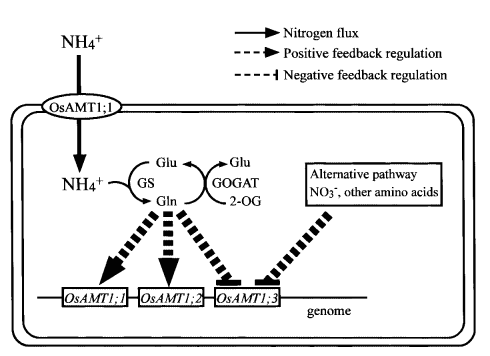 Figure 1Hypothetical model of the regulation of OsAMT1 genes in rice roots.

OsAMT1gene expression is positively feedback-regulated (dotted arrow) and negatively feedback-regulated (dotted T line) by cytosolic glutamine(Gln). Nitrogen fluxes are shown as solid arrows. See text for details.
While OsAMT1;1 was constitutively expressed (Figs. 2 and 3), accumulation of OsAMT1;2 transcripts was roots-specific and ammonium-inducible (Figs. 2 and 3). while OsAMT1;1 was constitutively expressed (Figs. 2 and 3), accumulation of OsAMT1;2 transcripts was roots-specific and ammonium-inducible (Figs. 2 and 3). We complemented a yeast mutant to determine whether the protein encoded by the cDNA is a functional ammonium transporter. Both cDNAs were able to functionally complement the mutant which is deficient in ammonium uptake, indicating that OsAMT1;1 and OsAMT1;2 encodes functional ammonium transporters (data not shown). Thus, OsAMT1;1 and OsAMT1;2 may have different physiological roles in ammonium uptake in rice. There results imply that OsAMT1;1 is involved in uptake and/or salvage of the ammonium in vascular tissues, and OsAMT1;2 in the uptake in root epidermis. Further experiments will be needeed to evaluate this hypothesis.[4]


Evolution
- Diversity and selective sweep in the OsAMT1;2 genomic region of rice. AMT1;2 transgenic rice plants with enhanced NH4+ permeability show superior growth and higher yield under optimal and suboptimal NH4+ conditions.
- OsAMT1;2(Os02g0620500)is one of the OsAMT1 family members which contain three genes(OsAMT1;1,OsAMT1;2 and OsAMT1;3). OsAMT1s belong to AMT1 family, containing 11 putative trans-membrane-spanning domains. (Figure4).[1]

- Hydropathy analysis of the deduced amino acid sequence suggests that OsAMT1;1 and OsAMT1;2 contain 10-11 putative trans-membrane domains. Sequence comparison shows that OsAMT1;1 and OsAMT1;2 are closely related to Arabidopsis and tomato ammonium transporters (67-63%,). (Figure5).[5]

Labs working on this gene
- BioScience Center and Graduate School of Bioagricultural Sciences, Nagoya University, Nagoya, 464-8601 Japan
- State Key Laboratory of Soil and Sustainable Agriculture, Institute of Soil Science, Chinese Academy of Sciences, Nanjing 210008 (China)
- Key Laboratory of Agro-ecological Processes in Subtropical Region, Institute of Subtropical Agriculture, Chinese Academy of Sciences,Hunan 410125 (China)
- Department of Botany, the University of British Columbia, Vancouver, BC, Canada
- Agriculture and AgriFood Canada, Shelterbelt Centre Indian Head SK, Canada
- Division of Biology, University of California at San Diego, La Jolla, CA 92093–0116, USA
- Division of Biological Sciences, Graduate School of Science, Hokkaido University, Kita-ku N10-W8, Sapporo, 060-0810 Japan
- CREST, Japan Science and Technology Corporation (JST)CREST, Japan Science and Technology Corporation (JST)
- Division of Bioresources and Product Science, Graduate School of Agriculture, Hokkaido University, Kita-ku N9-W9, Sapporo, 060-8589 Japan
- Plant Science Center, RIKEN, 1-7-22 Suehiro, Tsurumi-ku, Yokohama, 230-0045 Japan
References
- ↑ 1.0 1.1 Sonoda Y, Ikeda A, Yamaya T, et al. Feedback regulation of the ammonium transporter gene family AMT1 by glutamine in rice[C]//Plant and Cell Physiology. GREAT CLARENDON ST, OXFORD OX2 6DP, ENGLAND: OXFORD UNIV PRESS, 2004, 45: S98-S98.
- ↑ 2.0 2.1 Suenaga A, Moriya K, Sonoda Y, et al. Constitutive expression of a novel-type ammonium transporter OsAMT2 in rice plants[J]. Plant and Cell Physiology, 2003, 44(2): 206-211.
- ↑ 3.0 3.1 Yutaka Sonoda; Akira Ikeda; Satomi Saiki, et al. Expression and Function of Three Ammonium Transporter Genes (OsAMT1;1 – 1;3) in Rice[C]// Plant and Cell Physiology, 2003, 44(7): 726-734.
- ↑ Lauter F.R. O. Ninnemann, M. Bucher, J.W. Riesmeier and W.B. Frommer, 1996. Preferential expression of an ammonium transporter and of two putative nitrate transporters in root hairs of tomato[C]//Proc. Natl. Acad. Sci. USA 93: 8139-8144.
- ↑ Y. SONODA, A. IKEDA and J. YAMAGUCHI Characterization of rice ammonium transporters, OsAMT1;1 and OsAMT1;2[C]// Rice Genetics Newsletter, Vol. 17.
Structured Information
| Gene Name |
Os02g0620600 |
|---|---|
| Description |
Ammonium transporter family protein |
| Version |
NM_001053991.1 GI:115447352 GeneID:4330008 |
| Length |
1853 bp |
| Definition |
Oryza sativa Japonica Group Os02g0620600, complete gene. |
| Source |
Oryza sativa Japonica Group ORGANISM Oryza sativa Japonica Group
Eukaryota; Viridiplantae; Streptophyta; Embryophyta; Tracheophyta;
Spermatophyta; Magnoliophyta; Liliopsida; Poales; Poaceae; BEP
clade; Ehrhartoideae; Oryzeae; Oryza.
|
| Chromosome | |
| Location |
Chromosome 2:25548745..25550597 |
| Sequence Coding Region |
25548816..25550306 |
| Expression | |
| Genome Context |
<gbrowseImage1> name=NC_008395:25548745..25550597 source=RiceChromosome02 preset=GeneLocation </gbrowseImage1> |
| Gene Structure |
<gbrowseImage2> name=NC_008395:25548745..25550597 source=RiceChromosome02 preset=GeneLocation </gbrowseImage2> |
| Coding Sequence |
<cdnaseq>atggcaacgtgcgcggataccctcggcccgctgctgggcacggcggcggcgaacgcgacggactacctgtgcaaccagttcgcggacacgacgtcggccgtggactcgacgtacctgctcttctcggcgtacctcgtgttcgccatgcagctcggcttcgccatgctctgcgccgggtccgtccgcgccaagaacaccatgaacatcatgcttaccaacgtgctcgacgccgccgccggcgcgctcttctactacctcttcggcttcgccttcgccttcggggcgccgtccaacggcttcatcgggaagcacttcttcggcctcaagcaggtcccacaggtcggcttcgactacagcttcttcctcttccagtgggccttcgccatcgccgccgcgggcatcacgtccggctccatcgccgagcggacccagttcgtggcgtacctcatctactccgccttcctcaccggcttcgtctacccggtggtgtcccactggatctggtccgccgacgggtgggcctcggcttcccggacgtcggggtcgctgctcttcgggtccggcgtcatcgacttcgccgggtcaggggttgtccacatggtgggcggcgtggccggactctggggcgccctcatcgagggcccccgcattgggcggttcgaccacgccggccgctcggtggcgctgcgcggccacagcgcgtcgctcgtcgtgctcggcagcttccttctgtggttcgggtggtacgggtttaaccccggctcgttcctcaccatcctcaaatcctacggcccgcccggtagcatccacgggcagtggtcggcggtgggacgcaccgccgtgaccaccaccctcgccggcagcacggcggcgctcacgacgctcttcgggaagaggctccagacggggcactggaacgtgatcgacgtctgcaacggcctcctcggcggcttcgcggcgatcaccgccggttgctccgtcgtcgacccgtgggccgcgatcatctgcgggttcgtctcggcgtgggtgctcatcggcctcaacgcgctggcggcgaggctcaagttcgacgacccgctcgaggcggcgcagctgcacggcgggtgcggcgcgtggggggtcatcttcacggcgctgttcgcgcgcaaggagtacgtggaccagatcttcggccagcccgggcgcccgtacgggctgttcatgggcggcggcggccggctgctcggggcgcacatagtggtcatcctggtcatcgcggcgtgggtgagcttcaccatggcgccgctgttcctggtgctcaacaagctgggcttgctgcgcatctcggccgaggacgagatggccggcatggaccagacgcgccacggcgggttcgcgtacgcgtaccacgacgacgacgcgagcggcaagccggaccgcagcgtcggcgggttcatgctcaagtcggcgcacggcacgcaggtcgccgccgagatgggaggccatgtctag</cdnaseq> |
| Protein Sequence |
<aaseq>MATCADTLGPLLGTAAANATDYLCNQFADTTSAVDSTYLLFSAY LVFAMQLGFAMLCAGSVRAKNTMNIMLTNVLDAAAGALFYYLFGFAFAFGAPSNGFIG KHFFGLKQVPQVGFDYSFFLFQWAFAIAAAGITSGSIAERTQFVAYLIYSAFLTGFVY PVVSHWIWSADGWASASRTSGSLLFGSGVIDFAGSGVVHMVGGVAGLWGALIEGPRIG RFDHAGRSVALRGHSASLVVLGSFLLWFGWYGFNPGSFLTILKSYGPPGSIHGQWSAV GRTAVTTTLAGSTAALTTLFGKRLQTGHWNVIDVCNGLLGGFAAITAGCSVVDPWAAI ICGFVSAWVLIGLNALAARLKFDDPLEAAQLHGGCGAWGVIFTALFARKEYVDQIFGQ PGRPYGLFMGGGGRLLGAHIVVILVIAAWVSFTMAPLFLVLNKLGLLRISAEDEMAGM DQTRHGGFAYAYHDDDASGKPDRSVGGFMLKSAHGTQVAAEMGGHV</aaseq> |
| Gene Sequence |
<dnaseqindica>72..1562#acagcccacacttccattgctcctcccctctcctctacagtctgtgttgagcgcgcgtcgaggcggcgaggatggcaacgtgcgcggataccctcggcccgctgctgggcacggcggcggcgaacgcgacggactacctgtgcaaccagttcgcggacacgacgtcggccgtggactcgacgtacctgctcttctcggcgtacctcgtgttcgccatgcagctcggcttcgccatgctctgcgccgggtccgtccgcgccaagaacaccatgaacatcatgcttaccaacgtgctcgacgccgccgccggcgcgctcttctactacctcttcggcttcgccttcgccttcggggcgccgtccaacggcttcatcgggaagcacttcttcggcctcaagcaggtcccacaggtcggcttcgactacagcttcttcctcttccagtgggccttcgccatcgccgccgcgggcatcacgtccggctccatcgccgagcggacccagttcgtggcgtacctcatctactccgccttcctcaccggcttcgtctacccggtggtgtcccactggatctggtccgccgacgggtgggcctcggcttcccggacgtcggggtcgctgctcttcgggtccggcgtcatcgacttcgccgggtcaggggttgtccacatggtgggcggcgtggccggactctggggcgccctcatcgagggcccccgcattgggcggttcgaccacgccggccgctcggtggcgctgcgcggccacagcgcgtcgctcgtcgtgctcggcagcttccttctgtggttcgggtggtacgggtttaaccccggctcgttcctcaccatcctcaaatcctacggcccgcccggtagcatccacgggcagtggtcggcggtgggacgcaccgccgtgaccaccaccctcgccggcagcacggcggcgctcacgacgctcttcgggaagaggctccagacggggcactggaacgtgatcgacgtctgcaacggcctcctcggcggcttcgcggcgatcaccgccggttgctccgtcgtcgacccgtgggccgcgatcatctgcgggttcgtctcggcgtgggtgctcatcggcctcaacgcgctggcggcgaggctcaagttcgacgacccgctcgaggcggcgcagctgcacggcgggtgcggcgcgtggggggtcatcttcacggcgctgttcgcgcgcaaggagtacgtggaccagatcttcggccagcccgggcgcccgtacgggctgttcatgggcggcggcggccggctgctcggggcgcacatagtggtcatcctggtcatcgcggcgtgggtgagcttcaccatggcgccgctgttcctggtgctcaacaagctgggcttgctgcgcatctcggccgaggacgagatggccggcatggaccagacgcgccacggcgggttcgcgtacgcgtaccacgacgacgacgcgagcggcaagccggaccgcagcgtcggcgggttcatgctcaagtcggcgcacggcacgcaggtcgccgccgagatgggaggccatgtctagtggaaccggaggagctgagctagtagtacatacatgcagcatcatcgatcgaacgaaatgcatataagcgtttttcaaggttgatctgatgctgcaggtttcgtgattgtataataggaagaaaaagatagtagtattttttatctgagatcatctgtttggaacaggggatttgactaagatttgatataaatttacacaaaatcttagcaaaaatccctttatctcaactctcaagtagagctttgctttgtacaacaaagtatcatgtgtgatataattgtcaggtgg</dnaseqindica> |
| External Link(s) |

