|
|
| (5 intermediate revisions by one other user not shown) |
| Line 6: |
Line 6: |
| | The SWR1 complex is important for the deposition of histone variant H2A.Z into chromatin necessary to robustly regulate gene expression during growth and development. In Arabidopsis thaliana, the catalytic subunit of the SWR1-like complex, encoded by PIE1 (PHOTOPERIOD-INDEPENDENT EARLY FLOWERING1), has been shown to function in multiple developmental processes including flowering time pathways and petal number regulation.Although OsPIE1 does not exhibit a conserved exon/intron structure as Arabidopsis PIE1, its encoded protein is highly similar to PIE1, sharing 53.9% amino acid sequence identity. OsPIE1 also has a very similar expression pattern as PIE1. Furthermore, transgenic expression of OsPIE1 completely rescued both early flowering and extra petal number phenotypes of the Arabidopsis pie1-2 mutant.However, homozygous T-DNA insertional mutants of OsPIE1 in rice were embryonically lethal, in contrast to the viable mutants in the orthologous genes for yeast, Drosophila and Arabidopsis (Swr1, DOMINO and PIE1, respectively). | | The SWR1 complex is important for the deposition of histone variant H2A.Z into chromatin necessary to robustly regulate gene expression during growth and development. In Arabidopsis thaliana, the catalytic subunit of the SWR1-like complex, encoded by PIE1 (PHOTOPERIOD-INDEPENDENT EARLY FLOWERING1), has been shown to function in multiple developmental processes including flowering time pathways and petal number regulation.Although OsPIE1 does not exhibit a conserved exon/intron structure as Arabidopsis PIE1, its encoded protein is highly similar to PIE1, sharing 53.9% amino acid sequence identity. OsPIE1 also has a very similar expression pattern as PIE1. Furthermore, transgenic expression of OsPIE1 completely rescued both early flowering and extra petal number phenotypes of the Arabidopsis pie1-2 mutant.However, homozygous T-DNA insertional mutants of OsPIE1 in rice were embryonically lethal, in contrast to the viable mutants in the orthologous genes for yeast, Drosophila and Arabidopsis (Swr1, DOMINO and PIE1, respectively). |
| | ===Expression=== | | ===Expression=== |
| − | OsPIE1 is likely a single copy gene, encoded by Os02g46450 and located in the upstream of chromosome 2. The OsPIE1 cDNA molecule was sequenced and the sequence has been deposited into the NCBI GenBank with an accession number GQ906768. Sequencing results revealed that there is an additional exon between the predicted ninth and tenth exons (Figure 1A). In addition, we also found that OsPIE1 has a very different genomic structure, with 23 exons and 22 introns,compared to PIE1 which contains 20 exons and 19 introns. | + | OsPIE1 is likely a single copy gene, encoded by Os02g46450 and located in the upstream of chromosome 2. The OsPIE1 cDNA molecule was sequenced and the sequence has been deposited into the NCBI GenBank with an accession number GQ906768. Sequencing results revealed that there is an additional exon between the predicted ninth and tenth exons (OsPIE1Figure 1A). In addition, we also found that OsPIE1 has a very different genomic structure, with 23 exons and 22 introns,compared to PIE1 which contains 20 exons and 19 introns. |
| − | OsPIE1 protein, like Arabidopsis PIE1, has an HAS domain at the N-terminus, two domains highly similar to the SNF2_N and HELICc domains, and a SANT domain in the C terminus(Figure 1B). Two bipartite nuclear localization signals (NLS) are also present (Figure 1B), indicating that both OsPIE1 and PIE1 are likely localized to the nucleus . The SNF2_N and HELICc domains are present in the SWI2/SNF2 and ISWI class of chromatin remodeling proteins, which are involved in the transcriptional activation or repression of target genes. For these two domains, OsPIE1 and PIE1 share high similarity with DOMINO (Accession number: AF076776) from Drosophila ,SRCAP (Accession number: AF143946) from human , andSWR1 (Accession number: NP_010621) from yeast , with amino acid identity ranging from 58 to 77% (Figure 1, C and D). | + | OsPIE1 protein, like Arabidopsis PIE1, has an HAS domain at the N-terminus, two domains highly similar to the SNF2_N and HELICc domains, and a SANT domain in the C terminus(OsPIE1Figure 1B). Two bipartite nuclear localization signals (NLS) are also present (OsPIE1Figure 1B), indicating that both OsPIE1 and PIE1 are likely localized to the nucleus . The SNF2_N and HELICc domains are present in the SWI2/SNF2 and ISWI class of chromatin remodeling proteins, which are involved in the transcriptional activation or repression of target genes. For these two domains, OsPIE1 and PIE1 share high similarity with DOMINO (Accession number: AF076776) from Drosophila ,SRCAP (Accession number: AF143946) from human , andSWR1 (Accession number: NP_010621) from yeast , with amino acid identity ranging from 58 to 77% (OsPIE1Figure 1, C and D). |
| | Transgenic Expression of OsPIE1 Rescues the Early Flowering Phenotype in the Arabidopsis pie1 Mutant. | | Transgenic Expression of OsPIE1 Rescues the Early Flowering Phenotype in the Arabidopsis pie1 Mutant. |
| − | OsPIE1 exhibits a very similar tissue and developmental expression pattern as PIE1.Transgenic expression of OsPIE1 in Arabidopsis pie1-2 mutant complements the pie1-2 phenotypes with regard to flowering time and petal number. Therefore, the identification of OsPIE1 as the ortholog of the catalytic subunit of the SWR1-like complex in rice provides the basis to dissect the physiological function of OsPIE1 in the future.[[File:OsPIE1,_the_Rice_Ortholog_of_Arabidopsis_PHOTOPERIODINDEPENDENT_EARLY_FLOWERING1,_Is_Essential_for_Embryo_Development.png]] | + | OsPIE1 exhibits a very similar tissue and developmental expression pattern as PIE1.Transgenic expression of OsPIE1 in Arabidopsis pie1-2 mutant complements the pie1-2 phenotypes with regard to flowering time and petal number. Therefore, the identification of OsPIE1 as the ortholog of the catalytic subunit of the SWR1-like complex in rice provides the basis to dissect the physiological function of OsPIE1 in the future.[[File:OsPIE1Figure1.png]] |
| | ===Evolution=== | | ===Evolution=== |
| | | | |
| Line 15: |
Line 15: |
| | | | |
| | ==Labs working on this gene== | | ==Labs working on this gene== |
| − | Please input related labs here.
| + | 1 Province Key Laboratory of Genetic Engineering on Plant Metabolism, Virology and Biotechnology Institute, Zhejiang Academy of Agricultural Sciences, Hangzhou,China. |
| | + | 2 College of Biosafety Science and Technology, Hunan Agricultural University, Changsha, China. |
| | + | 3 Crop Science and Nuclear Utilization Institute, Zhejiang Academy of Agricultural Sciences, Hangzhou, China. |
| | + | 4 Department of Biological Sciences, Lehman College, City University of New York, Bronx, New York, United States of America. |
| | | | |
| | ==References== | | ==References== |
| − | Please input cited references here.
| + | Yonghan Xu,Minjuan Deng,Jianfei Peng,et al.(2010). OsPIE1, the Rice Ortholog of Arabidopsis PHOTOPERIODINDEPENDENT EARLY FLOWERING1, Is Essential for Embryo Development.PLoS ONE5(6): e11299. |
| | | | |
| | ==Structured Information== | | ==Structured Information== |
| − | {{JaponicaGene|
| + | [[Category:Genes]][[Category:Oryza Sativa Japonica Group]][[Category:Japonica Chromosome 2]] |
| − | GeneName = Os02g0689800|
| |
| − | Description = DEAD/DEAH box helicase domain containing protein|
| |
| − | Version = NM_001054321.1 GI:115448012 GeneID:4330371|
| |
| − | Length = 5559 bp|
| |
| − | Definition = Oryza sativa Japonica Group Os02g0689800, complete gene.|
| |
| − | Source = Oryza sativa Japonica Group
| |
| − | | |
| − | ORGANISM Oryza sativa Japonica Group
| |
| − | Eukaryota; Viridiplantae; Streptophyta; Embryophyta; Tracheophyta;
| |
| − | Spermatophyta; Magnoliophyta; Liliopsida; Poales; Poaceae; BEP
| |
| − | clade; Ehrhartoideae; Oryzeae; Oryza.
| |
| − | |
| |
| − | Chromosome = [[:category:Japonica Chromosome 2|Chromosome 2]]|
| |
| − | AP = Chromosome 2:29181183..29186741|
| |
| − | CDS = 29181558..29181969,29182127..29182593,29183412..29184150,29184916..29184983,29185061..29185125<br>,29185290..29186718|
| |
| − | GCID = <gbrowseImage1>
| |
| − | name=NC_008395:29181183..29186741
| |
| − | source=RiceChromosome02
| |
| − | preset=GeneLocation
| |
| − | </gbrowseImage1>|
| |
| − | GSID = <gbrowseImage2>
| |
| − | name=NC_008395:29181183..29186741
| |
| − | source=RiceChromosome02
| |
| − | preset=GeneLocation
| |
| − | </gbrowseImage2>|
| |
| − | CDNA = <cdnaseq>atggaattttcatcaagcctagcaaatcttgttctatcatcggtggatcgcttcaagacaatgcttgattttattgagtcatttacttttgcaattcctgctgcacgagcgcctgcaccattattctggtgcaacaaagggaaatctcctgttcttattgaaccagcatacagagagaaatgcatgaatgagttttctcctgttttctctcctataaggcctgcgattgttcgccgtcaagtgtactttcctgacaggcgtttgatccagtttgactgtggaaagttgcaggaacttgctattttgttgaggcgtttgaagtcagaaggacacagggccttgatatttactcagatgactaagatgcttgatatactggaggagttcattaatctatatgggtatacgtatttgcggttagatggatcaacccagccagaagagaggcagacactgatgcagaggtttaatactaacccaaagttttttctttttatcttatccactcgtagtggtggtgtgggaatcaacctagtaggtgcagacactgtcattttctatgatagtgactggaatcctgcaatggaccaacaggcccaagacagatgccacaggataggtcaaactcgtgaagttcacatctatagactgatcagtgagagcactatagaggagaatatactcaagaaagccaatcagaagcgagctcttgatgatctagtgatacaacgcggtagctacaatacagagttcttcaagaagcttgatcctatggaattcttttctgggcactcatcacttcatgcagagaatcagcagaaggattgctctctgtctgctggaccctcaaacggaactaatctggcgctgtcaaatgttgatgttgaagcagctattagacaggcagaagatgaagctgactatatggctctcaagaggctggagcaggaagaggccgtggacaatcaagagttcagcgaggaggctgctggaagacttgaggaggatgatcttgtaaacgaggatgacactaaacctgatgaacacaccaatgaagagcataaatatcagtgttctgatttggtcaaggacaagcatgttgctttatctataaatcaattagatgaagaaaaggctataactttggctggaggagatggagatattgacatgcttgctgatgttaagcagatggctgctgcagctgctgcagcaggtcaagcaagttcgtcttttgaaaatcagctccggccaattgatagatatgccatgcggtttttggaactctgggatccaataattgataaagctgctataaactatcaggtcaatgttgaagaggaagaatgggaacttgaacgcattgaaaaactcaaagaagatttagaagcagaaattgatgaagaccaggaaccactttcttatgagtcatgggatgttgattttgctactacagcatatcggcaacatgttgaggctctagctcaaaaacagttgtttgaggaacaagaaagacaagcccgtgaagcagcaaaagagttggaggaaaagaatgataatagcactcaacgaaaaaagtcaaaaaagaacaagaagaaggcagcgaagttcaaatctttgaagaaaggacgtttatcatctgagtcagaggttatggttgaggaaacatcagtagatactatgagcattgatgacaatgcaccctcaccagagctaatgagcgatgaatcagcacaccatcattctaacaagcataagaggataatgtcaaccaatgaggaagagaacagcaatagcagaagcctgaagaagctcaagaaagcccctaaatcgagtttcagttccgaggccttatcacctaagcattttcttgaaggcaagcagcttaagttgaaagatgaacttaatgattctgatcccaaatcgggggcaagaattaagagtgatggccgaatttctgtcccatgcatgccagtaaagcgtgtcatggtaatcaagcctgagagattgaagaagaagagcctatggtctcgcgattgtgcttcagactcgtggacaactgaggaagatgctgttctttgtgcaactgtaaatgagtacggccctctttgggaactggctagtgattctcttcattctgtaccaggtggtgcattttatagaggaagataccgtcaccctgtgcattgctgtgagagattccgggaattagtctgcaagcacatcttatcagcaacagacaattcaaacagtgagaaggttccttctgggactgggaaggctatcttgaaagtatctgaggatcaaactcagatgttgctcaatgtaatcagcgagcttcctaacaatgaattgcttctccagaaacatttcatggctgttctttcatctgtttggagatcgaagtctgcctgtgagtcccactgtgttatgagttactctaacacactccagaaacctggcagactcagcgagaactggtccatgacaaacttcagaccaaactttaatctagtaaggacagccctcgcagatgctcaggttcaatgtccaagaatggtagttccaacaagcaatcatgagtcccgccgtaactttttggaattggaattggatttcttgacagatcgagatgattatgaggcggactttccatctgttgttaacgtgtccatactagaaccggaaccattaaaacatgctgtggagccagtggagcactcactactgtccacactttcttatagacatgctgagaacagattcaggatggtatcagaaacttgttttgaaggggaaggttctcactgggcctcatctgctttccacacatacgatgccggtcggcataaatctggtcctaagtccataggaaagcacaaagcatcatcagaatctggaaggcctcccaaatccaaaattcaaaggaccactgaaccacaggaagtgccggttacaaataattttcataggattccggggcaacttctgcataactcagcagagttccacattacccagtccctatctgaccttggcatcagtgattctgaattcacctactttgataatcttcctcaagaggctgaaacagagtttgttccgtaccagtatgactctgatgtcctttctggcattgaggagttggatcctcttacagatttcacagacatcggatga</cdnaseq>|
| |
| − | AA = <aaseq>MEFSSSLANLVLSSVDRFKTMLDFIESFTFAIPAARAPAPLFWC NKGKSPVLIEPAYREKCMNEFSPVFSPIRPAIVRRQVYFPDRRLIQFDCGKLQELAIL LRRLKSEGHRALIFTQMTKMLDILEEFINLYGYTYLRLDGSTQPEERQTLMQRFNTNP KFFLFILSTRSGGVGINLVGADTVIFYDSDWNPAMDQQAQDRCHRIGQTREVHIYRLI SESTIEENILKKANQKRALDDLVIQRGSYNTEFFKKLDPMEFFSGHSSLHAENQQKDC SLSAGPSNGTNLALSNVDVEAAIRQAEDEADYMALKRLEQEEAVDNQEFSEEAAGRLE EDDLVNEDDTKPDEHTNEEHKYQCSDLVKDKHVALSINQLDEEKAITLAGGDGDIDML ADVKQMAAAAAAAGQASSSFENQLRPIDRYAMRFLELWDPIIDKAAINYQVNVEEEEW ELERIEKLKEDLEAEIDEDQEPLSYESWDVDFATTAYRQHVEALAQKQLFEEQERQAR EAAKELEEKNDNSTQRKKSKKNKKKAAKFKSLKKGRLSSESEVMVEETSVDTMSIDDN APSPELMSDESAHHHSNKHKRIMSTNEEENSNSRSLKKLKKAPKSSFSSEALSPKHFL EGKQLKLKDELNDSDPKSGARIKSDGRISVPCMPVKRVMVIKPERLKKKSLWSRDCAS DSWTTEEDAVLCATVNEYGPLWELASDSLHSVPGGAFYRGRYRHPVHCCERFRELVCK HILSATDNSNSEKVPSGTGKAILKVSEDQTQMLLNVISELPNNELLLQKHFMAVLSSV WRSKSACESHCVMSYSNTLQKPGRLSENWSMTNFRPNFNLVRTALADAQVQCPRMVVP TSNHESRRNFLELELDFLTDRDDYEADFPSVVNVSILEPEPLKHAVEPVEHSLLSTLS YRHAENRFRMVSETCFEGEGSHWASSAFHTYDAGRHKSGPKSIGKHKASSESGRPPKS KIQRTTEPQEVPVTNNFHRIPGQLLHNSAEFHITQSLSDLGISDSEFTYFDNLPQEAE TEFVPYQYDSDVLSGIEELDPLTDFTDIG</aaseq>|
| |
| − | DNA = <dnaseqindica>4773..5184#4149..4615#2592..3330#1759..1826#1617..1681#24..1452#agaagaagaaccctttatgccacatggaattttcatcaagcctagcaaatcttgttctatcatcggtggatcgcttcaagacaatgcttgattttattgagtcatttacttttgcaattcctgctgcacgagcgcctgcaccattattctggtgcaacaaagggaaatctcctgttcttattgaaccagcatacagagagaaatgcatgaatgagttttctcctgttttctctcctataaggcctgcgattgttcgccgtcaagtgtactttcctgacaggcgtttgatccagtttgactgtggaaagttgcaggaacttgctattttgttgaggcgtttgaagtcagaaggacacagggccttgatatttactcagatgactaagatgcttgatatactggaggagttcattaatctatatgggtatacgtatttgcggttagatggatcaacccagccagaagagaggcagacactgatgcagaggtttaatactaacccaaagttttttctttttatcttatccactcgtagtggtggtgtgggaatcaacctagtaggtgcagacactgtcattttctatgatagtgactggaatcctgcaatggaccaacaggcccaagacagatgccacaggataggtcaaactcgtgaagttcacatctatagactgatcagtgagagcactatagaggagaatatactcaagaaagccaatcagaagcgagctcttgatgatctagtgatacaacgcggtagctacaatacagagttcttcaagaagcttgatcctatggaattcttttctgggcactcatcacttcatgcagagaatcagcagaaggattgctctctgtctgctggaccctcaaacggaactaatctggcgctgtcaaatgttgatgttgaagcagctattagacaggcagaagatgaagctgactatatggctctcaagaggctggagcaggaagaggccgtggacaatcaagagttcagcgaggaggctgctggaagacttgaggaggatgatcttgtaaacgaggatgacactaaacctgatgaacacaccaatgaagagcataaatatcagtgttctgatttggtcaaggacaagcatgttgctttatctataaatcaattagatgaagaaaaggctataactttggctggaggagatggagatattgacatgcttgctgatgttaagcagatggctgctgcagctgctgcagcaggtcaagcaagttcgtcttttgaaaatcagctccggccaattgatagatatgccatgcggtttttggaactctgggatccaataattgataaagctgctataaactatcaggtcaatgttgaagaggaagaatgggaacttgaacgcattgaaaaactcaaagaagatttagaagcagaaattgatgaagaccaggaaccactttcttatgagtgtaagtgtttttatgtttatgttgacccaacagcccatagcacttacgaaaaaagtttcatctcatatttgatttatgcaacttagttttaggtagttgtctctgctatactcacccttccttgtattatgctttgttgtgttgacacatcatcttaactgcagcatgggatgttgattttgctactacagcatatcggcaacatgttgaggctctagctcaaaaacaggtcagttcatacttctattcttgtgttttcctcttggggctagtggctaattatgtcacctgatgtgatacccacagttgtttgaggaacaagaaagacaagcccgtgaagcagcaaaagagttggaggaaaagaatgataataggtatagactgagaaattgtgctctcactttggtgttcattgtttttggctcttaggccctgttcgatagtggggataacctgagcttattagctccacgcaaaatgatgcagatgattagggtatgattaattgagtattaactaccataaacttaaaaatagatttatttgttttttaagaaactttgatatagaaagtttttgcaaaaacacaccgtttagcagttcgggaagcgtgctcatgataaacgagggagtagctccccctagaagcacattagaatggggccttagtgggtagatgcatatactccctctgcttttttattatctaacagcgggcactattcattttcacactgtgatcactcatcttttttcaataattttacaaatgaaaagatgtcatgttattaaagtgtactgtatcgtaagcataaacaagaaagttcaattcaccattaattctttaatcctaaacttcaacaagaaactttaatcctaaactattaatcattttaataattttgaccattaatagttcctcgcaaaaaaaaaaaggtcaaagtagaaacagtagtagtcaatgttgacagtcatgaaaacagagggagcttttgtgctgttttgcacttcactttggtgctcatctgtagggttacatggtatgcctgcattttctttccaattggttttagatgtgtccatatgctttcatctatttactgtatcctaaaagaataacttttgtcaatctttgacagcactcaacgaaaaaagtcaaaaaagaacaagaagaaggcagcgaagttcaaatctttgaagaaaggacgtttatcatctgagtcagaggttatggttgaggaaacatcagtagatactatgagcattgatgacaatgcaccctcaccagagctaatgagcgatgaatcagcacaccatcattctaacaagcataagaggataatgtcaaccaatgaggaagagaacagcaatagcagaagcctgaagaagctcaagaaagcccctaaatcgagtttcagttccgaggccttatcacctaagcattttcttgaaggcaagcagcttaagttgaaagatgaacttaatgattctgatcccaaatcgggggcaagaattaagagtgatggccgaatttctgtcccatgcatgccagtaaagcgtgtcatggtaatcaagcctgagagattgaagaagaagagcctatggtctcgcgattgtgcttcagactcgtggacaactgaggaagatgctgttctttgtgcaactgtaaatgagtacggccctctttgggaactggctagtgattctcttcattctgtaccaggtggtgcattttatagaggaagataccgtcaccctgtgcattgctgtgagagattccgggaattagtctgcaagcacatcttatcagcaacagacaattcaaacagtgagaaggttccttctgggactgggaaggctatcttgaaagtatctgaggtcagtttactcatgtcatctactccctccatccctaaataagtctagtttttagcataagaattcgtccctaaaagagtgtagttttagagtggtccactagcattagacctttttaataccacctacatccttttcttctcatttttagtcatcgaaccaatagtactccctcatcctactcactttctctccatattaatgaagggcttagtagtcttttgaccccttaatatgtctttgactagctaaaactacacttatttagggacgaagggagtagttagtgggatagttctcaatatgctgacaaccttaaatttttacaaattttacatttttaccatggttctcgctgttctcatttctcactcactaaaataagtctgaaatgactcaaattcgaaacatgccacatgatcaatatgtctgaaatgactcaaattcggaaagtccgacagactagacacacataaaaacgctaaattaaggggattttgagtaaaataccatattcttaattcctggagggccgtttttagaagctcaagtcattgaatatctttgacagtgattacaagtgttaaatggttgtcgtgctggggttggtcctctatctgactaataagcaagtcatacctctgccaattgccagttgcaatctgcaatcttgtgctttaatccagttaagaggccaggcatgtgaatatatctatactgtgcctgtttttttttgtatatgtgtgctttaaacaaatctactatttatattcaacttattgtgtgcacaacttgattttctatgacttattttccaggatcaaactcagatgttgctcaatgtaatcagcgagcttcctaacaatgaattgcttctccagaaacatttcatggctgttctttcatctgtttggagatcgaagtctgcctgtgagtcccactgtgttatgagttactctaacacactccagaaacctggcagactcagcgagaactggtccatgacaaacttcagaccaaactttaatctagtaaggacagccctcgcagatgctcaggttcaatgtccaagaatggtagttccaacaagcaatcatgagtcccgccgtaactttttggaattggaattggatttcttgacagatcgagatgattatgaggcggactttccatctgttgttaacgtgtccatactagaaccggaaccattaaaacatgctgtggagccagtggagcactcactactgtccacactttcttatagacatgctgagaacagattcaggtaattgttgacacagatattttgtgtatttattggagctagtggttattagcaccggaaaaatcctcttcatgatgatacagttctgctttgcattttttatttatttatttttgcttctgatcttcctaacgtgtcattgcattcatttacacaggatggtatcagaaacttgttttgaaggggaaggttctcactgggcctcatctgctttccacacatacgatgccggtcggcataaatctggtcctaagtccataggaaagcacaaagcatcatcagaatctggaaggcctcccaaatccaaaattcaaaggaccactgaaccacaggaagtgccggttacaaataattttcataggattccggggcaacttctgcataactcagcagagttccacattacccagtccctatctgaccttggcatcagtgattctgaattcacctactttgataatcttcctcaagaggctgaaacagagtttgttccgtaccagtatgactctgatgtcctttctggcattgaggagttggatcctcttacagatttcacagacatcggatgagaacaaatgaacatattgctctggatgtcatgccctttcttttaaagaggacattagattgtcaacggtaggagcccaaggatacacagattgagtcgctcgccacacagaattgatgcaagcttgatggcgattggtgggagcgaagctatttgcttgatgtggtcacaatgaccttacaagcttggagggtttggttagcactaatggaggcattgggtactttctatacatgtatgtatattggtagcgtaggctctttagatgtagaattgtattccctcatttatgttgagggaagactttgtaacttggaaattttgtttagcagatgccaacagagaagggaaaagaggaaggccctcggcaccaccc</dnaseqindica>|
| |
| − | Link = [http://www.ncbi.nlm.nih.gov/nuccore/NM_001054321.1 RefSeq:Os02g0689800]|
| |
| − | }}
| |
| − | [[Category:Genes]] | |
| − | [[Category:Japonica mRNA]]
| |
| − | [[Category:Oryza Sativa Japonica Group]] | |
| − | [[Category:Japonica Genes]] | |
| − | [[Category:Japonica Chromosome 2]]
| |
| − | [[Category:Chromosome 2]]
| |
Please input one-sentence summary here.
Annotated Information
Function
OsPIE1 is the rice ortholog of Arabidopsis PIE1 and plays an essential role in rice embryo development.
The SWR1 complex is important for the deposition of histone variant H2A.Z into chromatin necessary to robustly regulate gene expression during growth and development. In Arabidopsis thaliana, the catalytic subunit of the SWR1-like complex, encoded by PIE1 (PHOTOPERIOD-INDEPENDENT EARLY FLOWERING1), has been shown to function in multiple developmental processes including flowering time pathways and petal number regulation.Although OsPIE1 does not exhibit a conserved exon/intron structure as Arabidopsis PIE1, its encoded protein is highly similar to PIE1, sharing 53.9% amino acid sequence identity. OsPIE1 also has a very similar expression pattern as PIE1. Furthermore, transgenic expression of OsPIE1 completely rescued both early flowering and extra petal number phenotypes of the Arabidopsis pie1-2 mutant.However, homozygous T-DNA insertional mutants of OsPIE1 in rice were embryonically lethal, in contrast to the viable mutants in the orthologous genes for yeast, Drosophila and Arabidopsis (Swr1, DOMINO and PIE1, respectively).
Expression
OsPIE1 is likely a single copy gene, encoded by Os02g46450 and located in the upstream of chromosome 2. The OsPIE1 cDNA molecule was sequenced and the sequence has been deposited into the NCBI GenBank with an accession number GQ906768. Sequencing results revealed that there is an additional exon between the predicted ninth and tenth exons (OsPIE1Figure 1A). In addition, we also found that OsPIE1 has a very different genomic structure, with 23 exons and 22 introns,compared to PIE1 which contains 20 exons and 19 introns.
OsPIE1 protein, like Arabidopsis PIE1, has an HAS domain at the N-terminus, two domains highly similar to the SNF2_N and HELICc domains, and a SANT domain in the C terminus(OsPIE1Figure 1B). Two bipartite nuclear localization signals (NLS) are also present (OsPIE1Figure 1B), indicating that both OsPIE1 and PIE1 are likely localized to the nucleus . The SNF2_N and HELICc domains are present in the SWI2/SNF2 and ISWI class of chromatin remodeling proteins, which are involved in the transcriptional activation or repression of target genes. For these two domains, OsPIE1 and PIE1 share high similarity with DOMINO (Accession number: AF076776) from Drosophila ,SRCAP (Accession number: AF143946) from human , andSWR1 (Accession number: NP_010621) from yeast , with amino acid identity ranging from 58 to 77% (OsPIE1Figure 1, C and D).
Transgenic Expression of OsPIE1 Rescues the Early Flowering Phenotype in the Arabidopsis pie1 Mutant.
OsPIE1 exhibits a very similar tissue and developmental expression pattern as PIE1.Transgenic expression of OsPIE1 in Arabidopsis pie1-2 mutant complements the pie1-2 phenotypes with regard to flowering time and petal number. Therefore, the identification of OsPIE1 as the ortholog of the catalytic subunit of the SWR1-like complex in rice provides the basis to dissect the physiological function of OsPIE1 in the future.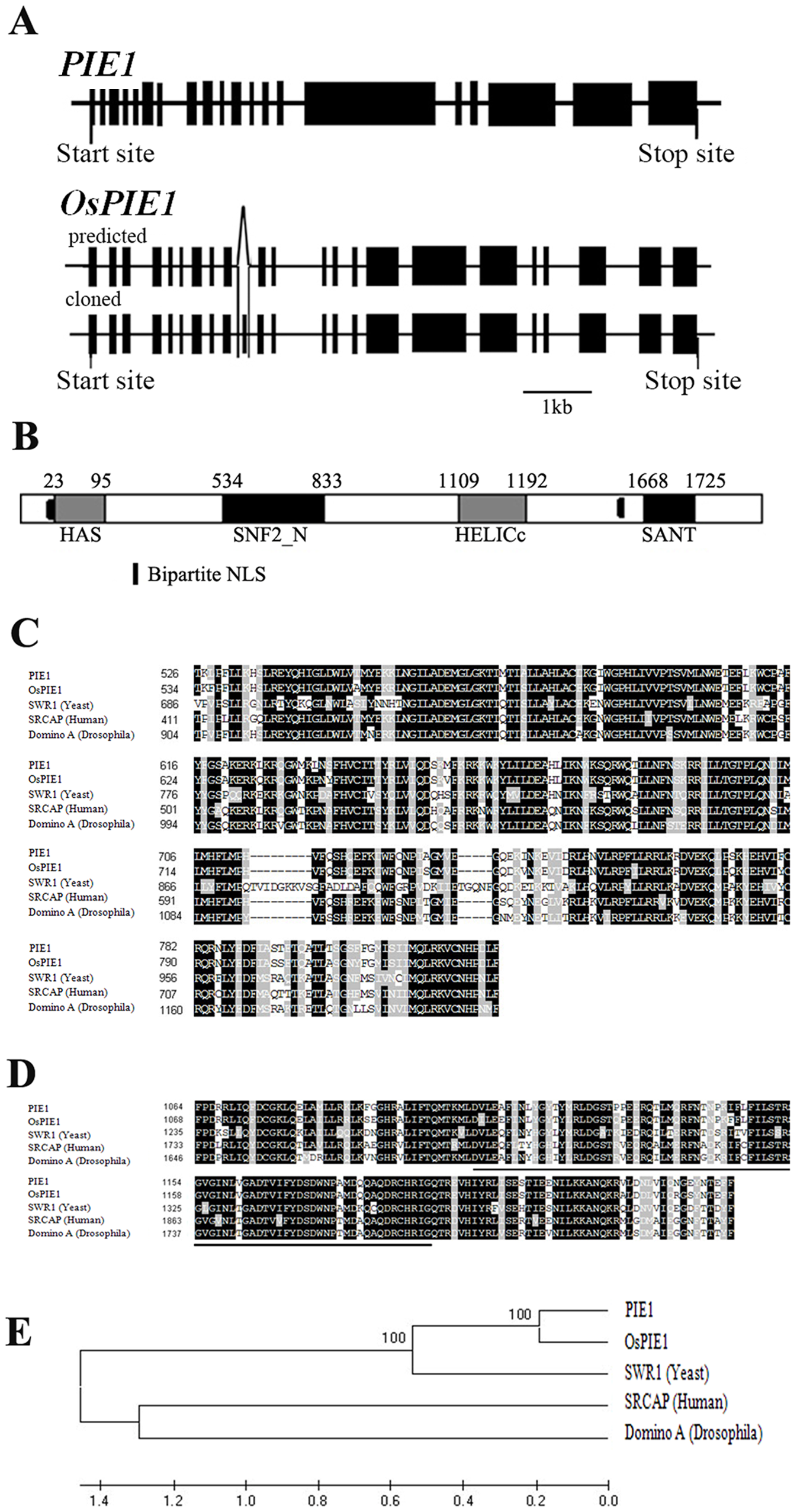
Evolution
OsPIE1,encoded by Os02g46450, is the true rice ortholog of Arabidopsis PIE1. At the amino acid sequence level, these two proteins share 53.9% identity. Protein domain prediction and comparison reveal that OsPIE1 is very similar to PIE1, with almost identical domains. Phylogenetic analysis also places OsPIE1 as the most closely related protein of PIE1, compared to other catalytic subunits in yeast and animals.
Labs working on this gene
1 Province Key Laboratory of Genetic Engineering on Plant Metabolism, Virology and Biotechnology Institute, Zhejiang Academy of Agricultural Sciences, Hangzhou,China.
2 College of Biosafety Science and Technology, Hunan Agricultural University, Changsha, China.
3 Crop Science and Nuclear Utilization Institute, Zhejiang Academy of Agricultural Sciences, Hangzhou, China.
4 Department of Biological Sciences, Lehman College, City University of New York, Bronx, New York, United States of America.
References
Yonghan Xu,Minjuan Deng,Jianfei Peng,et al.(2010). OsPIE1, the Rice Ortholog of Arabidopsis PHOTOPERIODINDEPENDENT EARLY FLOWERING1, Is Essential for Embryo Development.PLoS ONE5(6): e11299.
Structured Information


