|
|
| (10 intermediate revisions by 3 users not shown) |
| Line 1: |
Line 1: |
| − | The rice ''SHALLOT-LIKE1'' ('' SLL1'') gene, a member of KANADI family, is a key gene controlling rice leaf rolling. | + | The rice ''SHALLOT-LIKE1'' (''SLL1'') gene, a member of KANADI family, is a key gene controlling rice leaf rolling. |
| | | | |
| | ==Annotated Information== | | ==Annotated Information== |
| | ===Function=== | | ===Function=== |
| − | [[File:ZhangF1.jpg|right|thumb|200px|Fig 1.''sll1'' has extremely incurved leaves, with deficiency of sclerenchymatous cells at the abaxial side <ref name=''ref1'' />.]] [[File:ZhangF2.jpg|right|thumb|200px|Fig 2. ''SLL1'' deficiency results in increased chlorophyll content <ref name=''ref1'' />.]] | + | [[File: ZhangF1.jpg|right|thumb|100px|Fig 1. ''sll1'' has extremely incurved leaves, with deficiency of sclerenchymatous cells at the abaxial side <ref name="ref1" />.]] [[File: ZhangF3.jpg|right|thumb|100px|Fig 3. Map-based cloning of ''SLL1'', which encodes an MYB transcription factor <ref name="ref1" />.]] [[File: ZhangF8.jpg|right|thumb|100px|Fig 8. ''Sll1'' alters adaxial-abaxial pattern formation <ref name="ref1" />.]] |
| | | | |
| − | ''sll1'', a rice mutant with shallot-like Leaves, displays abnormal sclerenchymatous cell development in the abaxial cell layers, altered mesophyll cell distribution, increased amounts of chlorophyll, and enhanced photosynthesis (Fig. 1&2) <ref name=''ref1'' />. | + | ''SLL1'' arrests normal sclerenchymatous cell formation and controls leaf rolling, controls the establishment of rice leaf polarity, and modulates ohotosynthesis by regulating cell fate <ref name="ref1" />. |
| | + | |
| | + | To investigate the molecular mechanisms of rice leaf rolling, a rice mutant population (''Oryza sativa'' L. ssp. ''japonica'' variety Nipponbare) generated by ethyl methanesulphonate mutagenesis was screened. Two allelic mutants with extremely incurved leaves were identified, designated as ''sll1-1'' and ''sll1-2'' (Fig. 1A ). ''sll1'', a rice mutant with shallot-like Leaves, displays abnormal sclerenchymatous cell development in the abaxial cell layers, altered mesophyll cell distribution, increased amounts of chlorophyll, and enhanced photosynthesis. |
| | + | |
| | + | Genetic analysis revealed that the abnormal character of ''sll1'' was controlled by a single recessive gene. To isolate the relevant mutant gene, ''SLL1'' was mapped to the long arm of rice chromosome 9 between markers RM1896 and RM3700. A large F2 mapping population was then generated, allowing the fine-mapping of ''SLL1'' to a 29.57-kb region, using the sequence tagged site and simple sequence repeat markers (Fig. 3A). Three annotated candidate genes, encoding a hypothetical protein, an En/Spm-like transposon, and a transcription factor containing a MYB-like domain, respectively, were located in this region. Further amplification of the relevant DNA fragments and sequence comparison revealed differences in ''sll1-1'' and ''sll1-2'' alleles in the gene encoding the transcription factor containing the MYB-like domain. Comparison with the corresponding genomic sequence revealed that the ''SLL1'' gene consists of six exons and five introns. The gene encodes a 377–amino acid MYB family transcription factor (Fig. 3B). Homologous analysis showed that ''SLL1'' shares high similarity with the KANADI family members in ''Arabidopsis''. |
| | + | |
| | + | A distinguishing characteristic of the monocot leaf is that microhairs or ligules are present only at the adaxial surface. In ''sll1-1'', the microhairs can be observed on both epidermal surfaces of some plants (Fig. 8A ), and the ligules exist on the abaxial side of the joint (Fig. 8B). This suggests an adaxialized trend in the abaxial epidermis of ''sll1-1'' and indicates the involvement of ''SLL1'' in the development of polarity throughout the leaf abaxial epidermis. ''SLL1'' overexpression resulted in dwarf plants with twisted and abnormal inner rolled leaves. We also observed enlarged phloem in the midrib as well as large and small veins, revealing the enhanced abaxial features of leaves following ''SLL1'' overexpression. |
| | + | |
| | + | ''SLL1'' affected developmental processes in multiple developmental stages, in accordance with its expression patterns. Aside from altered leaf morphology, other tissues, including seeds, anthers, and roots, displayed abnormal development in ''sll1'' mutants (Fig. 10). |
| | | | |
| | ===Expression=== | | ===Expression=== |
| − | [[File:ZhangF5.jpg|right|thumb|200px|Fig 5. ''SLL1'' Expression Pattern Analysis <ref name=''ref1'' />.]]
| + | Quantitative real-time RT-PCR (qRT-PCR) analysis revealed the expression of ''SLL1'' in various tissues, including roots, stems, leaves, flowers, and seedlings, with relatively high expression in leaf and seedlings (Fig. 5A , top panel). With an emphasis on the leaf, analysis by qRT-PCR showed that ''SLL1'' is ubiquitously expressed in shoot apical meristem (SAM), leaf blade, or leaf sheath at different developmental stages (Figure 5A, bottom panel) <ref name="ref1" />. |
| | | | |
| − | Quantitative real-time RT-PCR (qRT-PCR) analysis revealed the expression of ''SLL1'' in various tissues, including roots, stems, leaves, flowers, and seedlings, with relatively high expression in leaf and seedlings (Figure 5A , top panel). With an emphasis on the leaf, analysis by qRT-PCR showed that ''SLL1'' is ubiquitously expressed in shoot apical meristem (SAM), leaf blade, or leaf sheath at different developmental stages (Figure 5A, bottom panel).
| + | To assess the expression pattern comprehensively, β-glucuronidase (GUS) activity was examined histochemically in transgenic plants carrying an ''SLL1'' promoter-GUS reporter gene. Results showed that ''SLL1'' was transcribed in stem (Fig. 5B, panels 1 and 2), anthers of young or mature flowers (Fig. 5B, panels 3 to 5), pistil tip (Fig. 5B, panel 6), glume (Fig. 5B, panel 7), vascular tissues of mature seeds (Fig. 5B, panels 8 and 9), coleoptile and embryonic root of germinating seedlings (Fig. 5B, panel 10), and root vascular tissues (Fig. 5B, panel 11). In addition, ''SLL1'' is highly transcribed in leaf veins and leaf sheath (Fig. 5C, panels 1 to 3), guard cells, and tracheal elements (Fig. 5C, panels 4 and 5). |
| | | | |
| − | To assess the expression pattern comprehensively, β-glucuronidase (GUS) activity was examined histochemically in transgenic plants carrying an ''SLL1'' promoter-GUS reporter gene. Results showed that ''SLL1'' was transcribed in stem (Figure 5B, panels 1 and 2), anthers of young or mature flowers (Figure 5B, panels 3 to 5), pistil tip (Figure 5B, panel 6), glume (Figure 5B, panel 7), vascular tissues of mature seeds (Figure 5B, panels 8 and 9), coleoptile and embryonic root of germinating seedlings (Figure 5B, panel 10), and root vascular tissues (Figure 5B, panel 11). In addition, ''SLL1'' is highly transcribed in leaf veins and leaf sheath (Figure 5C, panels 1 to 3), guard cells, and tracheal elements (Figure 5C, panels 4 and 5).
| + | The spatial and temporal localization of ''SLL1'' during leaf development was further examined by in situ hybridization analysis. The mRNA expression of ''SLL1'' was detected throughout the young leaf primordium (plastochrons 1 to 3) and was more intense in abaxial cell layer through leaf development (plastochrons 4 and 5) (Fig. 5D, panel 2). However, the ''SLL1'' transcript did not demonstrate apical/basal polarity and did not accumulate at the apex of the meristem (Fig.e 5D, panel 3). Cross-section analysis of the shoot apex showed that ''SLL1'' was more highly expressed in the abaxial cell layer, including the epidermis and vasculature of the early leaf blade (Fig. 5D, panels 5 and 6). In the mature leaf, ''SLL1'' mainly accumulated at the abaxial epidermis, abaxial mesophyll cells, and vasculature (Fig. 5D, panels 8 and 9). In contrast with the sense probe (Fig. 5D, panels 4 and 7), ''SLL1'' was transcribed at a relatively low level throughout other leaf positions including the adaxial epidermis (Fig. 5D, panels 5 and 6). |
| − | | |
| − | The spatial and temporal localization of ''SLL1'' during leaf development was further examined by in situ hybridization analysis. The mRNA expression of ''SLL1'' was detected throughout the young leaf primordium (plastochrons 1 to 3) and was more intense in abaxial cell layer through leaf development (plastochrons 4 and 5) (Figure 5D, panel 2). However, the ''SLL1'' transcript did not demonstrate apical/basal polarity and did not accumulate at the apex of the meristem (Figure 5D, panel 3). Cross-section analysis of the shoot apex showed that ''SLL1'' was more highly expressed in the abaxial cell layer, including the epidermis and vasculature of the early leaf blade (Figure 5D, panels 5 and 6). In the mature leaf, ''SLL1'' mainly accumulated at the abaxial epidermis, abaxial mesophyll cells, and vasculature (Figure 5D, panels 8 and 9). In contrast with the sense probe (Figure 5D, panels 4 and 7), ''SLL1'' was transcribed at a relatively low level throughout other leaf positions including the adaxial epidermis (Figure 5D, panels 5 and 6). | |
| | | | |
| | ===Evolution=== | | ===Evolution=== |
| − | Please input evolution information here.
| |
| − |
| |
| − | You can also add sub-section(s) at will.
| |
| | | | |
| | ==Labs working on this gene== | | ==Labs working on this gene== |
| Line 27: |
Line 30: |
| | ==References== | | ==References== |
| | <references> | | <references> |
| − | <ref name="ref1">Zhang GH, et al. (2009) ''SHALLOT-LIKE1''is a KANADI transcription factor that modulates rice leaf rolling by regulating leaf abaxial cell development. The Plant Cell Online 21: 719-735.</ref> | + | <ref name="ref1">Zhang GH, et al. (2009) ''SHALLOT-LIKE1'' is a KANADI transcription factor that modulates rice leaf rolling by regulating leaf abaxial cell development. The Plant Cell Online 21: 719-735.</ref> |
| | + | </references> |
| | | | |
| | ==Structured Information== | | ==Structured Information== |
| − | {{JaponicaGene|
| |
| − | GeneName = Os09g0395300|
| |
| − | Description = Similar to CDPK substrate protein 1|
| |
| − | Version = NM_001069632.1 GI:115479006 GeneID:4346973|
| |
| − | Length = 7672 bp|
| |
| − | Definition = Oryza sativa Japonica Group Os09g0395300, complete gene.|
| |
| − | Source = Oryza sativa Japonica Group
| |
| | | | |
| − | ORGANISM Oryza sativa Japonica Group
| |
| − | Eukaryota; Viridiplantae; Streptophyta; Embryophyta; Tracheophyta;
| |
| − | Spermatophyta; Magnoliophyta; Liliopsida; Poales; Poaceae; BEP
| |
| − | clade; Ehrhartoideae; Oryzeae; Oryza.
| |
| − | |
| |
| − | Chromosome = [[:category:Japonica Chromosome 9|Chromosome 9]]|
| |
| − | AP = Chromosome 9:14411926..14419597|
| |
| − | CDS = 14411926..14412128,14413047..14413888,14413990..14414066,14414656..14414701,14414841..14415084<br>,14418440..14418512,14419481..14419597|
| |
| − | GCID = <gbrowseImage1>
| |
| − | name=NC_008402:14411926..14419597
| |
| − | source=RiceChromosome09
| |
| − | preset=GeneLocation
| |
| − | </gbrowseImage1>|
| |
| − | GSID = <gbrowseImage2>
| |
| − | name=NC_008402:14411926..14419597
| |
| − | source=RiceChromosome09
| |
| − | preset=GeneLocation
| |
| − | </gbrowseImage2>|
| |
| − | CDNA = <cdnaseq>atggcaatggtgcgggagctcgagttgatgacgagctggagcaacagcatggggcgacaccgctacccaacgcgcatcctcgtcgattccttcgggcataagtgcagtgcctctgacaagggtgtgtggacctcctgcagcattcgcgcacccttgcaaggacgcggctccttccgacgtggcgcgaatattcgctttgggagcttgccgagcagcgcggcggtggcgacgtcggggggagggcgtggcggcggcggggtggtggtgggaggaggaggaggggacccgtggcggaggctggatgggtccacggcgtcgacggagttgtcgctgtcgccgccgccggcgcaggcggcgggtgggggaggtggtggtggtggagcggacgcgctgccgtggcggcaccgaccttcgccgccgtcgtcggcggtggccaccacgtctgccgccgccgcggcggcgctgatggcgccgatgatgctgcagccgctcgacgccggcggcggcgcgtcggcgccgccgccgccgatccgcgggatacctatctacaacggccccggcgggttcccgttcctgcagccgtcgcccaccgccggcgacgtcggccaccaccaccaccaccaccccaagatgggattctacagctcgtaccaccacccatccacgtggccctccacgtcgccgtccccgctcgcggcgccgccgggcgccgcgtcgtcgccgctcgaccccacggcggcgttcctctcctccccccaccaccggatgctgtccgccgcctcggggaggctcaacggcatgctctccgtctccgacaccctccgcagctacggcgtccccggcgccgccgcccccggcgtcatcggcggcgcgcaccaccaccaccaccacctccacggcggccagccgttcgtcggcgccctcgcgtcccgcttcatgcccaagctccccgccaagcgcagcatgcgcgcgccgcgcatgcgctggacgagcaccctccacgcccgcttcgtccacgccgtcgagctcctcggcggccacgagagggcgacgcccaagtcggtgctggagctcatggacgtcaaggatctgacgctagcgcatgtcaagagccacctccagatgtatcgcaccgtgaagagcactgacaagcctgcagcctcttcagggccggcggacggcggctccggcgacgaggagttcgccggcggcgggcaggcggcgtcgggcggcggcgacagcatgtgcctgaggggtggcggcggcggcggggtggccgcggcggcgttcgcggagcacggccggtcggcgtcggagggcgccgccagctcggtcggcggcggcggcggcggcgacatggaccagtcgtcggccggcaacaccagcaccaccaggtggagcaactcctcaagggacccatggctgtcgtccaattcttgcaacatggacgcccatcgctccgtaggattgtcttctcctattgaggttcttgcacttcctttagcctcattgatcatgtcagatactgcctacctgttcttttccagcaaccatggccggtgtgaaccggcctctcttgaccagaaactagcagatatctga</cdnaseq>|
| |
| − | AA = <aaseq>MAMVRELELMTSWSNSMGRHRYPTRILVDSFGHKCSASDKGVWT SCSIRAPLQGRGSFRRGANIRFGSLPSSAAVATSGGGRGGGGVVVGGGGGDPWRRLDG STASTELSLSPPPAQAAGGGGGGGGADALPWRHRPSPPSSAVATTSAAAAAALMAPMM LQPLDAGGGASAPPPPIRGIPIYNGPGGFPFLQPSPTAGDVGHHHHHHPKMGFYSSYH HPSTWPSTSPSPLAAPPGAASSPLDPTAAFLSSPHHRMLSAASGRLNGMLSVSDTLRS YGVPGAAAPGVIGGAHHHHHHLHGGQPFVGALASRFMPKLPAKRSMRAPRMRWTSTLH ARFVHAVELLGGHERATPKSVLELMDVKDLTLAHVKSHLQMYRTVKSTDKPAASSGPA DGGSGDEEFAGGGQAASGGGDSMCLRGGGGGGVAAAAFAEHGRSASEGAASSVGGGGG GDMDQSSAGNTSTTRWSNSSRDPWLSSNSCNMDAHRSVGLSSPIEVLALPLASLIMSD TAYLFFSSNHGRCEPASLDQKLADI</aaseq>|
| |
| − | DNA = <dnaseqindica>1..203#1122..1963#2065..2141#2731..2776#2916..3159#6515..6587#7556..7672#atggcaatggtgcgggagctcgagttgatgacgagctggagcaacagcatggggcgacaccgctacccaacgcgcatcctcgtcgattccttcgggcataagtgcagtgcctctgacaagggtgtgtggacctcctgcagcattcgcgcacccttgcaaggacgcggctccttccgacgtggcgcgaatattcgctttgggaggtatgagactacgctccatggtggagcgttgggcgtgaccttagtgtgcgcatatgtaagctgtatgcgtacgtataaatgttgagcttgcagtacatgtatacttgtttttttcttcttttttatgaggtcctttaattccattgtctgtattatttatgctagtatggaggatgatggtggcagtgacataaagtatacaaaaagcatagtatagtatacgtatggaaacaaaagcatgctacctttgactccacttgcattgcctgctaactgccattatttaaggaatacatggttgaatgcctgcctaaacatcaagataacctcacattctcctctctctctctcctaccttgcaattaagggtagcagcagtactctcctcactgctggctgactgctcccattttctctctctactctctctctctctctctcctctattccttttatacttgttgttggtagctaggagtatagcaggacagcacaaggaaccaattcatgcatatatccctggtgtctctcatgcatgttagtgtgaagaaagaagaagcttgagagagaagagagagttagagagagaaagtagagtgtttgtagagagagaaagtggtgtgtgtactagtagtaactccaagccagtgctagagacagagatacaaaaaggagacatcatccttctcttggccaaagcaagcaaccaagcaaagcttcctcttcttctccaagaactccaagaaccttctccttcatcttctccaccatgattccttccatcgcatgagctccatctccggcgtgtcgatcgagatcaccgttgctgctgccgaggtggagaaggaggtgtttgatcgatcggtcgatggaggcgagctcggcggcgacgccaccggacctgtcgctgcacatcagcttgccgagcagcgcggcggtggcgacgtcggggggagggcgtggcggcggcggggtggtggtgggaggaggaggaggggacccgtggcggaggctggatgggtccacggcgtcgacggagttgtcgctgtcgccgccgccggcgcaggcggcgggtgggggaggtggtggtggtggagcggacgcgctgccgtggcggcaccgaccttcgccgccgtcgtcggcggtggccaccacgtctgccgccgccgcggcggcgctgatggcgccgatgatgctgcagccgctcgacgccggcggcggcgcgtcggcgccgccgccgccgatccgcgggatacctatctacaacggccccggcgggttcccgttcctgcagccgtcgcccaccgccggcgacgtcggccaccaccaccaccaccaccccaagatgggattctacagctcgtaccaccacccatccacgtggccctccacgtcgccgtccccgctcgcggcgccgccgggcgccgcgtcgtcgccgctcgaccccacggcggcgttcctctcctccccccaccaccggatgctgtccgccgcctcggggaggctcaacggcatgctctccgtctccgacaccctccgcagctacggcgtccccggcgccgccgcccccggcgtcatcggcggcgcgcaccaccaccaccaccacctccacggcggccagccgttcgtcggcgccctcgcgtcccgcttcatgcccaagctccccgccaagcgcagcatgcgcgcgccgcgcatgcgctggacgagcaccctccacgcccgcttcgtccacgccgtcgagctcctcggcggccacgagagtacgcccccgccatcatcgtcgtcgtcctcctcctccttctcaccaccatcatcaacgagctcgatcaatctgatgagaatccaatcttgttcttggcaggggcgacgcccaagtcggtgctggagctcatggacgtcaaggatctgacgctagcgcatgtcaagagccacctccaggtatcccgccattgccgaccaattctcacagctcgatcgatcgatcaaacaccactcaccactgcaccatctctctctttctctctctcgatttcgattccattcagcttctgttcttgatcatcttgtttgggtgagacaaagatgccaatgcagtaactcctgagttagtgaagaaactgccattcttgggagcagagagagagagtgtgtgtgtgacatgtttggggatgtgtgtgcaagagagaagagagagagagaggggaaaaaagttgccatcattacacaataatgcattgcatctgcatctgtgctactagctccttccttagctctagtcatactagcgtatatgtgcacggcccaaagcactctcacacacaaacacaagagagagagagagagagagaagaagaagatgagagatgagagagagtaggacatattttgtgtgtgtttctttgctgcttgtcttttgcaatggcttcaacctcctggtttcattttgatctcacaaaaaatgtgtgtgtgtgtgtaaatatatatattgatcttctttttgttggacttttgtgttttattactgcagatgtatcgcaccgtgaagagcactgacaagcctgcagcctcttcaggtgattttttttaccatggcagctactagtagtagtagtagtagctaatttagctaagctccattttgcttttctttttttttggcgttgtgcattgcgttttacattacattgttgctatggtttttttgacgtgtagggccggcggacggcggctccggcgacgaggagttcgccggcggcgggcaggcggcgtcgggcggcggcgacagcatgtgcctgaggggtggcggcggcggcggggtggccgcggcggcgttcgcggagcacggccggtcggcgtcggagggcgccgccagctcggtcggcggcggcggcggcggcgacatggaccagtcgtcggccggcaacaccagcaccaccaggtggagcaactcctcaaggtacacacatggcagagttgcatttcaagtctttcagattaattatatatctacattgttatgccatctttaattaattaaaaatgaaattaatcaatcagaatgtcatgagatgatgatgatgatgataataatactaggataggaagaggatgatatgatggatgggtgtgctatgtgtgtttttaagtgtgttttagcttagaaccaaaggcaacaccaacaaactttggcatgcattgatgatgtatctaaatatgagttagtgacatgcaaaattaacctgccaagtacaacctctatttattaattcccaaaaaaatctcatggaggagaagggagagagagagatagtagtaatgtgtggtgatgcatggctaaaaaagcttagcaaaagaatgttttgggggcacacacacacacacctggagagggagttgcctatgtttaggtggccaatgttgttatgtcacacaaaagaccaaaaagtcacacaccccatggcttggcctcctcctccccccttgacctgtgcagttagctaggcttcttctcttctctccctctgtgtttggtttttgtggagctaaaaacattttaaaaatcttgcaaacattgtgtgtaaaaataggttcttgggctctgcccattgtcctctagcttctctcaaatctctctctctctctctctctctctctctctctttctcaaacctagggaggggagggttactcaggcagggctccattatcatttcttatcaatgcatggctctgattccagggggatggggctttgacctgacatgccctattgcctaggaatatgtaaccaaggacttgctgcattcttggttctttctccctctctcaccagtctcttcaatgcccttttcttccacctcttgggcaattattagcatggatggagctcaccttttcactctaccctctagctgtgattaaatcattgactaatcctaattcataaatataagggattcaactatgtaactagatgtactagatcctagtattactagtgtgttttgattctgttaggaggagtgattagcgtttgtcgtaagtactagtattaaactataggggattagtgtagatcatttttttaaaaattagtgagtgtgcttgggcagattttactccagccattggcgtgaaaactttgatctttgggcagcttggaagcaagtacagttcaacctgtccttggctgcattcgctgctttttctttctcaggactcactgcaactttcttgccatccccaacacctccctttcggtcgtgtttgatcagttgcattgctggtttcttcgccgctttaatttctccatctttcttctgttccttattggctaagtaaaaaatcattctcagcaatcaagttttgaaattcaaattagcttcaggttttatctatctaataattctctgactagttctctttctttcaagacctgttcttgttcagaactcttatgcagttgagagttcagttgttcatggaagtaatggcaatgcctggtctagtctttgagcagtatcctccttatgctcttgattttccttcactttagccgtttcagtcaaactttggggacaaattaaagtcagctggtcaagtgcatacataccacgtcatattttttagatgaatccattgtagtattaaatactagtgacaaaaaaatataactaaatggcattaaattgcaaccttcttccccaaaataattgggcacaactaccttgcttgcatatgctttatagtactcctacttattacttccttgaatccatgaggattccaggaatttggtcaggtcaaatgtccaggaggaattaggctatctttttttatcttcttctttttcttctaggtagtaggatcgttgtgcacatataaacaaaacaaaatagaaatttaagaggaaaccctcccaaaaaaaatacgactatcaattatgagtgattttacagttcttgaggaggtacaatgatacattttctattttaaaattcagtaactttgatactatgaggtacagaaatttgcacaaaaaaaatttggtacctctcaagtacttaaaatatcttatcaattatatttcagcaatgttgtcgttgctcgagttgtgcaaaaacatttctgatgaacaagtggagatgtatgcatatttagagagggaaacacatgcattttttaatatacattctcatgacaaattttggtgttctcgtctcattttagtctagcttagattaatggcatccatatattggtgaactgaaacagattgtatatgtccagtcttgaacaaacttcattatacaatgcataatcagaaaagatacagacatatattggcagatcacataaagtggtgtatctatgattgggtggtattttggacatacaaagtctactggtccctcatttgttaacagcatacatttgttcctatcaagacaaaagcactttacaacagtttggtagtaagttggtgttatgtgcgtgtctatttagatagagtggtagtaaaggaaggacactttttcttgatataccaaaatcacacataaaaaagaagtgtcattttcatgatcaacatgtggggtatgaacaaaaatgttctcccccctccaaccaacattgaagtcatcacacataaaaagcaaaaacatttaacaataatacatgcagacacatgtgcatgcatgtgtggatcacgcaaggacatactaattcaattaggtattcacaattaattagtgcaggaaatgacatgtaattacaattatatatgcacaacgatccttgtgtatttgtgtgacccattgtagtagcatttgattcctttcttgtgcctttctctacattgaattcgatctttgccaacagcggcttgctgatgagctcctgtgccattgcactgctgagctgcaccaaacagggacatcttttaagagcttgttgcctggaaatgatccatgtaaccaactgttcaggaagagcacactgtttgctgctcactttagctaaagcaaaactgtgtgcattatgcaatgcatatgcatccttccatctacccctgtgtcctttgccccccaaactgtgtaactacagtttaccatgcacatacatacaatgcacatctacccaattgtagcattgttgcaaggcctacttcagaattcagttagtccccaattgatccaactgcacacatatacatttacatatacatatacacaaacataccagcttggagaaaaggttgtaacaactttgctaaatgtgagatgtgtaatgtgtgttcttcctcttttcagggacccatggctgtcgtccaattcttgcaacatggacgcccatcgctccgtaggattgtcttctcctattgaggtatatatccttacattgttcaaagcttctttcgattcctagctaactgcatatccatgcagaaattcattagctcgcattcattctgaacatgatgtctgaaactctgaattttttttcgtttgtgcgtgtttcagaacttggaaccgtgcagatcgagcagctcgcaggtgtccaaccatgagctgagtagccctagtctcgagttcactctagggaggcctgactggcacggtgcagatcatgattagatggcaatcacagaggctaatgatcaaaaaaaaatttctcctgagatgtgaaatatatatgtgatatacaccaacctggtgctgatcatctttcgccaaccccagcttagccagagccagttcgtctgaagcttgtcatggcgaagaatgatcagcagcaatggcttgaaacgcacatcatatccactgcgtcgtcgtcatcgtcgtcgcaatcgatcggagaagagatatatatttcgcgtctcgatctcatcatcacaatttgggttttcttgattccttcttcttcttctttttgcaattaatatcatggatgcagctagagtttccttgtctgatctccatatttatttagttttgttcgccgtgccgggatcgatttacagtgtagttcagtggtgagctagctagctagagagtgagtgagtgagtgtcagctaggcagctggagatcgagagtgtgagtttggtgatgagttggttgtgtgtttgtcagtgtgtgtgaaagtgtgtgtgccattagcacatggaaagttggaaaggagagaaaggaagaaagaaaagggaattgagttcaggtgaagcaatctgccaatctatctagctacctatctatccatctacttagctcagttgctcagatgatgatctcagatttccatggcccttttttgtgtgcatgcatgccgcatatgcttctttctttaatccctgcaggttcttgcacttcctttagcctcattgatcatgtcagatactgcctacctgttcttttccagcaaccatggccggtgtgaaccggcctctcttgaccagaaactagcagatatctga</dnaseqindica>|
| |
| − | Link = [http://www.ncbi.nlm.nih.gov/nuccore/NM_001069632.1 RefSeq:Os09g0395300]|
| |
| − | }}
| |
| | [[Category:Genes]] | | [[Category:Genes]] |
| | [[Category:Japonica mRNA]] | | [[Category:Japonica mRNA]] |
The rice SHALLOT-LIKE1 (SLL1) gene, a member of KANADI family, is a key gene controlling rice leaf rolling.
Annotated Information
Function
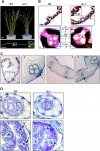
Fig 1.
sll1 has extremely incurved leaves, with deficiency of sclerenchymatous cells at the abaxial side
[1].
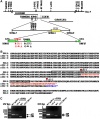
Fig 3. Map-based cloning of
SLL1, which encodes an MYB transcription factor
[1].
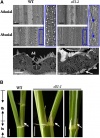
Fig 8.
Sll1 alters adaxial-abaxial pattern formation
[1].
SLL1 arrests normal sclerenchymatous cell formation and controls leaf rolling, controls the establishment of rice leaf polarity, and modulates ohotosynthesis by regulating cell fate [1].
To investigate the molecular mechanisms of rice leaf rolling, a rice mutant population (Oryza sativa L. ssp. japonica variety Nipponbare) generated by ethyl methanesulphonate mutagenesis was screened. Two allelic mutants with extremely incurved leaves were identified, designated as sll1-1 and sll1-2 (Fig. 1A ). sll1, a rice mutant with shallot-like Leaves, displays abnormal sclerenchymatous cell development in the abaxial cell layers, altered mesophyll cell distribution, increased amounts of chlorophyll, and enhanced photosynthesis.
Genetic analysis revealed that the abnormal character of sll1 was controlled by a single recessive gene. To isolate the relevant mutant gene, SLL1 was mapped to the long arm of rice chromosome 9 between markers RM1896 and RM3700. A large F2 mapping population was then generated, allowing the fine-mapping of SLL1 to a 29.57-kb region, using the sequence tagged site and simple sequence repeat markers (Fig. 3A). Three annotated candidate genes, encoding a hypothetical protein, an En/Spm-like transposon, and a transcription factor containing a MYB-like domain, respectively, were located in this region. Further amplification of the relevant DNA fragments and sequence comparison revealed differences in sll1-1 and sll1-2 alleles in the gene encoding the transcription factor containing the MYB-like domain. Comparison with the corresponding genomic sequence revealed that the SLL1 gene consists of six exons and five introns. The gene encodes a 377–amino acid MYB family transcription factor (Fig. 3B). Homologous analysis showed that SLL1 shares high similarity with the KANADI family members in Arabidopsis.
A distinguishing characteristic of the monocot leaf is that microhairs or ligules are present only at the adaxial surface. In sll1-1, the microhairs can be observed on both epidermal surfaces of some plants (Fig. 8A ), and the ligules exist on the abaxial side of the joint (Fig. 8B). This suggests an adaxialized trend in the abaxial epidermis of sll1-1 and indicates the involvement of SLL1 in the development of polarity throughout the leaf abaxial epidermis. SLL1 overexpression resulted in dwarf plants with twisted and abnormal inner rolled leaves. We also observed enlarged phloem in the midrib as well as large and small veins, revealing the enhanced abaxial features of leaves following SLL1 overexpression.
SLL1 affected developmental processes in multiple developmental stages, in accordance with its expression patterns. Aside from altered leaf morphology, other tissues, including seeds, anthers, and roots, displayed abnormal development in sll1 mutants (Fig. 10).
Expression
Quantitative real-time RT-PCR (qRT-PCR) analysis revealed the expression of SLL1 in various tissues, including roots, stems, leaves, flowers, and seedlings, with relatively high expression in leaf and seedlings (Fig. 5A , top panel). With an emphasis on the leaf, analysis by qRT-PCR showed that SLL1 is ubiquitously expressed in shoot apical meristem (SAM), leaf blade, or leaf sheath at different developmental stages (Figure 5A, bottom panel) [1].
To assess the expression pattern comprehensively, β-glucuronidase (GUS) activity was examined histochemically in transgenic plants carrying an SLL1 promoter-GUS reporter gene. Results showed that SLL1 was transcribed in stem (Fig. 5B, panels 1 and 2), anthers of young or mature flowers (Fig. 5B, panels 3 to 5), pistil tip (Fig. 5B, panel 6), glume (Fig. 5B, panel 7), vascular tissues of mature seeds (Fig. 5B, panels 8 and 9), coleoptile and embryonic root of germinating seedlings (Fig. 5B, panel 10), and root vascular tissues (Fig. 5B, panel 11). In addition, SLL1 is highly transcribed in leaf veins and leaf sheath (Fig. 5C, panels 1 to 3), guard cells, and tracheal elements (Fig. 5C, panels 4 and 5).
The spatial and temporal localization of SLL1 during leaf development was further examined by in situ hybridization analysis. The mRNA expression of SLL1 was detected throughout the young leaf primordium (plastochrons 1 to 3) and was more intense in abaxial cell layer through leaf development (plastochrons 4 and 5) (Fig. 5D, panel 2). However, the SLL1 transcript did not demonstrate apical/basal polarity and did not accumulate at the apex of the meristem (Fig.e 5D, panel 3). Cross-section analysis of the shoot apex showed that SLL1 was more highly expressed in the abaxial cell layer, including the epidermis and vasculature of the early leaf blade (Fig. 5D, panels 5 and 6). In the mature leaf, SLL1 mainly accumulated at the abaxial epidermis, abaxial mesophyll cells, and vasculature (Fig. 5D, panels 8 and 9). In contrast with the sense probe (Fig. 5D, panels 4 and 7), SLL1 was transcribed at a relatively low level throughout other leaf positions including the adaxial epidermis (Fig. 5D, panels 5 and 6).
Evolution
Labs working on this gene
- State Key Laboratory of Rice Biology, China National Rice Research Institute, Hangzhou 310006, Zhejiang, China
- National Key Laboratory of Plant Molecular Genetics, Institute of Plant Physiology and Ecology, Shanghai Institutes for Biological Sciences, Chinese Academy of Sciences, Shanghai 200032, China
References
- ↑ 1.0 1.1 1.2 1.3 1.4 Zhang GH, et al. (2009) SHALLOT-LIKE1 is a KANADI transcription factor that modulates rice leaf rolling by regulating leaf abaxial cell development. The Plant Cell Online 21: 719-735.
Structured Information


