|
|
| (16 intermediate revisions by the same user not shown) |
| Line 3: |
Line 3: |
| | ==Annotated Information== | | ==Annotated Information== |
| | ===Function=== | | ===Function=== |
| − | MADS6在功能上与B类基因SUPERWOMAN1/MADS16或C类基因MADS3冗余,确定了三轮和花分生组织。MADS6通过与D类基因MADS13相互作用来决定心皮/胚珠的发育,并和YABBY类基因DROOPING LEAF一起控制内稃和花分生组织。表达分析显示,在mads6-1突变体中, 在花发育早期,6个B-,C-,E-类基因的转录水平下降,表明MADS6是花发育早期的关键调节因子。此外,MADS6能直接与C类基因MADS8中调节基序相结合,mads6-1 mads58 双突变体的表型与mads6-1的表型相似。
| + | SPW1, namely OsMADS16, the seven exons and six introns, intron length respectively, 101, 204, 173, 448, 2168, 124 bp. In the mutant spw1-1, the first intron of the last 3 G mutation at nucleotide A; mutant spw1-2, the fifth intron 1 G mutation at nucleotide A (Nagasawa et al ., 2003). OsMADS16 product contains 225 amino acids, containing MADS box (Xiao et al., 2003). |
| − | | + | SPW1 ABC model of floral organ development belongs in the class B genes homologous with AP3/DEF, from floral organs to determine the function of rice paddles and stamens attributes (Nagasawa et al, 2003;. Xiao et al, 2003.). SPW1 existence of mutual antagonism with the DL, and stamens and carpels attributes common control (Nagasawa et al., 2003). |
| − | ===Expression===
| + | MADS6 on gene function and class B or class C gene MADS3 SUPERWOMAN1/MADS16 redundancy, identified three and floral meristem. MADS6 genes by interacting with class D MADS13 to determine carpel / ovule development, and together YABBY DROOPING LEAF genes control palea and floral meristem. Expression analysis showed mads6-1 mutant, in the early stage of flower development, six B-, C-, E-class gene transcript levels decreased, indicating that the key MADS6 early flower development regulator. Furthermore, MADS6 gene MADS8 with Class C motif directly modulating combined phenotype mads6-1 mads58 double mutant phenotype mads6-1 is similar. SPW1, control and development of rice floral organs, mutations of this gene cause abnormal rice floral organs. |
| − | Please input expression information here.
| |
| | | | |
| | ===Evolution=== | | ===Evolution=== |
| − | Please input evolution information here.
| + | MADS6 on gene function and class B or class C gene MADS3 SUPERWOMAN1/MADS16 redundancy, identified three and floral meristem. MADS6 genes by interacting with class D MADS13 to determine carpel / ovule development, and together YABBY DROOPING LEAF genes control palea and floral meristem. Expression analysis showed mads6-1 mutant, in the early stage of flower development, six B-, C-, E-class gene transcript levels decreased, indicating that the key MADS6 early flower development regulator. Furthermore, MADS6 gene MADS8 with Class C motif directly modulating combined phenotype mads6-1 mads58 double mutant phenotype mads6-1 is similar. SPW1, control and development of rice floral organs, mutations of this gene cause abnormal rice floral organs. |
| − | | |
| − | You can also add sub-section(s) at will.
| |
| | | | |
| − | ==Labs working on this gene==
| |
| − | Please input related labs here.
| |
| | | | |
| − | ==References==
| |
| − | Please input cited references here.
| |
| | | | |
| − | ==Structured Information==
| + | [[File:QQ截图20140609160851.png]] |
| − | {{JaponicaGene|
| |
| − | GeneName = Os06g0712700|
| |
| − | Description = MADS-box protein SPW1|
| |
| − | Version = NM_001065095.1 GI:115469921 GeneID:4342047|
| |
| − | Length = 4370 bp|
| |
| − | Definition = Oryza sativa Japonica Group Os06g0712700, complete gene.|
| |
| − | Source = Oryza sativa Japonica Group
| |
| | | | |
| − | ORGANISM Oryza sativa Japonica Group
| + | ==Labs working on this gene== |
| − | Eukaryota; Viridiplantae; Streptophyta; Embryophyta; Tracheophyta;
| + | Haifeng Li;Wanqi Liang;Yun Hua;Lu Zhu;Changsong Yin;Jie Xu;Ludovico Dreni;Martin M. Kater;Dabing Zhang |
| − | Spermatophyta; Magnoliophyta; Liliopsida; Poales; Poaceae; BEP
| + | Rice MADS6 Interacts with the Floral Homeotic Genes SUPERWOMAN1, MADS3, MADS58, MADS13, and DROOPING LEAF in Specifying Floral Organ Identities and Meristem Fate |
| − | clade; Ehrhartoideae; Oryzeae; Oryza.
| + | The Plant Cell, 2011, 23(7): 2536-2552 |
| − | |
| |
| − | Chromosome = [[:category:Japonica Chromosome 6|Chromosome 6]]|
| |
| − | AP = Chromosome 6:31050629..31054998|
| |
| − | CDS = 31050947..31051117,31051241..31051285,31053404..31053445,31053894..31053991,31054161..31054224<br>,31054429..31054495,31054597..31054784|
| |
| − | GCID = <gbrowseImage1>
| |
| − | name=NC_008399:31050629..31054998
| |
| − | source=RiceChromosome06
| |
| − | preset=GeneLocation
| |
| − | </gbrowseImage1>|
| |
| − | GSID = <gbrowseImage2>
| |
| − | name=NC_008399:31050629..31054998
| |
| − | source=RiceChromosome06
| |
| − | preset=GeneLocation
| |
| − | </gbrowseImage2>|
| |
| − | CDNA = <cdnaseq>atggggaggggcaagatcgagatcaagcggatcgagaacgcgaccaacaggcaggtgacctactcgaagcgccgcacggggatcatgaagaaggccagggagctcaccgtgctctgcgacgcccaggtcgccatcatcatgttctcctccaccggcaagtaccacgagttctgcagcccttccaccgacatcaaggggatctttgaccgctaccagcaagccatcggcaccagcctttggatcgagcagtatgagaatatgcagcgcacgctgagccatctcaaggacatcaaccgcaacctgcgcaccgagatcaggcaaaggatgggagaagatctggacgggctggagttcgacgagctgcgcggtcttgagcaaaatgtcgatgccgccctcaaggaggttcgccacaggaagtatcatgtgatcaccacacagactgaaacctacaagaaaaaggtgaagcactcctacgaggcgtacgagactctgcagcaggagctggggttgcgcgaggagccggcgttcgggttcgtggacaacaccggcggcgggtgggacggcggcgccggcgccggcgcggcggcggacatgttcgccttccgcgtggtgcccagccagcccaacctgcacggcatggcctacggcggcaaccacgacctgcgcctcggttga</cdnaseq>|
| |
| − | AA = <aaseq>MGRGKIEIKRIENATNRQVTYSKRRTGIMKKARELTVLCDAQVA IIMFSSTGKYHEFCSPSTDIKGIFDRYQQAIGTSLWIEQYENMQRTLSHLKDINRNLR TEIRQRMGEDLDGLEFDELRGLEQNVDAALKEVRHRKYHVITTQTETYKKKVKHSYEA YETLQQELGLREEPAFGFVDNTGGGWDGGAGAGAAADMFAFRVVPSQPNLHGMAYGGN HDLRLG</aaseq>|
| |
| − | DNA = <dnaseqindica>3882..4052#3714..3758#1554..1595#1008..1105#775..838#504..570#215..402#gagttgggaatccgttgctgtcgtacgtctcgtctatggcgtgctgtatgtcctctccttctttcttcctttccaaataagcactcctcttcttcctcctcctcctcctccgcctcctcttctcattcccaactcatcgatccatcagtagctagctagctagctagctagctgcattgtccggcgagagagatagctgctgcagggggcggccatggggaggggcaagatcgagatcaagcggatcgagaacgcgaccaacaggcaggtgacctactcgaagcgccgcacggggatcatgaagaaggccagggagctcaccgtgctctgcgacgcccaggtcgccatcatcatgttctcctccaccggcaagtaccacgagttctgcagcccttccaccgagtctgtatctccatctccacttcgactctatgatcttctccatcctgattatactatatatataactgcatcatatcgatcttaattgcatcctgctgcagcatcaaggggatctttgaccgctaccagcaagccatcggcaccagcctttggatcgagcagtatgaggttgatttgtttaatttcttcctttcttcccctccgctagctgcaaccaagctgctcacttcgattctctccttatgatttgttttctcatcttttgctcgattcgtcttctcaattttcactccagtttctttcctttaattctatgtcccaactctcttctgctcgttaattggtttggtttggtttgttttcatccatcagaatatgcagcgcacgctgagccatctcaaggacatcaaccgcaacctgcgcaccgagatcaggccagcacaaatttcacccctttaattactttcctctcttctccttaattaatccctcttagtatatagttactgggggattttagcttgaacaagagatccaaatttacaacgtttttcaagatatgtactgctggatctgaatataaacaaccatacgtgtgtgcaggcaaaggatgggagaagatctggacgggctggagttcgacgagctgcgcggtcttgagcaaaatgtcgatgccgccctcaaggaggttcgccacaggaaggcatgcacgcacgcacgccctaattaaactacgaaccctaatttgctcaatactaaaacgtcgttcaattccttaattcaagggtggtagatccttgtattttgtgcacactagatctacggttcatgatcagatccgtgcatatttcatgcttctcgctacagatctacgagtttcttgaacccttcttggcttcttgcatgtgtggaaattatattgatggtttttaatttggcctcggttgcttgctcgtattaaacaagataattttaaggtttatgctttatagaaacataatttatgtgtactattgttttatcttacaactagtaggatgtatgctcattgatctattggactgtaacatattaaactttctgcttcatgtatcctagccttttaatttgtttcagttttctcatgattaattcggttttaatttctgcagtatcatgtgatcaccacacagactgaaacctacaagaaaaaggtcaggaataagccatgcccattttctcagtatttgtttctggttaaatttatatatatatatatatatatatatatatatatatatatatatatatatatatataccaccaattttattccttcctcttgaaactgttggctataggtgtacatctactgtggattttattccttcccttggaagctgttgactatgtgtgcatctcttgtggatatataggccggatttaatcaatccattatcttaaaaaaaatactgccaatattatgcctaataatgcagcaatattagtatatatatgtatgttcttctggtgcagtaataagggtatatctagatatctgcacaagcctatataagtgtatatttatcttccccaattccttactttaattgcttcacttttgtggccaccatcactgcttaaatttgcttagtttggccaataagttcgcacttgcagtgtcgtctatgttcacatgtctttctgaagagctatatgctatccctttgattgtacgttgttcacatttttcctgacgatattaagttcctccgggtaaaatatacattgatcccgtgaactaaattgcactcacccaataacctgcattttgccttattgcgtgctaatttagccatatacatagccatggatctcccagtttctgtacttgaacagtcgaagctagctaagctagcccttgaatcgatcaaaagccaaaataaaagatctgacaagcaccatgacgcctctcaaccgaaacatgcatgctaatgtacagtgtgcattaccatgcgtgtctgtgcatttccatactatctacacatcaatatatttgatcgaggctacctgatctacacatctagtctaagctatacacatagccatcagtagatgtacatcgatgttaattggagcatgcattgtcatgtgcattcctatacattacatgatgaacaacgcacgcaatataatgcgatctgcgatgcagttttctctgtcttttttgcaagctagaactcatgacaaacagcaaaggacagtagtatgaattgggcatgtatctgcatatatatgcgtatatgtatctcctgttaagcaaacaactaagccaggatcggtagctatataaactagctgtacctagagacgatgaagcatgcatgcttattttggtcccccggctatttaggagagtagcatgtcaaacacggatttttatgagagattgcatcgcggcgtgataccttttggtagataagggacggcattgaggctttatgatttgcaagaatttggaaaccaaaccattacggccgctggcttactgaatctttagtggggtgtactactaattaattactcagcttgaacaaccgagcaaaagcgaatacttttgactttacattcaatcgactttaatagggagtactctttgttcattgttttgtagttttacctgcggttagctggtcagaattaaacatatatatatatatatatatatatatatatatatatatatatatatatatgtagctgaataagtaattcattgcatcgaggggattgttaaccattcatgcatatctaactgtgttgtcggctgaggtgaaaattaaccagttcaagcatgcatgttggcatatagtataagctagcacatcacaaattcacaatcaccttcaagtgtttaatttcgctgcattagctactcctttggtcttgttacgtgagagagctgacagagagtagtgtataaactctgaacaaagaactgcactttgatatggagctagctagaagatgactttgaatctgtatatatatctttgtcattgtgatatgggagaggataacttgcttaaattttatgtgagtgactgttcatagaaataaacttgacgattgtttcttgtgtgctatagcatgctgtccgaagatgcaaacatgtatatatacacattgcagtgacactctacttttacttgcacacatatgctggaccctgtgtctatacatgcatgcacatgatataatttgtctgtctatagctaatagagattggtttctacattaattgatccggtgtgtgcatgcatataatgcaggtgaagcactcctacgaggcgtacgagactctgcagcaggagctggtaacctatcaagcatttttttttcagttatagccagaaaattatttgttaattagtttctccaatgcaggctagctaatttgattgaactctactgttggatgaatgtttgaattaattcaggggttgcgcgaggagccggcgttcgggttcgtggacaacaccggcggcgggtgggacggcggcgccggcgccggcgcggcggcggacatgttcgccttccgcgtggtgcccagccagcccaacctgcacggcatggcctacggcggcaaccacgacctgcgcctcggttgatatatcatcgccgccgccgccgccgccgccggcggcctgctcgtcgccggccggccggccgccggacaccgtatcatcgctcgatctagataacaagccgacgaataaattgcagtgctcgtgttacttacctgcatgcgcatgcattattatcgatcaacgcaagaacttcatttcatttaccaaaccacttgatgtgtgctatgatccagcggttaaaccgtgtgttgtctcttgacattttgtaccagttactgatgatgttgtattatgtatgcgtggtgtgcaactgtgcttggataatttcacacttatttg</dnaseqindica>|
| |
| − | Link = [http://www.ncbi.nlm.nih.gov/nuccore/NM_001065095.1 RefSeq:Os06g0712700]|
| |
| − | }}
| |
| − | [[Category:Genes]]
| |
| − | [[Category:Japonica mRNA]]
| |
| − | [[Category:Oryza Sativa Japonica Group]]
| |
| − | [[Category:Japonica Genes]]
| |
| − | [[Category:Japonica Chromosome 6]]
| |
| − | [[Category:Chromosome 6]]
| |
Please input one-sentence summary here.
Annotated Information
Function
SPW1, namely OsMADS16, the seven exons and six introns, intron length respectively, 101, 204, 173, 448, 2168, 124 bp. In the mutant spw1-1, the first intron of the last 3 G mutation at nucleotide A; mutant spw1-2, the fifth intron 1 G mutation at nucleotide A (Nagasawa et al ., 2003). OsMADS16 product contains 225 amino acids, containing MADS box (Xiao et al., 2003).
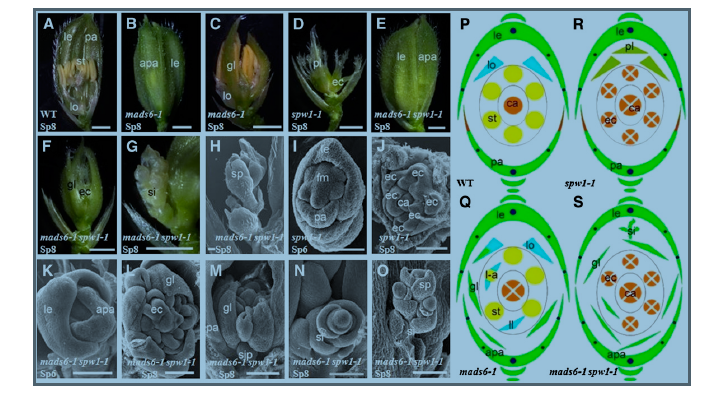
SPW1 ABC model of floral organ development belongs in the class B genes homologous with AP3/DEF, from floral organs to determine the function of rice paddles and stamens attributes (Nagasawa et al, 2003;. Xiao et al, 2003.). SPW1 existence of mutual antagonism with the DL, and stamens and carpels attributes common control (Nagasawa et al., 2003).
MADS6 on gene function and class B or class C gene MADS3 SUPERWOMAN1/MADS16 redundancy, identified three and floral meristem. MADS6 genes by interacting with class D MADS13 to determine carpel / ovule development, and together YABBY DROOPING LEAF genes control palea and floral meristem. Expression analysis showed mads6-1 mutant, in the early stage of flower development, six B-, C-, E-class gene transcript levels decreased, indicating that the key MADS6 early flower development regulator. Furthermore, MADS6 gene MADS8 with Class C motif directly modulating combined phenotype mads6-1 mads58 double mutant phenotype mads6-1 is similar. SPW1, control and development of rice floral organs, mutations of this gene cause abnormal rice floral organs.
Evolution
MADS6 on gene function and class B or class C gene MADS3 SUPERWOMAN1/MADS16 redundancy, identified three and floral meristem. MADS6 genes by interacting with class D MADS13 to determine carpel / ovule development, and together YABBY DROOPING LEAF genes control palea and floral meristem. Expression analysis showed mads6-1 mutant, in the early stage of flower development, six B-, C-, E-class gene transcript levels decreased, indicating that the key MADS6 early flower development regulator. Furthermore, MADS6 gene MADS8 with Class C motif directly modulating combined phenotype mads6-1 mads58 double mutant phenotype mads6-1 is similar. SPW1, control and development of rice floral organs, mutations of this gene cause abnormal rice floral organs.
Labs working on this gene
Haifeng Li;Wanqi Liang;Yun Hua;Lu Zhu;Changsong Yin;Jie Xu;Ludovico Dreni;Martin M. Kater;Dabing Zhang
 Rice MADS6 Interacts with the Floral Homeotic Genes SUPERWOMAN1, MADS3, MADS58, MADS13, and DROOPING LEAF in Specifying Floral Organ Identities and Meristem Fate
 The Plant Cell, 2011, 23(7): 2536-2552


