|
|
| Line 75: |
Line 75: |
| | | | |
| | ==Structured Information== | | ==Structured Information== |
| − | {{JaponicaGene|
| + | [[Category:Genes]][[Category:Oryza Sativa Japonica Group]][[Category:Japonica Chromosome 1]] |
| − | GeneName = Os01g0940000|
| |
| − | Description = FAD linked oxidase, N-terminal domain containing protein|
| |
| − | Version = NM_001051888.1 GI:115442146 GeneID:4326515|
| |
| − | Length = 2781 bp|
| |
| − | Definition = Oryza sativa Japonica Group Os01g0940000, complete gene.|
| |
| − | Source = Oryza sativa Japonica Group
| |
| − | | |
| − | ORGANISM Oryza sativa Japonica Group
| |
| − | Eukaryota; Viridiplantae; Streptophyta; Embryophyta; Tracheophyta;
| |
| − | Spermatophyta; Magnoliophyta; Liliopsida; Poales; Poaceae; BEP
| |
| − | clade; Ehrhartoideae; Oryzeae; Oryza.
| |
| − | |
| |
| − | Chromosome = [[:category:Japonica Chromosome 1|Chromosome 1]]|
| |
| − | AP = Chromosome 1:43095050..43097830|
| |
| − | CDS = 43095276..43095888,43096010..43096137,43096247..43096507,43096642..43096904,43096995..43097319<br>|
| |
| − | GCID = <gbrowseImage1>
| |
| − | name=NC_008394:43095050..43097830
| |
| − | source=RiceChromosome01
| |
| − | preset=GeneLocation
| |
| − | </gbrowseImage1>|
| |
| − | GSID = <gbrowseImage2>
| |
| − | name=NC_008394:43095050..43097830
| |
| − | source=RiceChromosome01
| |
| − | preset=GeneLocation
| |
| − | </gbrowseImage2>|
| |
| − | CDNA = <cdnaseq>atgcggggagccatgaagccgtcgatcgtgcactgcctcaagctgctcatgctgctggcgctcggcggggtcaccatgcacgtccccgacgaggacgacgtggtcgcgtcgctcggggcgctgcgcctcgacggccatttcagcttcgacgacgcccacgccgccgcccgggacttcggcaaccggtgcagcctcctgccggcggccgtgctccaccctggctcggtgtccgacgtcgccgccaccgtcaggcgcgtgttccagctgggcaggagctcgccgctcaccgtcgcggcgcgcgggcacggccactcgctcctcggccagtcccaggccgccggcgggatcgtcgtcaagatggagtccctcgccgccgccgcagccagggcggtgcgggtgcacggcggcgcgtcgccccacgtggacgccccgggcggcgagctctggatcaacgtgctgcatgagacgctcaagcacgggctggcgcccaggtcatggaccgactacctccatctcacagtcggtggcaccttgtcgaatgcgggggtcagcgggcaggcgttccggcatggaccgcaggtcagcaatgtcaaccaactggagattgtgacagggaggggagaagttgtcacctgctcgcacgaggtgaactctgatctcttctacgctgctcttggcggcctgggccagtttgggatcatcaccagggctcggattgctcttgaacctgctccaaagatggtgcggtggatacgtgttctctactcggactttgagaccttcaccgaggaccaggagaagctgatcgcgtctgagaagaccttcgactacatcgaagggtttgtgatcataaacaggacaggcatcctcaacaactggaggacgtcgttcaagccacaggacccagtgcaggcaagccagttccagtcggatggaagagtgctatactgccttgagctgacgatgaacttcaaccacgatgaggctgacatcatggaacaggaagttggtgcgctgctatctcgactcagatacatatcgtccactctattctacaccgatgtcacatacctggagttcttggacagggtgcacacttctgagctgaagctgagggctcaaggcctctgggaagtcccacacccgtggctgaatcttctgatcccaaggagcacagtccacaaatttgcaaaggaagtcttcggcaagatcctaaaagatagcaacaatggtcccatactgctttacccagtgaacagaaccaagtgggacaacagaacatcagtggtcataccagatgaagaaattttctacctggttgggttcctatcttcagcaccatcatcctcaggtcatggtagtgtcgaacatgcaatgaacctgaacaacaaaatagtggacttctgtgaaaagaatggtgttgggatgaaacagtatctagcaccctacactacacagaagcagtggaaagcccacttcggagcaaggtgggagacatttgaacggaggaaacacacgtacgatcccctagcaatcctagctccagggcagagaatatttccaaaggcatcactacctatgtccttgtga</cdnaseq>|
| |
| − | AA = <aaseq>MRGAMKPSIVHCLKLLMLLALGGVTMHVPDEDDVVASLGALRLD GHFSFDDAHAAARDFGNRCSLLPAAVLHPGSVSDVAATVRRVFQLGRSSPLTVAARGH GHSLLGQSQAAGGIVVKMESLAAAAARAVRVHGGASPHVDAPGGELWINVLHETLKHG LAPRSWTDYLHLTVGGTLSNAGVSGQAFRHGPQVSNVNQLEIVTGRGEVVTCSHEVNS DLFYAALGGLGQFGIITRARIALEPAPKMVRWIRVLYSDFETFTEDQEKLIASEKTFD YIEGFVIINRTGILNNWRTSFKPQDPVQASQFQSDGRVLYCLELTMNFNHDEADIMEQ EVGALLSRLRYISSTLFYTDVTYLEFLDRVHTSELKLRAQGLWEVPHPWLNLLIPRST VHKFAKEVFGKILKDSNNGPILLYPVNRTKWDNRTSVVIPDEEIFYLVGFLSSAPSSS GHGSVEHAMNLNNKIVDFCEKNGVGMKQYLAPYTTQKQWKAHFGARWETFERRKHTYD PLAILAPGQRIFPKASLPMSL</aaseq>|
| |
| − | DNA = <dnaseqindica>227..839#961..1088#1198..1458#1593..1855#1946..2270#cctccccttacctaccttggtggcctcctctcgctctcgctctccttctcttcctgcacctgttgcacccccaacaactctcactcactgccagtgtcaagcaagattatacagcttggtctcatctcttaattccaagcttgtttcaccgacctgccaaactcgattgatccacagatagatagtacttctggttgggatcttgagcttatatagaccaggaagcatgcggggagccatgaagccgtcgatcgtgcactgcctcaagctgctcatgctgctggcgctcggcggggtcaccatgcacgtccccgacgaggacgacgtggtcgcgtcgctcggggcgctgcgcctcgacggccatttcagcttcgacgacgcccacgccgccgcccgggacttcggcaaccggtgcagcctcctgccggcggccgtgctccaccctggctcggtgtccgacgtcgccgccaccgtcaggcgcgtgttccagctgggcaggagctcgccgctcaccgtcgcggcgcgcgggcacggccactcgctcctcggccagtcccaggccgccggcgggatcgtcgtcaagatggagtccctcgccgccgccgcagccagggcggtgcgggtgcacggcggcgcgtcgccccacgtggacgccccgggcggcgagctctggatcaacgtgctgcatgagacgctcaagcacgggctggcgcccaggtcatggaccgactacctccatctcacagtcggtggcaccttgtcgaatgcgggggtcagcgggcaggcgttccggcatggaccgcaggtcagcaatgtcaaccaactggagattgtgacaggtctctgacaaacccgccacgcacgataaaaacatatacagccgctctaatactactactacaacaacagcataggaattagatgactaaatttgttcttgctatgaactaccaaatgcagggaggggagaagttgtcacctgctcgcacgaggtgaactctgatctcttctacgctgctcttggcggcctgggccagtttgggatcatcaccagggctcggattgctcttgaacctgctccaaagatggtaacatcaagcaatcaattttgtgtcaactcaatgatggaaaaactggccattatttgattcgtttcattggtgcatgttcacgtactaattagatatacaatgacaggtgcggtggatacgtgttctctactcggactttgagaccttcaccgaggaccaggagaagctgatcgcgtctgagaagaccttcgactacatcgaagggtttgtgatcataaacaggacaggcatcctcaacaactggaggacgtcgttcaagccacaggacccagtgcaggcaagccagttccagtcggatggaagagtgctatactgccttgagctgacgatgaacttcaaccacgatgaggctgacatcatggaacaggtgagctgagttaattattttctctttgcatcaagatgttgacgtatcaggaaatatatatataggatattagatagcccaggccgtgcaggtgttttttaattaatggttggtgtttgtatatgtatttacaggaagttggtgcgctgctatctcgactcagatacatatcgtccactctattctacaccgatgtcacatacctggagttcttggacagggtgcacacttctgagctgaagctgagggctcaaggcctctgggaagtcccacacccgtggctgaatcttctgatcccaaggagcacagtccacaaatttgcaaaggaagtcttcggcaagatcctaaaagatagcaacaatggtcccatactgctttacccagtgaacagaaccaagtaaatataactagccaaattgcagtcctatactatactatccagtttcaagttttggtaactaaaaaaagtttaacatggttgatgcaggtgggacaacagaacatcagtggtcataccagatgaagaaattttctacctggttgggttcctatcttcagcaccatcatcctcaggtcatggtagtgtcgaacatgcaatgaacctgaacaacaaaatagtggacttctgtgaaaagaatggtgttgggatgaaacagtatctagcaccctacactacacagaagcagtggaaagcccacttcggagcaaggtgggagacatttgaacggaggaaacacacgtacgatcccctagcaatcctagctccagggcagagaatatttccaaaggcatcactacctatgtccttgtgacagtatatgctgtgaaaaggcttttgtagagcatatgttgtacaaaaatgtagcgaaaatatcctttgtaaagacgaaatctacggaaggtagcttaaagaacacagcggggcaaccagtagactagaactcaagaagtagtggaagatacctcacaaaagacttcaaagcaaagcagcgtggccttaactctggttgcagctttggaggcaaatgattggaggattacagtggtcctagcaactgaagtccagctgttgttacagcatagagaagagctgtgctacctcaatgatcactaaatcactgactagtgtaactcatgttaagttgtttgtgttcagctaacaacactgcagaaggtagcatcagggtagacccttgattagcaaataacacagcctgttgcatgtgagtactatctgcataaatgcagcagattacattagtttttatgaatcgaatgttatgtttgcaaatgttaaagaaaaaaacagcaaagtttcttatt</dnaseqindica>|
| |
| − | Link = [http://www.ncbi.nlm.nih.gov/nuccore/NM_001051888.1 RefSeq:Os01g0940000]|
| |
| − | }}
| |
| − | [[Category:Genes]] | |
| − | [[Category:Japonica mRNA]]
| |
| − | [[Category:Oryza Sativa Japonica Group]] | |
| − | [[Category:Japonica Genes]] | |
| − | [[Category:Japonica Chromosome 1]]
| |
| − | [[Category:Chromosome 1]]
| |
Latest revision as of 05:08, 14 May 2015
OsCKX4(ren1-D),funtion as cytokinin oxidase/dehydrogenases, integrates cytokinin and auxin
signaling to control rice crown root formation.
Annotated Information
Function
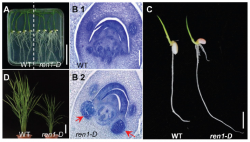
Phenotypes of the ren1-D mutant[1]). OsCKX4 is induced by
exogenous auxin and cytokinin in the roots. Furthermore, one-hybrid assays revealed that OsCKX4
is a direct binding target of both auxin response factor OsARF25 and the cytokinin response
regulators ORR2 and ORR3. Overexpression and RNAi of OsCKX4 confirmed that OsCKX4 plays
a positive role in crown root formation. Moreover, expression analysis revealed a significant
alteration in the expression of auxin-related genes in the ren1-D mutants, indicating that the
OsCKX4 mediates crown root development by integrating the interaction between cytokinin and
auxin. Transgenic plants harboring OsCKX4 under the control of a root-specific promoter RCc3
displayed enhanced root development without affecting their shoot parts, suggesting that this
strategy could be a powerful tool in rice root engineering[1].
Expression
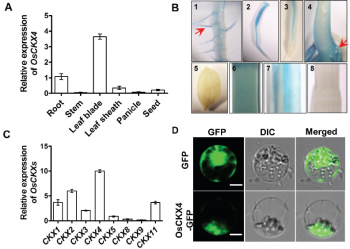
Expression pattern of OsCKX4 and subcellular localization of OsCKX4.[1]). qRT-PCR tests indicate OsCKX4 was predominantly expressed in leaf blades and roots, but hardly detected in stems and
panicles(Fig. 2A).
OsCKX4 promoter:GUS cassette showed that GUS was detected in the primary roots, lateral roots,
and crown roots(Fig. 2B-1, 2, 3)..GUS was observed to be strongest at the base of
shoots where crown root primordia were formed (Fig. 2B-4). Apart from roots, GUS activity was
detected at a relatively high level in mature leaf sheaths (Fig. 2B-6) and mature leaf blades (Fig.
2B-7), suggesting that OsCKX4 might also play a role in regulating other aspects of plant
development[1].
Evolution
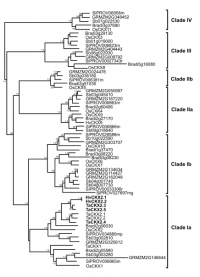
Phylogenetic tree of all 66 full-length cytokinin oxidase ⁄ dehydrogenases 2 (CKX2) family members from rice, brachypodium, sorghum, maize and foxtail millet, as well as full-length members from wheat and barley.[2]). a total of 66 full-length cereal CKX
proteins originating from rice (11 members),
brachypodium (11), sorghum (11), foxtail millet (11), maize
(12), wheat (six) and barley (four) were analysed. CKX proteins from
sequenced grasses grouped into four major phylogenetic clusters,
with clades I and II each divided into two subclades. The
seven full-length wheat ⁄ barley CKX2 proteins are found within
clade Ia, with TaCKX2.3 clustering with HvCKX2.1 and
HvCKX2.2, while TaCKX2.1 and TaCKX2.2 group separately.
The occurrence of two or more CKX2 paralogs is specific to the
Triticeae. The overall tree topography of CKX2 proteins agrees
with established evolutionary relationships between the grass
species investigated, with those from the Poideae (wheat, barley,
brachypodium) clustering together, followed by members
from the Ehrhartoideae (rice) and Panicoideae (foxtail millet,
sorghum and maize). CKX1 proteins from all five sequenced
grasses cluster within the second major phylogenetic grouping
within clade Ia, supporting their close evolutionary relationship
with the CKX2 proteins (as implied by their physical proximity
to each other in the five sequenced grass species investigated).
Clade Ib includes orthologs of OsCKX6 and OsCKX7, as well as OsCKX10 orthologs. CKX4 and CKX9 proteins group within
clade IIa. Clades III and IV contain two (CKX3, CKX8) and one
(CKX11) CKX family member, respectively. Phylogenetic analysis
of barley and wheat CKX members for which only partial protein
sequence data were available showed all members to
group within the expected clades[2]
You can also add sub-section(s) at will.
Labs working on this gene
chengcai chu. Institute of Genetics and Developmental Biology, Chinese Academy of Sciences; http://chulab.genetics.ac.cn
References
- ↑ 1.0 1.1 1.2 1.3
Gao, S., Fang, J., Xu, F., Wang, W., Sun, X., Chu, J., ... & Chu, C. (2014). A cytokinin oxidase/dehydrogenase gene OsCKX4 integrates cytokinin and auxin signaling to control rice crown root formation. Plant physiology, pp-114.
- ↑ 2.0 2.1 Cite error: Invalid
<ref> tag;
no text was provided for refs named ref2
Structured Information


