|
|
| Line 49: |
Line 49: |
| | | | |
| | ==Structured Information== | | ==Structured Information== |
| − | {{JaponicaGene|
| |
| − | GeneName = Os09g0452200|
| |
| − | Description = Similar to LysM-domain GPI-anchored protein 1 precursor. Splice isoform 2|
| |
| − | Version = NM_001069870.1 GI:115479482 GeneID:4347230|
| |
| − | Length = 3597 bp|
| |
| − | Definition = Oryza sativa Japonica Group Os09g0452200, complete gene.|
| |
| − | Source = Oryza sativa Japonica Group
| |
| | | | |
| − | ORGANISM Oryza sativa Japonica Group
| |
| − | Eukaryota; Viridiplantae; Streptophyta; Embryophyta; Tracheophyta;
| |
| − | Spermatophyta; Magnoliophyta; Liliopsida; Poales; Poaceae; BEP
| |
| − | clade; Ehrhartoideae; Oryzeae; Oryza.
| |
| − | |
| |
| − | Chromosome = [[:category:Japonica Chromosome 9|Chromosome 9]]|
| |
| − | AP = Chromosome 9:17612255..17615851|
| |
| − | CDS = 17612437..17613100,17614647..17614764,17614895..17615059,17615173..17615204,17615292..17615518<br>|
| |
| − | GCID = <gbrowseImage1>
| |
| − | name=NC_008402:17612255..17615851
| |
| − | source=RiceChromosome09
| |
| − | preset=GeneLocation
| |
| − | </gbrowseImage1>|
| |
| − | GSID = <gbrowseImage2>
| |
| − | name=NC_008402:17612255..17615851
| |
| − | source=RiceChromosome09
| |
| − | preset=GeneLocation
| |
| − | </gbrowseImage2>|
| |
| − | CDNA = <cdnaseq>atgccaccacccttgctcctcctcctcctcctcgccgccgccgccgccgccgtcgcgcccgcgcggtccaagtcgacgctggagtcctgctcctcttccaccgcctgcccagcgctgctctcctacacgctctacgccgacctcaagctcgccgagctggccgcgctcttctccgccgacccgctcgccatcctcgccgccaactccatcgacttcgccgtcccggaccccgccgaccgcatcctccccgcggggctcccgctccgcgtgcccgtcccctgcgcctgctccgacggcatccgcagggtcaccaccgtgcgctacgttgcgcgcccgggcgacacgctcgcctccgtcgcctcctccgtctacggcggcctcaccaccccggactggatcagcgactccaacggcatcctcggcgccaagcccgacgccgccgtcgacgccgggacgactctgttcgtgccgctgcactgcgcctgcttcggcggcgtcgacaacggcctccccgcggtgtacctcacgtacgtcgccgggaagggggacaccgtcgccgcagtcgcgcagaggtaccggaccacggccaccgacctcatgagcgtcaacgacatggccacccccgagctcgccgccggtgacatcatcgtcgtcccgctgccagcgtgcacatcatcattcccggcgttcacggcggactacggcctggcggtggcgaacgggacctacgcagttactgccaaccggtgtgtccagtgcagctgtggcccaggcaacttggacctgttctgcgtgccggcgccgctcgccgactcgacgtgctccagcatgcagtgcgccaacagcagcatgatgctcggcaacttcactctcctcatgaccagctccggctgcagcgtcacgtcctgcagctacggcggattcgtgaacggcacaattctcaccacgttaaccacagcactcaagcctcaatgcccaggtccgcatcagtatcctccgctgattccgccgccgacgtcgtccttcttcgagacgtacctcggcccttcgccgacgccgatggcatccgaaggaggcgtcatggccggcatggcgccgacgagcaccccggcggcgagctccggccctcctccggccggccggcacgtcgtcggcgacgttcttggggcgttcgctctctgcctcgtcggcaacctgctgtggtaa</cdnaseq>|
| |
| − | AA = <aaseq>MPPPLLLLLLLAAAAAAVAPARSKSTLESCSSSTACPALLSYTL YADLKLAELAALFSADPLAILAANSIDFAVPDPADRILPAGLPLRVPVPCACSDGIRR VTTVRYVARPGDTLASVASSVYGGLTTPDWISDSNGILGAKPDAAVDAGTTLFVPLHC ACFGGVDNGLPAVYLTYVAGKGDTVAAVAQRYRTTATDLMSVNDMATPELAAGDIIVV PLPACTSSFPAFTADYGLAVANGTYAVTANRCVQCSCGPGNLDLFCVPAPLADSTCSS MQCANSSMMLGNFTLLMTSSGCSVTSCSYGGFVNGTILTTLTTALKPQCPGPHQYPPL IPPPTSSFFETYLGPSPTPMASEGGVMAGMAPTSTPAASSGPPPAGRHVVGDVLGAFA LCLVGNLLW</aaseq>|
| |
| − | DNA = <dnaseqindica>183..846#2393..2510#2641..2805#2919..2950#3038..3264#atgtgatcccaggtctgcagttctgcacagccgaacacaagatccaaaaccccccgcacgctttccaaagcaaagcactctctcgacatcgccccactccaggtcaacagtctccactctcactggctcgcagtcgcacacactcccacgcctccgcgctcccgaccaccgtcgccatcatcatgccaccacccttgctcctcctcctcctcctcgccgccgccgccgccgccgtcgcgcccgcgcggtccaagtcgacgctggagtcctgctcctcttccaccgcctgcccagcgctgctctcctacacgctctacgccgacctcaagctcgccgagctggccgcgctcttctccgccgacccgctcgccatcctcgccgccaactccatcgacttcgccgtcccggaccccgccgaccgcatcctccccgcggggctcccgctccgcgtgcccgtcccctgcgcctgctccgacggcatccgcagggtcaccaccgtgcgctacgttgcgcgcccgggcgacacgctcgcctccgtcgcctcctccgtctacggcggcctcaccaccccggactggatcagcgactccaacggcatcctcggcgccaagcccgacgccgccgtcgacgccgggacgactctgttcgtgccgctgcactgcgcctgcttcggcggcgtcgacaacggcctccccgcggtgtacctcacgtacgtcgccgggaagggggacaccgtcgccgcagtcgcgcagaggtaccggaccacggccaccgacctcatgagcgtcaacgacatggccacccccgagctcgccgccggtgacatcatcgtcgtcccgctgccaggtgagcccttttctagcttcaattcatagcttcttcttggatctggtagtttttggttttgttgctttgtgctaccgagatgtattgcgtggttcgttggtaattagatccatggccatgggtggttaaccgacaaatttggttggtaattttactccatactcagtaagaagtagcagtaggagtactatactgacagtaatgtgattagtctagtgtgtccttggtaatttagtgcaatgcagtaaccgcactggccacaagccttgctactgcgagcatgagatttactccgaattctggatacgggcatgtgcagatttgtagtactagaatgcgtctaatccgatcctaagttgctatattttgggacggagggagtatctagctttgatatcagaaaggccatgtttagttcctatgcaaaaactttttatcctgtcatatcgaatatttagacatatacatggagaattaaatatagataaaaaaactaattacacagattgcgtgtaattgtgagatgaatcttttaagcctaattgcgctatgatttgataatgtggtgctacagtaaatatgtgctaatgatgaattaattaggcttaataaatttgtctcgcagtttacaggcggaatctataatttatttttttattagattacgtttaatactttaagtctatgtccatatatccgatgtaacacgccaaaacttttcatcctgtaactaaacagggccaaaatgcttcaagattcgtgaggtgaaacatgagtgccagcaatgcagcgcatcactgcttgtctgctcaaattgtttactagtgccagttcggatgctctgtttgtgtatctgcacgtactggcgctctcagctttaaaataaaagggtccatgcatgaaactttacctttccactgctccttttgatcatttgctgtcaattaagctgacacccaagaaaaggagatgaaaaaaaaggtgtagcatgcagcacgattgcacgacataaatttgacaattaagaatgttcaacacaaacttagagagactttaatttcactattgtgagaaagaaagtgttgtgtcgttttctctgttgtgaatagctgaaaggtcttctagagttcttaagtgcgatccatgtgtgatgcattgaaaaaattaacgattttcatttgtgcacatagattcagcactgaaaagctgtgctgttttcctgtttcctaaaaggaggttggtaaacaaactaaacactctgctctgagtttctagaccgaattgtagttccgataatttctgaagggaagtggccaaaagtttcaatcccctccatacccagatgttctgtcagatcacggacaaacaggattctatcataattaatcagtggccactacaatagccagtacctagctacagttagtacatgattggtccatttcgtcctcgtcgtcactgttatccctataccgttttctgcttcatttatctcacatgcaattaatcatgacggagtaccattttttttctctcgaacatgcagcgtgcacatcatcattcccggcgttcacggcggactacggcctggcggtggcgaacgggacctacgcagttactgccaaccggtgtgtccagtgcagctgtggcccaggcaacttggagtaggcaccgatcgatttcaccctcccatcttcaatctgctccagatcttacgcgaaccgagagatttctctcctgtttctgacgctgccgttgcccgttgctttgcttgcttttgctctgctgttgcagcctgttctgcgtgccggcgccgctcgccgactcgacgtgctccagcatgcagtgcgccaacagcagcatgatgctcggcaacttcactctcctcatgaccagctccggctgcagcgtcacgtcctgcagctacggcggattcgtgaacggcacaattctcaccacgtaattgatcagcttttttttttttgtgtgtgtgtgtgtcccaaatccatctcgcattttgctattcagaaaccgttgtctcaccgtagcgatacattttgtgcatctttcaggttaaccacagcactcaagcctcaatgcccaggtataaaattcgtgctcaattatgtctcagttcaccatttctgccttgaaaaaccgagactttatgcagctcttgcttttcgtgcaggtccgcatcagtatcctccgctgattccgccgccgacgtcgtccttcttcgagacgtacctcggcccttcgccgacgccgatggcatccgaaggaggcgtcatggccggcatggcgccgacgagcaccccggcggcgagctccggccctcctccggccggccggcacgtcgtcggcgacgttcttggggcgttcgctctctgcctcgtcggcaacctgctgtggtaacagagcggctctcgccgttgatgctacataattttgtacagaagctgtggccggctgtgtttttgtcgggcagcgtcgggttgtgcccaatttttgttgcgttcattcgatttgtctgccactcactcctgtggaatggcaaacacaattacagaagcgcagatctctccagcgcggctgtaatggtcctgaattcctgatgctattgagaatgtgagtaccgagtagtgtgctttttatcgacgctttttactgtaccttctactactgatatgctttttagggcacccacaatggttatttataaactctctacaggagattcatatcagc</dnaseqindica>|
| |
| − | Link = [http://www.ncbi.nlm.nih.gov/nuccore/NM_001069870.1 RefSeq:Os09g0452200]|
| |
| − | }}
| |
| | [[Category:Genes]] | | [[Category:Genes]] |
| | [[Category:Japonica mRNA]] | | [[Category:Japonica mRNA]] |
Latest revision as of 09:45, 12 June 2015
This gene is named as LYP4. LYP4 and LYP6 are dual function receptors sensing both bacterial PGN and fungal chitin in rice innate immunity.
Annotated Information
Function
This gene's sign is LYP4 which function is encoding peptidoglycan(PGN) and chitin oligosaccharide elicitor-binding protein.
LYP4 and LYP6 are dual function receptors sensing both bacterial PGN and fungal chitin in rice innate
immunity. in vitro ligand binding assays demonstrated that these proteins could not only bind to PGN but also to chitin. Silencing of either LYPgene significantly compromised PGN- and chitin-induced defense responses in rice, leading to increased susceptibility to both bacterial and fungal pathogens.
Rice LYP4 and LYP6 Are LysM-Containing Proteins Localized at the Plasma Membrane
Bioinformatic analysis predicted that LYP4 and LYP6 both have an N-terminal signal peptide, two characteristic LysMs, and a putative C-terminal glycosylphosphatidylinositol (GPI) anchor signal sequence. All characterized homologs of LYP4 and LYP6 have been verified as plasma membrane proteins. [1]
LYP4 and LYP6 Affect Rice Susceptibility to Both Bacterial and Fungal Pathogens
Liu's[1] data suggested that knockdown of LYP4 and LYP6 expression in rice results in an increased susceptibility to both bacterial and fungal pathogens. And upregulation of LYP4 and LYP6 expression in rice leads to an enhanced resistance against both bacterial and fungal infection.

Figure 1.
LysM-Containing LYP4 and LYP6 Are Rice Plasma Membrane Proteins. [1]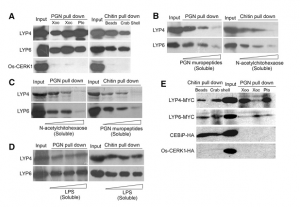
Figure 2.
LYP4 and LYP6 Selectively Bind PGN and Chitin but Not LPS. [1]Expression
LYP4 and LYP6 were most abundantly expressed in rice callus cells, and both transcripts progressively decreased during maturation (Figure 1D). Furthermore, analysis of LYP4 and LYP6 expression patterns in Promoter:GUS(for b-glucuronidase) transgenic rice demonstrated strong GUS staining in young seedlings, particularly in the root meristem region and the lateral root primordium, resembling the expression patterns of their orthologLYM1 in M. truncatula(Fliegmann et al., 2011 [2]). Interestingly, expression ofLYP4andLYP6in rice seedlings, mature leaves, and roots could be quickly induced upon exposure to the rice bacterial pathogen Xanthomonas oryzae pv oryzae. [1]
LYP4 and LYP6 expressed in rice protoplasts also could be precipitated by different bacterial PGNs and commercial chitin products (Figure 2E), confirming the physical association of PGN and chitin to LYPs in rice. By contrast, the CEBiP proteins successfully expressed in rice protoplasts could be precipitated only by chitin but not PGN, while the full-length rice CERK1 proteins expressed in rice protoplasts could be pulled down by neither MAMP (Figure 2E). [1]
Silencing of LYP4 or LYP6 Compromises Diverse PGN- and Chitin-Induced Defense Responses in Rice
The findings regarding the plasma membrane localization of LYP4 and LYP6 and their physical interactions with both PGN and chitin pointed to a more exciting possibility that these proteins may be not only the PGN receptors but also previously unknown chitin receptors in rice. Although LYP4 and LYP6 genes share ~80% identity, the LYP4 and LYP6 transcripts were specifically reduced by ~80% by their cognate RNAi construct in the silencing lines. Notably, the expression of CEBiP and CERK1, the two known genes involved in rice chitin perception, was affected by neither RNAi construct. On the other hand, the expression of LYP4 in its overexpressing(OX) lines was increased by 5.2- to 6.8-fold and that of LYP6 in its OX lines was increased by 14- to 15-fold. Using LYP RNAi or OX transgenic rice, we investigated three different cell responses occurring at different defense time points after PGN or chitin exposure. These defense responses included ROS generation (a very early response), defense gene activation (an early response), and callose deposition (a late response). LPS, as another glycoconjugate elicitor, was used as control MAMP during the examination of the two earlier defense responses.
Evolution
Please input evolution information here.
You can also add sub-section#s# at will.
Labs working on this gene
- State Key Laboratory of Biocontrol
- Key Laboratory of Gene Engineering of the Ministry of Education
- Guangdong Key Laboratory of Plant Resources, School of Life Sciences, Sun Yat-sen University, 510275 Guangzhou, People’s Republic of China
References
- ↑ 1.0 1.1 1.2 1.3 1.4 1.5
Bing Liu;Jian-Feng Li;Ying Ao;Jinwang Qu;Zhangqun Li;Jianbin Su;Yang Zhang;Jun Liu;Dongru Feng;Kangbiao Qi;Yanming He;Jinfa Wang;Hong-Bin Wang. Lysin Motif–Containing Proteins LYP4 and LYP6 Play Dual Roles in Peptidoglycan and Chitin Perception in Rice Innate Immunity. The Plant Cell, 2012, 24(8): 3406-3419.
fullText
- ↑
Fliegmann, J., Uhlenbroich, S., Shinya, T., Martinez, Y., Lefebvre,B., Shibuya, N., and Bono, J.J.(2011). Biochemical and phylogenetic analysis of CEBiP-like LysM domain-containing extracellular proteins in higher plants. Plant Physiol. Biochem.49:709–720. here
Structured Information


