Difference between revisions of "Os03g0123300"
(→Function) |
(→References) |
||
| Line 29: | Line 29: | ||
==References== | ==References== | ||
| − | |||
| − | |||
| − | |||
==Labs working on this gene== | ==Labs working on this gene== | ||
Revision as of 08:21, 9 June 2014
Please input one-sentence summary here.
Contents
Annotated Information
Function
Tillering and Dwarf 1(TAD1), which encodes a co-activator of the anaphase-promoting complex (APC/C), a multi-subunit E3 ligase. The protein interacts with moC1, forms a complex with osAPC10 and functions as a co-activator of APC/C to target MoC1 for degradation in a cell-cycle-dependent manner.
TAD1 encodes a Cdh1-type activator of APC/C, an ortholog to CCS52A in dicots.During the cell-cycl progression, TAD1 shows an oscillating expression pattern with a higher level in the G1-phase.The TAD1-deduced amino-acid sequence contains several conserved domains, including seven WD repeats, C-box, CSM, RVL and IR motifs.Along with APC/C, they form APC/C-TAD1complex and functions as a key regulator of tillering.TAD1 can specifically recruit MOC1 by interacting with OsAPC10 and then degrade MOC1 to maintain an appropriate protein level of MOC1 to control rice tillering. In the absence of TAD1 function, MOC1 fails to be recruited to the APC/C for degradation, resulting in an accumulation of endogenous MOC1 proteins and thus an increase in tiller number in the tad1mutant plant.
 Deternination of the interaction between TAD1 and MOC1 by coimmunoprecipitation and BiFC assays.

Sequence analysis revealed that MOC1 harbours a typical D-box at the N-terminal (Fig.a). Therefore, it is very likely that MOC1 and TAD1 directly interact to control rice tillering. MOC1–GFP fusion protein could capture the TAD1–FLAG fusion protein, suggesting an in vivo interaction between MOC1 and TAD1 (Fig.b). Bimolecular fluorescence complementation shown in Fig.c, when the full-length cDNAs of TAD1 and MOC1 were introduced into rice protoplasts simultaneously, the fluorescence signal was detected in the nucleus, indicating that TAD1 can directly interact with MOC1 in the nucleus. Furthermore, when two conserved residues, arginine and leucine, of the D-box at the N-terminal were changed into alanine (Fig.a), the MOC1 protein was unable to interact with TAD1, demonstrating that the D-box is indispensable for the interaction between MOC1 and TAD1 (Fig.c). In addition, a series of truncated TAD1 proteins were generated to determine the domains that are essential for the interaction with MOC1 via the BiFC analysis (Fig.d). The results showed that the N-terminal 203 amino acids of TAD1 are sufficient to interact with MOC1.
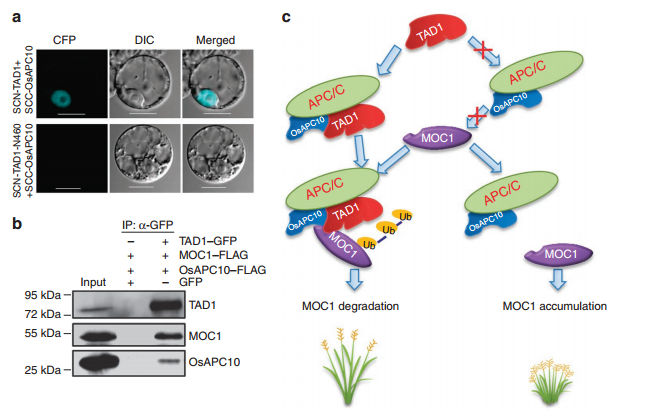 The APC C(TAD1) complex-mediated degradation of MOC1.
_complex-mediated_degradation_of_MOC1.png)
OsAPC10 interacts with TAD1 in vivo and their interaction occurs in the nucleus of rice protoplasts. Coexpressed TAD1, MOC1 and OsAPC10 proteins in the rice protoplasts can prove that MOC1 can indeed form a protein complex with TAD1 and OsAPC10 in vivo(Fig.b). Therefore, it is very likely that TAD1 recruits MOC1 to APC/C, and OsAPC10 is also involved in recognizing and targeting MOC1 for further degradation. TAD1 may recruit MOC1 to APC/C for degradation mainly at the G1-phase Cell division may execute the activation of bud cells. The activity of cell division blocked in the G1-phase possibly accompanies low levels of MOC1 proteins in the dormant tiller buds. Based on the cellcycle profile of bud cells and the function of APC/C TAD1–MOC1, it can be proposed that the APC/CTAD1–MOC1 complex may act locally in tiller buds. During the cell-cycle progression of tiller bud cells, TAD1 is activated in the G1-phase, where it targets MOC1 for degradation to maintain a low level of MOC1. When tiller cells transit into the next phase, the TAD1 level is reduced, which causes MOC1 to accumulate and regain its function in controlling tillering.
Expression
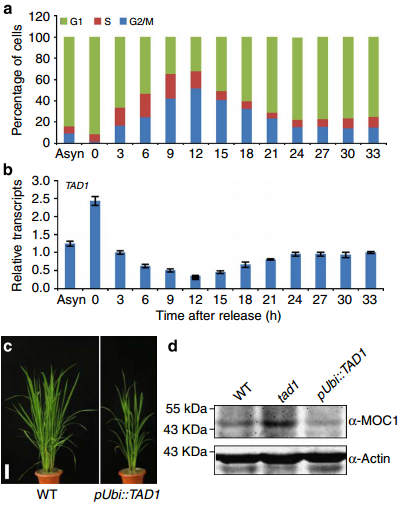 Expression of TAD1 during the cell-cycle progression and phenotypes of TAD1-overexpressing transgenic plants.

TAD1 has an oscillated expression pattern during the cell-cycle progression, showing a higher level in the G1-phase and a lower level in the S- and G2/M-phases. The overexpression of MOC1 resulted in similar phenotypes to that of the tad1mutant plant, such as more tillers and reduced plant height, whereas TAD1-overexpressing transgenic plants showed a reduced tiller number,a similar phenotype to moc1.Real-time PCR analysis showed that TAD1is expressed ubiquitously in the examined rice organs, including roots, shoot apices, axillary buds, internodes, nodes, and young leaves and panicles, but more abundant in young leaves, axillary buds and nodes.The tissue-specific expression pattern of TAD1 was further examined by messenger RNA in situhybridization. TAD1 was predominantly expressed in the leaf primordia and young leaves, tiller buds, inflorescence promordia, and crown root promordia. In addition, TAD1 expression was detected in vascular bundles at the unenlongated stem.
Evolution
In animals, in addition to its essential role involved in cell-cycle progression, the APC/C has also been reported recently to target different substrates in non-mitotic cells such as neurons, muscle cells and lens fibre cells. In the ventral nerve cord of Caenorhabditis elegans, the APC/C CDH1 complex regulates synaptic strength by affecting the number of glutamate receptors on the postsynaptic side. In Drosophila, APC/CCdh1 regulates presynaptic organization and synaptic size by targeting liprin-αfor degradation. In mammals, knockdown of Cdh1 leads to increased axon and disrupted axonal patterning. Further studies showed that Cdh1 targets two key development regulators, inhibitor of DNA binding 2 (Id2) and the transcription corepressor ski-related novel protein N (SnoN), for degradation in regulating the axonal pattern. In plants, however, whether APC/C CDH1 targets the key regulators of plant development other than conserved cell-cycle regulators is still unknown. MOC1 is the first identified target of Cdh1-type co-activator of APC/C other than cyclins in plants. Loss-of-function of TAD1 disrupts normal plant architecture in rice, which is comparable to the axon phenotypes in mammals.
References
Labs working on this gene
State Key Laboratory of Plant Genomics and National Center for Plant Gene Research, Institute of Genetics and Developmental Biology, Chinese Academy of Sciences, Beijing 100101, China. State Key Laboratory of Rice Biology, China National Rice Research Institute, Chinese Academy of Agricultural Sciences, Hangzhou 310006, China. College of Life and Environmental Sciences, Hangzhou Normal University, Hangzhou 310036, China.
Structured Information
| Gene Name |
Os03g0123300 |
|---|---|
| Description |
Similar to Cell cycle switch protein |
| Version |
NM_001055339.1 GI:115450406 GeneID:4331448 |
| Length |
3573 bp |
| Definition |
Oryza sativa Japonica Group Os03g0123300, complete gene. |
| Source |
Oryza sativa Japonica Group ORGANISM Oryza sativa Japonica Group
Eukaryota; Viridiplantae; Streptophyta; Embryophyta; Tracheophyta;
Spermatophyta; Magnoliophyta; Liliopsida; Poales; Poaceae; BEP
clade; Ehrhartoideae; Oryzeae; Oryza.
|
| Chromosome | |
| Location |
Chromosome 3:1305797..1309369 |
| Sequence Coding Region |
1305822..1306433,1306643..1306765,1306846..1306950,1307352..1307531,1307652..1307714 |
| Expression | |
| Genome Context |
<gbrowseImage1> name=NC_008396:1305797..1309369 source=RiceChromosome03 preset=GeneLocation </gbrowseImage1> |
| Gene Structure |
<gbrowseImage2> name=NC_008396:1305797..1309369 source=RiceChromosome03 preset=GeneLocation </gbrowseImage2> |
| Coding Sequence |
<cdnaseq>atggatcaccaccaccaccacctgccgccgccgccgccgcggtcgccgatggagaactccgcgtcctccaagccgcccaccccggcgtccaccccgtcgtcgcgcctcgccgccgcgccgtcctcccgcgtctcctccgcggcgccgcacccctccccgtcctcctccgcgcccacgccggcctcgcggacggtctacagcgaccgcttcatccccagccgcgccggatccaacctcgcgctcttcgacctcgccccgtcgccgtcccaccacgacgccgccgccgccgccgcctcccccggcgcgccgcccccctccggatctaccccggcctcgtcgccctactgcgcgctcctccgcgccgcgctcttcggccccaccacgcccgaccgggtggcgtcgtcggcgtccgcgtgctcctcctcctcctccgccggggcgtcgcccgtgggctcacccgccaccggcaacatattcaggttcaaggcggaggtgccccggaatgctaagcgcgcccttttctccgacggggacgacgagggcgtgctcttccccggggtgttcacgacgaggggcactggccccaggaagatccctaggtcaccttataaggtgctggatgctcccgcattgcaggatgacttctacctgaaccttgtggattggtcttcgcataatatccttgcagttggattggggaattgtgtctacttatggaatgcatgcagcagcaaggtcaccaagctatgtgatttgggggtggatgacaatgtctgttcagtgggttgggcacagcgtggcactcaccttgctgtagggacaaaccaaggcaaagttcaggtatgggatgccactcgttgtaagagaataagaaccatggaaagccatcggatgcgagtaggtgctcttgcatggaattcatcattgctttcgtcaggcagtcgtgacaagagcatccttcaccatgatatccgtgcccaggatgattatattagtagacttgctgggcataaatcggaggtctgtgggctcaagtggtcttatgataaccgtcagcttgcatctggtggtaatgacaacagactttatgtatggaatcaacactcggcgcacccggtactgaagtatactgagcatacagcagctgtcaaagctattgcgtggtcacctcatcttcatgggctgcttgcatctggtggaggaactgcagatagatgcatacgattttggaataccaccacgaatatgcacttaaattgcgtcgacacaggcagtcaggtctgtaatcttgtatggtcaaagaatgttaatgagcttgttagcactcatggatattctcaaaatcagataattgtttggcgatacccaacaatgtcaaagctcgccacattgacaggccatacatatagggtattatatttagccatctccccagatggacagactatagtaactggcgctggtgatgaaacgcttcggttttggaacgtgtttccatctcccaagtcccagagttctgacagcctaagtagcatcggggccacatcatttgttaggagctacatccggtga</cdnaseq> |
| Protein Sequence |
<aaseq>MDHHHHHLPPPPPRSPMENSASSKPPTPASTPSSRLAAAPSSRV SSAAPHPSPSSSAPTPASRTVYSDRFIPSRAGSNLALFDLAPSPSHHDAAAAAASPGA PPPSGSTPASSPYCALLRAALFGPTTPDRVASSASACSSSSSAGASPVGSPATGNIFR FKAEVPRNAKRALFSDGDDEGVLFPGVFTTRGTGPRKIPRSPYKVLDAPALQDDFYLN LVDWSSHNILAVGLGNCVYLWNACSSKVTKLCDLGVDDNVCSVGWAQRGTHLAVGTNQ GKVQVWDATRCKRIRTMESHRMRVGALAWNSSLLSSGSRDKSILHHDIRAQDDYISRL AGHKSEVCGLKWSYDNRQLASGGNDNRLYVWNQHSAHPVLKYTEHTAAVKAIAWSPHL HGLLASGGGTADRCIRFWNTTTNMHLNCVDTGSQVCNLVWSKNVNELVSTHGYSQNQI IVWRYPTMSKLATLTGHTYRVLYLAISPDGQTIVTGAGDETLRFWNVFPSPKSQSSDS LSSIGATSFVRSYIR</aaseq> |
| Gene Sequence |
<dnaseqindica>26..637#847..969#1050..1154#1556..1735#1856..1918#2019..2213#2572..2673#2753..2815#2913..2981#3083..3142#atccccaaatctctcgcccccacccatggatcaccaccaccaccacctgccgccgccgccgccgcggtcgccgatggagaactccgcgtcctccaagccgcccaccccggcgtccaccccgtcgtcgcgcctcgccgccgcgccgtcctcccgcgtctcctccgcggcgccgcacccctccccgtcctcctccgcgcccacgccggcctcgcggacggtctacagcgaccgcttcatccccagccgcgccggatccaacctcgcgctcttcgacctcgccccgtcgccgtcccaccacgacgccgccgccgccgccgcctcccccggcgcgccgcccccctccggatctaccccggcctcgtcgccctactgcgcgctcctccgcgccgcgctcttcggccccaccacgcccgaccgggtggcgtcgtcggcgtccgcgtgctcctcctcctcctccgccggggcgtcgcccgtgggctcacccgccaccggcaacatattcaggttcaaggcggaggtgccccggaatgctaagcgcgcccttttctccgacggggacgacgagggcgtgctcttccccggggtgttcacgacgaggggcactggccccaggaagatccctaggtcaccttataaggtgagaagtgttcgccttcgatttcatagtttctttcaattgatatggtctgtttcttgattgatgtttctttgaattgagaaaaacatggtctttattattcatctgctctgtaccaagaatcctgtgttatttgtcatgcataaagagactgatatgaaagcttattactcaaaatctcacatgaattttccttctgttgctcttaggtgctggatgctcccgcattgcaggatgacttctacctgaaccttgtggattggtcttcgcataatatccttgcagttggattggggaattgtgtctacttatggaatgcatgcagcagcaaggtgagccaactgcggccatccatgcgcattcttgtttgggtacttgaagagggtttgtaaagaagtttattgctgtgcaggtcaccaagctatgtgatttgggggtggatgacaatgtctgttcagtgggttgggcacagcgtggcactcaccttgctgtagggacaaaccaaggcaaagttcaggttagacgtatgcccctttctgaaatgatcagataacatagtcatgatccaccaaaatttggaacgatgccttagcttaatctttatctagagtgtcaatggaaacattgagaagtatacaactcacttatggaaagatcagaaaaattgcaatactattaacagtggacctaatttttcgcacaaataatatatgatagacgcagtagagttttatgactaaactgaatgactttcatttttactccaaagaatgaatttggtccattgtaatctctgtttacaaatgtgctgtagtatttgatgattatcgattaatcctgttgagctctgaaattggtatgcaatgctacaatttcaatttggtgtctgactgtcaccttggattttatcttatttaggtatgggatgccactcgttgtaagagaataagaaccatggaaagccatcggatgcgagtaggtgctcttgcatggaattcatcattgctttcgtcaggcagtcgtgacaagagcatccttcaccatgatatccgtgcccaggatgattatattagtagacttgctgggcataaatcggaggtgatctattttatacatcattatgaattttccgacatgtcagattcttggattatcctattgtgctcccttttgatatattcttataatatgcatattctgtttccaaacacctttcaggtctgtgggctcaagtggtcttatgataaccgtcagcttgcatctggtggtaatgacaacagagtaagaatgcatccatgaattgtttcttgattggatcattggtattacatggaattcaaggttgcaatttcttatgtccatatcaatgtctcttttccagctttatgtatggaatcaacactcggcgcacccggtactgaagtatactgagcatacagcagctgtcaaagctattgcgtggtcacctcatcttcatgggctgcttgcatctggtggaggaactgcagatagatgcatacgattttggaataccaccacgaatatgcacttaaattgcgtcgacacaggcagtcaggtattttgctacacatctaatttctttagtgattgtgcagcccatgtttatagttctgaactttaatgaactcttgtttattctatttatagtaccatattaaataccgtggtatatggtatgtgaaataagcatgataactctcaatctttggacgcacttaaaaaattgaacatttctttagtcatgtcagttccgaaaagtaagaaatgtaggctgagctctattttcaatagtgaagttctatttcttgttttcatatctgaaaccttcacagaaatgccatgtcattaagactgtagagttaagcatattgttttttggtatgtactgaggacgctgagtgaatcttgaataggtctgtaatcttgtatggtcaaagaatgttaatgagcttgttagcactcatggatattctcaaaatcagataattgtttggcgatacccaacaatgtcaaaggtatgcttgcaagcttattcttaactcagtacgctttacctttttcttgtattaattgtgctcgatttctcctttgtagctcgccacattgacaggccatacatatagggtattatatttagccatctccccagatggacaggtgaagttatctcttgagtctttgaatctactgaattctgtttattgtatctagaatattttggcatagctgtgtttttgacattttatgtcaacagactatagtaactggcgctggtgatgaaacgcttcggttttggaacgtgtttccatctcccaagtcccaggtaccttttttaaaaatagtataattggtccttatttcaatttgaatgaaatttcactttcatatatagcttctaaataataattggtccttcaattacagagttctgacagcctaagtagcatcggggccacatcatttgttaggagctacatccggtgacactgagatgtggtaatctaataacacttggctcataagtcataacactactgcagcagagtgttgatgatcatcaatatcattccatttgtaccacttgcatcaccagttcatgaaccatcaaacctagccaaattttagagatagtaggatgcagaatggtgaaactggctcgcagacctcggagtggctcatttgctgaatgctgtatatatttattcattggctttgtaggagcgaagatggcaaacactgaccatccgcaatgtaccattgataagttcacggcctcctgtttttgtttttgctgagtcaacttggagctggagctcttatgtataccatgctagggcttaacaacattggccaactcatgatgctcattgcatccaagttggaatatgctaaggaagctggagaatttctggtgc</dnaseqindica> |
| External Link(s) |

