Difference between revisions of "Os01g0826400"
(→References) |
(→Annotated Information) |
||
| Line 6: | Line 6: | ||
===Expression=== | ===Expression=== | ||
| − | Rice WRKY genes that are involved in modulating GA and/or ABA responses in aleurone cells. WRKY proteins possess at leastone WRKY domain, which is about 60 amino acids in lengthand contains a WRKY motif and a putative zinc-finger motif[2]. A large number of the WRKY genes have been shown to be involved in plant defense responses[3].about one hundred WRKY gene have been found in the rice genome[4].The steady state mRNA levels of several rice WRKY genes are affected by ABA and GA. For example, ABA enhances, while GA decreases the mRNA levels of OsWRKY51 and OsWRKY71[5].As to the functions,OsWRKY51 and OsWRKY71 suppress GA induction of the a-amylase gene promoter; yet they have little effect on ABA induction of the HVA22 promoter (class I)[6].Another class of OsWRKY genes, | + | Rice WRKY genes that are involved in modulating GA and/or ABA responses in aleurone cells. WRKY proteins possess at leastone WRKY domain, which is about 60 amino acids in lengthand contains a WRKY motif and a putative zinc-finger motif[2]. A large number of the WRKY genes have been shown to be involved in plant defense responses[3].about one hundred WRKY gene have been found in the rice genome[4].The steady state mRNA levels of several rice WRKY genes are affected by ABA and GA. For example, ABA enhances, while GA decreases the mRNA levels of OsWRKY51 and OsWRKY71[5].As to the functions,OsWRKY51 and OsWRKY71 suppress GA induction of the a-amylase gene promoter; yet they have little effect on ABA induction of the HVA22 promoter (class I)[5,6,7].Another class of OsWRKY genes, |
such as OsWRKY72and OsWRKY77, function as activators of ABA signaling (class II)[7].While OsWRKY24, which negatively regulates both GA and ABA signaling in aleurone cells. It represents the third class of OsWRKY genes that are different from class I and II in regulating GA and ABA signaling pathways[1]. | such as OsWRKY72and OsWRKY77, function as activators of ABA signaling (class II)[7].While OsWRKY24, which negatively regulates both GA and ABA signaling in aleurone cells. It represents the third class of OsWRKY genes that are different from class I and II in regulating GA and ABA signaling pathways[1]. | ||
| Line 15: | Line 15: | ||
2.OsWRKY24 represses GA induction of the low pI α-amylase Amy32b promoter | 2.OsWRKY24 represses GA induction of the low pI α-amylase Amy32b promoter | ||
The exogenous GA treatment led to a 37-fold induction of the Amy32b-GUS expression. Co-expression of the effector construct, UBI-SenseOsWRKY24, completely | The exogenous GA treatment led to a 37-fold induction of the Amy32b-GUS expression. Co-expression of the effector construct, UBI-SenseOsWRKY24, completely | ||
| − | suppressed GA induction. However, the antisense construct,UBI-Antisense OsWRKY24, had little effect; the GUS activity remained as high as 35-fold relative to the control. | + | suppressed GA induction. However, the antisense construct,UBI-Antisense OsWRKY24, had little effect; the GUS activity remained as high as 35-fold relative to the control[1]. |
[[File:fig2 OsWRKY24 suppresses GA induction of the low pI a-amylase gene (Amy32b) expression in aleurone cells.jpg]] | [[File:fig2 OsWRKY24 suppresses GA induction of the low pI a-amylase gene (Amy32b) expression in aleurone cells.jpg]] | ||
3.OsWRKY24 also functions as a negative regulator on ABA signaling in aleurone cells | 3.OsWRKY24 also functions as a negative regulator on ABA signaling in aleurone cells | ||
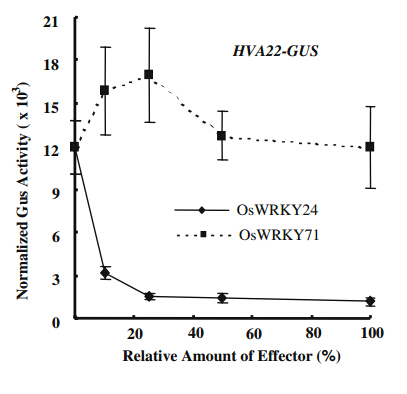
| − | Both OsWRKY71 and OsWRKY24 repressed GA induction of the Amy32bpromoter in a dosage-dependent manner. The potency of these two genes on repressing the GA response was similar, as indicated by the nearly overlapping dosage response curves. However, completely different effects were observed for OsWRKY24 and-71 on ABA signaling. OsWRKY71 has little effect on ABA induction of HVA22-GUS.The ABA induction effect was even slightly potentiated when the effector/reporter ratio was low. In contrast, OsWRKY24 strongly suppresses ABA induction of HVA22-GUS expression. | + | Both OsWRKY71 and OsWRKY24 repressed GA induction of the Amy32bpromoter in a dosage-dependent manner. The potency of these two genes on repressing the GA response was similar, as indicated by the nearly overlapping dosage response curves. However, completely different effects were observed for OsWRKY24 and-71 on ABA signaling. OsWRKY71 has little effect on ABA induction of HVA22-GUS.The ABA induction effect was even slightly potentiated when the effector/reporter ratio was low. In contrast, OsWRKY24 strongly suppresses ABA induction of HVA22-GUS expression[1]. |
[[File:Fig3 OsWRKY24, but not OsWRKY71, suppresses ABA induction of HVA22expression.jpg]] | [[File:Fig3 OsWRKY24, but not OsWRKY71, suppresses ABA induction of HVA22expression.jpg]] | ||
Revision as of 09:32, 10 June 2014
Please input one-sentence summary here.
Contents
Annotated Information
Function
OsWRKY24, which encodes aprotein that functions as a negative regulator of both GA andABA signaling. Abscisic acid (ABA) and gibberellins (GAs) control several developmental processes including seed maturation, dormancy, and germination. The antagonism of these two hormones is well-documented. The transcription profiling studies indicate that they can function as agonists in regulating the expression of many genes. A rice WRKY gene,OsWRKY24, which encodes a protein that functions as a negative regulator of both GA and ABA signaling. Overexpression of OsWRKY24 via particle bombardment-mediated transient expression in aleurone cells represses the expression of two reporter constructs: the β-glucuronidase gene driven by the GA-inducible Amy32b α-amylase promoter (Amy32b-GUS) and the ABA-inducible HVA22 promoter (HVA22-GUS). OsWRKY24 is unlikely a general repressor because it has little effect on the expression of the luciferase reporter gene driven by a constitutive ubiquitin promoter (UBI-Luciferase)[1].
Expression
Rice WRKY genes that are involved in modulating GA and/or ABA responses in aleurone cells. WRKY proteins possess at leastone WRKY domain, which is about 60 amino acids in lengthand contains a WRKY motif and a putative zinc-finger motif[2]. A large number of the WRKY genes have been shown to be involved in plant defense responses[3].about one hundred WRKY gene have been found in the rice genome[4].The steady state mRNA levels of several rice WRKY genes are affected by ABA and GA. For example, ABA enhances, while GA decreases the mRNA levels of OsWRKY51 and OsWRKY71[5].As to the functions,OsWRKY51 and OsWRKY71 suppress GA induction of the a-amylase gene promoter; yet they have little effect on ABA induction of the HVA22 promoter (class I)[5,6,7].Another class of OsWRKY genes, such as OsWRKY72and OsWRKY77, function as activators of ABA signaling (class II)[7].While OsWRKY24, which negatively regulates both GA and ABA signaling in aleurone cells. It represents the third class of OsWRKY genes that are different from class I and II in regulating GA and ABA signaling pathways[1].
1.Like in aleurone cells, the expression of OsWRKY24 in rice embryos is not affected by GA, but slightly induced by ABA at some stages of the treatment the OsWRKY24 was expressed at a relatively high level in the aleurone cells purified from dry seeds[5].When the embryoless half-seeds were treated with the buffer only or GA3 for 4, 24, or 24 h, the OsWRKY24mRNA level changed little in the aleurone cells. The ABA treatment did not affect theOsWRKY24mRNA much either at the 4 h time point, but slightly enhanced its expression at the 24 and 48 h time points. A similar pattern was observed for the samples treated with a combination of ABA and GA3[1].


2.OsWRKY24 represses GA induction of the low pI α-amylase Amy32b promoter The exogenous GA treatment led to a 37-fold induction of the Amy32b-GUS expression. Co-expression of the effector construct, UBI-SenseOsWRKY24, completely suppressed GA induction. However, the antisense construct,UBI-Antisense OsWRKY24, had little effect; the GUS activity remained as high as 35-fold relative to the control[1].

_expression_in_aleurone_cells.jpg)
3.OsWRKY24 also functions as a negative regulator on ABA signaling in aleurone cells Both OsWRKY71 and OsWRKY24 repressed GA induction of the Amy32bpromoter in a dosage-dependent manner. The potency of these two genes on repressing the GA response was similar, as indicated by the nearly overlapping dosage response curves. However, completely different effects were observed for OsWRKY24 and-71 on ABA signaling. OsWRKY71 has little effect on ABA induction of HVA22-GUS.The ABA induction effect was even slightly potentiated when the effector/reporter ratio was low. In contrast, OsWRKY24 strongly suppresses ABA induction of HVA22-GUS expression[1].

Evolution
Please input evolution information here.
You can also add sub-section(s) at will.
Labs working on this gene
Please input related labs here.
References
[1]Zhong LZ;Margaret Shin et al. A negative regulator encoded by a rice WRKY gene represses both abscisic acid and gibberellins signaling in aleurone cells Plant Molecular Biology,2009,70(1-2):139-151
[2]Eulgem T, Rushton PJ, Robatzek S, Somssich IE.The WRKY superfamily of plant transcription factors. Trends Plant Sci,2010, 5:199–206
[3]Eulgem T .Dissecting the WRKY web of plant defense regulators. PLoS Pathog,2006,2:e126
[4]Ross CA, Liu Y, Shen QJ.The WRKY gene family in rice (Oryza sativa). J Integr Plant Biol,2007, 49:827–842
[5]Xie Z, Zhang ZL, Zou X, Huang J, Ruas P, Thompson D, Shen QJC.Annotations and functional analyses of the rice WRKY gene superfamily reveal positive and negative regulators of abscisic acid signaling in aleurone cells. Plant Physiol,2005, 137:176–189
[6]Xie Z, Zhang ZL, Zou X, Yang G, Komatsu S, Shen QJ.Interactions of two abscisic-acid induced WRKY genes in repressing gibberellin signaling in aleurone cells. Plant J,2006, 46:231–242
[7]Zhang ZL, Xie Z, Zou X, Casaretto J, Ho TH, Shen QJ.A rice WRKY gene encodes a transcriptional repressor of the gibberellin signaling pathway in aleurone cells. Plant Physiol,2004, 134:1500–1513V
Structured Information
| Gene Name |
Os01g0826400 |
|---|---|
| Description |
WRKY transcription factor 24 (WRKY24) |
| Version |
NM_001051210.1 GI:115440790 GeneID:4327518 |
| Length |
2565 bp |
| Definition |
Oryza sativa Japonica Group Os01g0826400, complete gene. |
| Source |
Oryza sativa Japonica Group ORGANISM Oryza sativa Japonica Group
Eukaryota; Viridiplantae; Streptophyta; Embryophyta; Tracheophyta;
Spermatophyta; Magnoliophyta; Liliopsida; Poales; Poaceae; BEP
clade; Ehrhartoideae; Oryzeae; Oryza.
|
| Chromosome | |
| Location |
Chromosome 1:37103829..37106393 |
| Sequence Coding Region |
37103963..37104223,37104338..37104541,37104739..37105325,37105413..37105574,37105684..37106137 |
| Expression | |
| Genome Context |
<gbrowseImage1> name=NC_008394:37103829..37106393 source=RiceChromosome01 preset=GeneLocation </gbrowseImage1> |
| Gene Structure |
<gbrowseImage2> name=NC_008394:37103829..37106393 source=RiceChromosome01 preset=GeneLocation </gbrowseImage2> |
| Coding Sequence |
<cdnaseq>atgacaacctcgtcgtccgggagcgtcgagacgtcggccaattcgcggctggggacgttctcgttcgccagcgcgagcttcacggacctcctcgggggaaacgcgggagccggcggcggaggtgtgtccaggtacaaggccatgaccccgccttcgctgccgctctcgccgccgccggtgtcgccgtcgtccttcttcaacagcccgatcggcatgaaccaggccgacttcctcggctcgccggtgctcctgacctccagtatcttcccgtcgccgacgacgggcgcattcgcgtcgcagcactttgactggaggccggaggtggcggcggcgcagagcgccgatcaaggcggcaaggacgagcagaggaattcctactccgacttctcgtttcagacggcgcctgcgagcgaggaggccgtgcgaacgacgactttccagccaccggtcccaccggccccactgggggacgaggcatacagaagtcagcagcagcagcagccatggggctaccagcagcagcctgcaggcatggacgcgggtgccaacgcggcgagcttcggtgcggcgccgttccaggcgacctcgtcggagatggcgccacaggtgcagggtggcggcgggtacagccagccgcagtcgcagaggcggtcgtcggacgacggctacaactggcgcaagtacgggcagaagcaggtgaaggggagcgagaacccccgcagctactacaagtgcaccttcccgaactgcccgaccaagaagaaggtggagcggtcgctcgacggccagatcaccgagatcgtgtacaagggcacgcacaaccacgccaagccgcagaacacgcgcaggaactccggctcgtcggcggcgcaggtcctgcagagcggcggcgacatgtcggagcattccttcgggggcatgtccggcacagcggcgacgcccgagaactcgtcggcgtcgttcggtgacgacgagatcagagttggctcccctcgggccgggaacggcggcggcgacgagttcgacgacgacgagccggattccaagagatggaggaaagacggtgacggcgaggggatctccatggctggcaaccggacggtgcgggaaccgagggtggtcgtccaaaccatgagcgacatcgacatcctcgacgacggctaccgctggagaaagtacggccagaaggtggtgaagggcaacccgaacccaaggagctactacaagtgcaccacggccggttgccccgtgcggaagcacgtggagcgcgcgtcccacgacctgcgcgccgtgatcaccacctacgaggggaaacacaaccacgacgtgcccgccgcgcgggggagcgccgcgctctaccgccccgcgccgccggcggcggccgccaccagcagccacccgtacctgccgaaccagccgccgcccatgtcctaccagcccacggggccacagccgtacgcgctgaggcccgacgggttcggcggccagggaccgttcggcggcgtggtcggcgggagcagcttcggcggcttctccgggttcgacgacgccaggggctcgtacatgagccagcaccagcagcagcagaggcagaacgacgcgatgcacgcctcgagagccaaggaagagcccggagacgacatgttcttccagaactcgctctactga</cdnaseq> |
| Protein Sequence |
<aaseq>MTTSSSGSVETSANSRLGTFSFASASFTDLLGGNAGAGGGGVSR YKAMTPPSLPLSPPPVSPSSFFNSPIGMNQADFLGSPVLLTSSIFPSPTTGAFASQHF DWRPEVAAAQSADQGGKDEQRNSYSDFSFQTAPASEEAVRTTTFQPPVPPAPLGDEAY RSQQQQQPWGYQQQPAGMDAGANAASFGAAPFQATSSEMAPQVQGGGGYSQPQSQRRS SDDGYNWRKYGQKQVKGSENPRSYYKCTFPNCPTKKKVERSLDGQITEIVYKGTHNHA KPQNTRRNSGSSAAQVLQSGGDMSEHSFGGMSGTAATPENSSASFGDDEIRVGSPRAG NGGGDEFDDDEPDSKRWRKDGDGEGISMAGNRTVREPRVVVQTMSDIDILDDGYRWRK YGQKVVKGNPNPRSYYKCTTAGCPVRKHVERASHDLRAVITTYEGKHNHDVPAARGSA ALYRPAPPAAAATSSHPYLPNQPPPMSYQPTGPQPYALRPDGFGGQGPFGGVVGGSSF GGFSGFDDARGSYMSQHQQQQRQNDAMHASRAKEEPGDDMFFQNSLY</aaseq> |
| Gene Sequence |
<dnaseqindica>135..395#510..713#911..1497#1585..1746#1856..2309#caaactctctcttccctccacccccgcttcctccttcttcccgtacgtacacgccggaggccggacagagacacgaaccgcacggcgacgagctgtgagacgcggcggttttggtcgcgacctgagggattccgatgacaacctcgtcgtccgggagcgtcgagacgtcggccaattcgcggctggggacgttctcgttcgccagcgcgagcttcacggacctcctcgggggaaacgcgggagccggcggcggaggtgtgtccaggtacaaggccatgaccccgccttcgctgccgctctcgccgccgccggtgtcgccgtcgtccttcttcaacagcccgatcggcatgaaccaggccgacttcctcggctcgccggtgctcctgacctccagtgtaagcacgcacgcgaatgggccgagctccattaatggcctaatgccatgtcatttctgtacggtttttcagatgataatgagaaattgagaattgaaccttgccggttttcagatcttcccgtcgccgacgacgggcgcattcgcgtcgcagcactttgactggaggccggaggtggcggcggcgcagagcgccgatcaaggcggcaaggacgagcagaggaattcctactccgacttctcgtttcagacggcgcctgcgagcgaggaggccgtgcgaacgacgactttccagccaccggtcccaccggccccactggtgagtgagagcaaccataacgtcagctgttaccctttttggaggggtccttcgctgactttgtccaaaagaaactactcctagcatctttctttcttactcctagctaaggcattttcactatttcagtttgcaaattgcaatagtcaaaacccaaactatagaagtagcctctaaacaataaccttttctgacagggggacgaggcatacagaagtcagcagcagcagcagccatggggctaccagcagcagcctgcaggcatggacgcgggtgccaacgcggcgagcttcggtgcggcgccgttccaggcgacctcgtcggagatggcgccacaggtgcagggtggcggcgggtacagccagccgcagtcgcagaggcggtcgtcggacgacggctacaactggcgcaagtacgggcagaagcaggtgaaggggagcgagaacccccgcagctactacaagtgcaccttcccgaactgcccgaccaagaagaaggtggagcggtcgctcgacggccagatcaccgagatcgtgtacaagggcacgcacaaccacgccaagccgcagaacacgcgcaggaactccggctcgtcggcggcgcaggtcctgcagagcggcggcgacatgtcggagcattccttcgggggcatgtccggcacagcggcgacgcccgagaactcgtcggcgtcgttcggtgacgacgagatcagagttggctcccctcgggccgggaacggcggcggcgacgagttcgacgacgacgagccggattccaagagatggtgagtgccctgttcccaaacctcttcgcgccaaattatgtttgttgagataaaacagtgaactgaacatgttcaccataatatcaggaggaaagacggtgacggcgaggggatctccatggctggcaaccggacggtgcgggaaccgagggtggtcgtccaaaccatgagcgacatcgacatcctcgacgacggctaccgctggagaaagtacggccagaaggtggtgaagggcaacccgaacccaaggtaaataaagaacccaaaaagtccatttttcagttcgtctactggtgtgatcgcgcgtgtgtatctctcgtacttgtacttatcgtgcgtgctgctttcgtgtctgcaggagctactacaagtgcaccacggccggttgccccgtgcggaagcacgtggagcgcgcgtcccacgacctgcgcgccgtgatcaccacctacgaggggaaacacaaccacgacgtgcccgccgcgcgggggagcgccgcgctctaccgccccgcgccgccggcggcggccgccaccagcagccacccgtacctgccgaaccagccgccgcccatgtcctaccagcccacggggccacagccgtacgcgctgaggcccgacgggttcggcggccagggaccgttcggcggcgtggtcggcgggagcagcttcggcggcttctccgggttcgacgacgccaggggctcgtacatgagccagcaccagcagcagcagaggcagaacgacgcgatgcacgcctcgagagccaaggaagagcccggagacgacatgttcttccagaactcgctctactgactgaaagaatcgtcgtcgtaggaatctcaaagacatgacacgacggaaattgtagtttaggggggttttgtacttgtacgtacctaggatatactgtagtctttgatacatttgtttatttgtttggagggcccaggaatgcagatggctgcagaaaagggtaccgtcccttaacactggagatgggaggaaaggatgtactcctgtaggatacacagcaaattttgctctgtaatttttttcacatagaaaaatg</dnaseqindica> |
| External Link(s) |

