|
|
| Line 72: |
Line 72: |
| | Theoretical and Applied Genetics, 1996, 93(4): 560-567 | | Theoretical and Applied Genetics, 1996, 93(4): 560-567 |
| | | | |
| − | ==Structured Information==
| |
| − |
| |
| − | {{JaponicaGene|
| |
| − | GeneName = Os12g0281300|
| |
| − | Description = Similar to Pi-ta protein|
| |
| − | Version = NM_001073106.1 GI:115488173 GeneID:4351983|
| |
| − | Length = 5556 bp|
| |
| − | Definition = Oryza sativa Japonica Group Os12g0281300, complete gene.|
| |
| − | Source = Oryza sativa Japonica Group
| |
| − |
| |
| − | ORGANISM Oryza sativa Japonica Group
| |
| − | Eukaryota; Viridiplantae; Streptophyta; Embryophyta; Tracheophyta;
| |
| − | Spermatophyta; Magnoliophyta; Liliopsida; Poales; Poaceae; BEP
| |
| − | clade; Ehrhartoideae; Oryzeae; Oryza.
| |
| − | |1. Seonghee Lee;Yulin Jia;Melissa Jia;David R. Gealy;Kenneth M. Olsen;Ana L. Caicedo
| |
| − | Molecular Evolution of the Rice Blast Resistance Gene Pi-ta in Invasive Weedy Rice in the USA
| |
| − | PLoS ONE, 2011, 6(10): e26260
| |
| − | Chromosome = [[:category:Japonica Chromosome 12|Chromosome 12]]|
| |
| − | AP = Chromosome 12:10605422..10610977|
| |
| − | CDS = 10605623..10606017,10606490..10606533,10606706..10608424,10609890..10610833|
| |
| − | GCID = <gbrowseImage1>
| |
| − | name=NC_008405:10605422..10610977
| |
| − | source=RiceChromosome12
| |
| − | preset=GeneLocation
| |
| − | </gbrowseImage1>|
| |
| − | GSID = <gbrowseImage2>
| |
| − | name=NC_008405:10605422..10610977
| |
| − | source=RiceChromosome12
| |
| − | preset=GeneLocation
| |
| − | </gbrowseImage2>|
| |
| − | CDNA = <cdnaseq>atggcgccggcggtcagtgcatcgcagggtgtcatcatgcggtccctgacgagcaagctcgactcgctgctgctgcagccgccggagccgccgccgcctgcgcaaccgtcgtcgctgcggaagggggagaggaagaagatcctcctcctcagaggcgatctccgacacctgctagatgactactacctcctcgtggagccgccgtcagacaccgcgccaccgccagactcgacggcggcgtgctgggctaaggaggttcgcgagctctcctacgacgtcgacgacttcctcgacgagctaacgacccagctcctccaccaccgcggcggcggcgatggcagtagcactgctggtgccaagaagatgatcagcagcatgatcgcccggcttcgaggggagcttaaccggcggcggtggatcgccgacgaggtcaccctgttcagcgcccgcgtgaaggaggccattcgccgccaggagagctaccatcttggcaggcgcacctcgagctcgaggccgagagaagaagtcgacgacgacgatcgcgaggactccgccggcaacgaacgccgccggtttctgtcgctgacgttcgggatggacgacgctgctgtgcacggccagctcgttggtagggatatttcgatgcaaaagctcgtccggtggctggccgacggcgagccgaagctcaaggtggcttccattgttggatccggaggtgttggcaagacgacgctggccacagaattctatcgtctgcatggccggcggttggatgcgccgttcgactgccgggctttcgtgcggacgccccggaagcctgacatgacgaagatcctcaccgacatgctgtcacagctgcggccacaacatcagcatcagtcttcggatgtttgggaggttgatcgactccttgaaactatccggacgcatttgcaagataaaaggtacttcatcataattgaagatttatgggcttcatcaatgtgggatattgttagccgtggtttgcctgataataatagttgcagtagaatactaataacaacagaaattgaacctgtagctttggcatgctgtggatataactcagagcacattattaagattgatccactgggtgatgatgtctcaagtcaattgtttttcagtggagttgttggccaaggaaatgaatttcctggacatcttactgaagtttctcatgacatgataaaaaaatgtggtggcttgccactagcaataactataacagccagacattttaaaagccagctgttagatggaatgcagcaatggaatcacatacaaaaatcattgactacttccaatttgaagaaaaatcctactttgcaggggatgaggcaagtactcaaccttatttacaataatcttcctcattgtttgaaagcatgtctgttataccttagcatctacaaagaggactacataattaggaaggccaacttggtgaggcaatggatggctgaaggtttcatcaattccatagaaaataaagtcatggaagaagttgcagggaactattttgatgaacttgttggtaggggcctggtccaaccagtagatgttaactgcaaaaatgaggtattgtcatgtgtagtgcaccacatggtattaaatttcatcaggtgtaagtcaatagaggagaatttcagcattacattggatcattctcagacgacagtaagacatgctgacaaggttcgccgactctcgcttcacttcagcaatgcacatgatacaacaccactagcaggtttgagactctcacaagttcgatcgatggcatttttcggacaagtcaagtgtatgccttccattgcagattataggcttcttcgagttctgattctttgtttttgggctgatcaagagaaaacaagctatgacctcacaagcatttctgaactgttacaactgagatatctgaagataacaggtaatatcacagttaaacttccagagaagatccaaggactacaacacttgcagacactggaagcagatgcaagagcaactgctgtcctattggatattgttcatacacagtgtttgttgcaccttcgtcttgtactacttgatctgctccctcactgtcacaggtacatcttcaccagcatccccaaatggactggaaagctcaacaatctccgcattttaaacattgcagtcatgcaaatttcccaggatgaccttgacactctcaaaggactgggatctctcactgctctttcgctgcttgttcgaacagcgcctgcgcaaagaatcgtcgctgcgaatgaggggttcgggtctctcaagtacttcatgtttgtctgtacagcaccatgcatgacttttgtggaaggagcaatgccgagtgtgcaaagattaaatctaaggttcaatgccaacgagttcaagcagtatgactctaaggagacagggttggaacacttggtcgcccttgcagagatctctgcaagaattgggggcactgatgatgatgaatcaaacaaaactgaagtggagtctgccttgaggactgcaattcgcaagcatccgacgccgagcactcttatggttgatatacaatgggtggattggatctttggtgctgaagggagagacttggatgaagatttggcacaacaagatgatcacgggttttgtatgctaccggaatcctcttcacgtcttcagagtagagagataagtatcgaagaagacatgcccaccggtgcggaagggacggtgattgtgccccacacaatggagcagttcgccctccacatgagccaagccaagcaatcccacaagctcgtagtcatccagttcactacttcccggtgccctgcttcacgctacatcgcgccagctttcaccgagtatgcgaaggagttcgctggtgcggttttcattaaggtcaatgtcgacagcgatgagctggagagtgttacggactggtatgacatcgaagggatagtgccaacatttttcttcgtcaaggatggggagaagattgacaagattcctggtgctaacaaggagttgctccgagccaaaattcgaaggcacacagcttctccttacttcctccgttga</cdnaseq>|
| |
| − | AA = <aaseq>MAPAVSASQGVIMRSLTSKLDSLLLQPPEPPPPAQPSSLRKGER KKILLLRGDLRHLLDDYYLLVEPPSDTAPPPDSTAACWAKEVRELSYDVDDFLDELTT QLLHHRGGGDGSSTAGAKKMISSMIARLRGELNRRRWIADEVTLFSARVKEAIRRQES YHLGRRTSSSRPREEVDDDDREDSAGNERRRFLSLTFGMDDAAVHGQLVGRDISMQKL VRWLADGEPKLKVASIVGSGGVGKTTLATEFYRLHGRRLDAPFDCRAFVRTPRKPDMT KILTDMLSQLRPQHQHQSSDVWEVDRLLETIRTHLQDKRYFIIIEDLWASSMWDIVSR GLPDNNSCSRILITTEIEPVALACCGYNSEHIIKIDPLGDDVSSQLFFSGVVGQGNEF PGHLTEVSHDMIKKCGGLPLAITITARHFKSQLLDGMQQWNHIQKSLTTSNLKKNPTL QGMRQVLNLIYNNLPHCLKACLLYLSIYKEDYIIRKANLVRQWMAEGFINSIENKVME EVAGNYFDELVGRGLVQPVDVNCKNEVLSCVVHHMVLNFIRCKSIEENFSITLDHSQT TVRHADKVRRLSLHFSNAHDTTPLAGLRLSQVRSMAFFGQVKCMPSIADYRLLRVLIL CFWADQEKTSYDLTSISELLQLRYLKITGNITVKLPEKIQGLQHLQTLEADARATAVL LDIVHTQCLLHLRLVLLDLLPHCHRYIFTSIPKWTGKLNNLRILNIAVMQISQDDLDT LKGLGSLTALSLLVRTAPAQRIVAANEGFGSLKYFMFVCTAPCMTFVEGAMPSVQRLN LRFNANEFKQYDSKETGLEHLVALAEISARIGGTDDDESNKTEVESALRTAIRKHPTP STLMVDIQWVDWIFGAEGRDLDEDLAQQDDHGFCMLPESSSRLQSREISIEEDMPTGA EGTVIVPHTMEQFALHMSQAKQSHKLVVIQFTTSRCPASRYIAPAFTEYAKEFAGAVF IKVNVDSDELESVTDWYDIEGIVPTFFFVKDGEKIDKIPGANKELLRAKIRRHTASPY FLR</aaseq>|
| |
| − | DNA = <dnaseqindica>4961..5355#4445..4488#2554..4272#145..1088#agataggattaagtttcaagagttaatttcttgtactcttgggcgatccatgctgtcaaatcagcaactaacgaggcataatctcgatcactagctctgatctgatcttcagctagcgccggcgagctgcagaggtctccatccatggcgccggcggtcagtgcatcgcagggtgtcatcatgcggtccctgacgagcaagctcgactcgctgctgctgcagccgccggagccgccgccgcctgcgcaaccgtcgtcgctgcggaagggggagaggaagaagatcctcctcctcagaggcgatctccgacacctgctagatgactactacctcctcgtggagccgccgtcagacaccgcgccaccgccagactcgacggcggcgtgctgggctaaggaggttcgcgagctctcctacgacgtcgacgacttcctcgacgagctaacgacccagctcctccaccaccgcggcggcggcgatggcagtagcactgctggtgccaagaagatgatcagcagcatgatcgcccggcttcgaggggagcttaaccggcggcggtggatcgccgacgaggtcaccctgttcagcgcccgcgtgaaggaggccattcgccgccaggagagctaccatcttggcaggcgcacctcgagctcgaggccgagagaagaagtcgacgacgacgatcgcgaggactccgccggcaacgaacgccgccggtttctgtcgctgacgttcgggatggacgacgctgctgtgcacggccagctcgttggtagggatatttcgatgcaaaagctcgtccggtggctggccgacggcgagccgaagctcaaggtggcttccattgttggatccggaggtgttggcaagacgacgctggccacagaattctatcgtctgcatggccggcggttggatgcgccgttcgactgccgggctttcgtgcggacgccccggaagcctgacatgacgaagatcctcaccgacatgctgtcacagctgcggccacaacatcagcatcagtcttcggatgtttgggaggttgatcgactccttgaaactatccggacgcatttgcaagataaaaggtaattcatgtctacatctatctctagtatttttttcatgaatttacaaactattttctcaaatttccccttttttatccttcatatagtaattaagttagtaactatacatatgaatttaatttactcgacaatgccaataatattttaaattacttttatagtgccctctattagtagatacgattcgatcgagccatgaattatactggtaatctaaacaattattatacccacctcattctactaacagcaattgagttgttaatataaatagatatggtctattgcatgaaaaaataaaggtaaagtgtttacattatttctactactagtagaagaactacaaagttgtttgtatttttaattattaaatgtaaatgaaagtatatgtttcatacccttgttattttttttaggcgactaaactactagtacattatttctactactagtagaacaactacaaagttgtttgtatttttaattactaaatgtaaatgaaagtacatgcttcatacccttgttataattttttagactaaactaccacaatggcatgttaacttatagcagtaagttgtaatttattttcttttcattttctcagttgttacaagaacttttttttacttaataaaaaatagtcgtaagggcctcccttgttcggtcaaaaaagaattagactaaactcaatcgtatttgtacataaacaaaatttaaaatataactaaaacgaaacagtgataaaaatggtgcaatttaactgctgcctcttgttttaatgtctgacaatgttgattttgtatatatgtttggccatttattttattcaaattttttacaaatatgaaaaatataatatatgcttaaattacttttaatgataaaataaatttaaaaaaatgataattatatttttaataagatggatgatctaacatatatatgtccaaaagtttgacatcaaacattaaaaacaagagagagtatttgcttaggagtacgtgtctttttccatgtctaagaacaggtacaatagcaggttataagctagctataaacatattttaaagagatataggaagagagagaagagcagcagcctacagatctgtagccagctgcagcacggactctaagacgtaatgtgtgtatgacaggtaggaccaagtattaatagtatagtaagcaactattgtatgaattggctatttggctctagatgatttggagctagtagtcggctatactattaaacttgctcttagatatgtggttaaatttaatttctgaaatttacaagatatagaacatgtcttcaccatgtttgcaaagttgataaaatgaaattgcactcaactttttaaattcagcatgctatcccacgtatagctttttaaatatgatttattttttcgtacattagaagtttaatgtttacgaagtactaaatgttctgcaggtacttcatcataattgaagatttatgggcttcatcaatgtgggatattgttagccgtggtttgcctgataataatagttgcagtagaatactaataacaacagaaattgaacctgtagctttggcatgctgtggatataactcagagcacattattaagattgatccactgggtgatgatgtctcaagtcaattgtttttcagtggagttgttggccaaggaaatgaatttcctggacatcttactgaagtttctcatgacatgataaaaaaatgtggtggcttgccactagcaataactataacagccagacattttaaaagccagctgttagatggaatgcagcaatggaatcacatacaaaaatcattgactacttccaatttgaagaaaaatcctactttgcaggggatgaggcaagtactcaaccttatttacaataatcttcctcattgtttgaaagcatgtctgttataccttagcatctacaaagaggactacataattaggaaggccaacttggtgaggcaatggatggctgaaggtttcatcaattccatagaaaataaagtcatggaagaagttgcagggaactattttgatgaacttgttggtaggggcctggtccaaccagtagatgttaactgcaaaaatgaggtattgtcatgtgtagtgcaccacatggtattaaatttcatcaggtgtaagtcaatagaggagaatttcagcattacattggatcattctcagacgacagtaagacatgctgacaaggttcgccgactctcgcttcacttcagcaatgcacatgatacaacaccactagcaggtttgagactctcacaagttcgatcgatggcatttttcggacaagtcaagtgtatgccttccattgcagattataggcttcttcgagttctgattctttgtttttgggctgatcaagagaaaacaagctatgacctcacaagcatttctgaactgttacaactgagatatctgaagataacaggtaatatcacagttaaacttccagagaagatccaaggactacaacacttgcagacactggaagcagatgcaagagcaactgctgtcctattggatattgttcatacacagtgtttgttgcaccttcgtcttgtactacttgatctgctccctcactgtcacaggtacatcttcaccagcatccccaaatggactggaaagctcaacaatctccgcattttaaacattgcagtcatgcaaatttcccaggatgaccttgacactctcaaaggactgggatctctcactgctctttcgctgcttgttcgaacagcgcctgcgcaaagaatcgtcgctgcgaatgaggggttcgggtctctcaagtacttcatgtttgtctgtacagcaccatgcatgacttttgtggaaggagcaatgccgagtgtgcaaagattaaatctaaggttcaatgccaacgagttcaagcagtatgactctaaggagacagggttggaacacttggtcgcccttgcagagatctctgcaagaattgggggcactgatgatgatgaatcaaacaaaactgaagtggagtctgccttgaggactgcaattcgcaagcatccgacgccgagcactcttatggttgatatacaatgggtggattggatctttggtgctgaagggagagacttggatgaagatttggcacaacaagatgatcacgggtatggatttttcattctattcccaggttacaacttacaaggattattgagcttctttctttctctgccgtggcttctatctttaccttctatgcatcttcaacctgacttgatgattgtttgaaaccaattttaatggaagttaaatgttattgttgtgaccctgaatcaggttttgtatgctaccggaatcctcttcacgtcttcagagtagaggtaattttgtttcttgtcattttacagttacagttcatctacttaaggaattaatgggaggtcctatattttctcgggtacctagaaggtgtggttcctagtcttacctccttaagaaccgtagaatgttggccctaacacttggatcaaagaacgaaaggtgtatgcactatagtatcctttatatattgcacaagtcaagacatttgttaaaacacacccagtgctagtaatttgtttactgagatatgaattatcgccaaatacccatactgagcctattagtaaaatatttacgaggtgtttgaggacagcataactttcagtaaagaatttactacgtgaggtgtgtgttttaggtattgcgcatcttgggtgcattttagcgcaaacgtgtataatatatatcccatggtactaactcatgtcttaaccataattgcacaccaacacaaaacatacactactacagagataagtatcgaagaagacatgcccaccggtgcggaagggacggtgattgtgccccacacaatggagcagttcgccctccacatgagccaagccaagcaatcccacaagctcgtagtcatccagttcactacttcccggtgccctgcttcacgctacatcgcgccagctttcaccgagtatgcgaaggagttcgctggtgcggttttcattaaggtcaatgtcgacagcgatgagctggagagtgttacggactggtatgacatcgaagggatagtgccaacatttttcttcgtcaaggatggggagaagattgacaagattcctggtgctaacaaggagttgctccgagccaaaattcgaaggcacacagcttctccttacttcctccgttgataatgacttcttttatcgtctttgtctagtatatatatggcacttatatagttaactaggaagggcaccttgtttaatgtagctttcatttttattatgaatgttaaggatgatattatattgttgaagtatttttttactccttgtaaacatgtattggttaataacgaagtagtttggacattagttatgattttcttc</dnaseqindica>|
| |
| − | Link = [http://www.ncbi.nlm.nih.gov/nuccore/NM_001073106.1 RefSeq:Os12g0281300]|
| |
| − | }}
| |
| | [[Category:Genes]] | | [[Category:Genes]] |
| | [[Category:Japonica mRNA]] | | [[Category:Japonica mRNA]] |
Please input one-sentence summary here.
Annotated Information
Function
The rice blast resistance gene, Pi-ta, originally introgressed into japonica from indica rice is important in breeding for rice blast resistance worldwide. In the southern USA, the rice cultivar Katy contains Pi-ta and is resistant to the predominant blast M. grisea races IB-49 and IC-17 and has been used as the blast resistant breeding parent. Three pairs of DNA primers specific to the dominant indica Pi-ta gene were designed to amplify the Pi-ta DNA fragments by polymerase chain reaction (PCR).
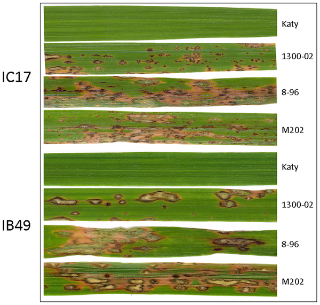
Rice expressing the Pi-ta gene is resistant to strains of the rice blast fungus, Magnaporthe grisea, expressing AVR-Pita in a gene-for-gene relationship. Pi-ta encodes a putative cytoplasmic receptor with a centrally localized nucleotide-binding site and leucine-rich domain (LRD) at the C-terminus. AVR-Pita is predicted to encode a metalloprotease with an N-terminal secretory signal and pro-protein sequences. AVR-Pita176 lacks the secretory and pro-protein sequences.
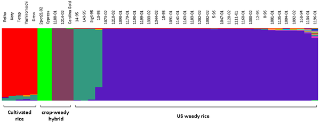
In addition, the resistant Pi-ta allele (Pi-ta) found in the majority of US weedy rice belongs to the weedy group strawhull awnless (SH), suggesting a single source of origin for Pi-ta. Weeds with Pi-ta were resistant to two M. oryzae races, IC17 and IB49, except for three accessions, suggesting that component(s) required for the Pi-ta mediated resistance may be missing in these accessions.
The DNA sequences of the resistant Pi-ta allele of most rice cultivars distributed in different areas are identical; the rice cultivar 435 (GenBank no. AB364491) has some polymorphisms that differ from those of others. O. rufipogon and O. sativa have very similar patterns of resistant Pi-ta alleles, and no fixed polymorphism exists between H1 and Pi-ta alleles of cultivated rice . This characteristic further supports the above scenario. Cultivated rice might have directly acquired the resistant Pi-ta allele from its wild ancestor accompanying domestication or through gene flow between each other. Some differences in resistant Pi-ta alleles might have arisen from different standing genetic variations of O. sativa and O. rufipogon, or mutations may have recently accumulated.
Expression
AVR-Pita176 protein is shown to bind specifically to the LRD of the Pi-ta protein, both in the yeast two-hybrid system and in an in vitro binding assay. Single amino acid substitutions in the Pi-ta LRD or in the AVR-Pita176 protease motif that result in loss of resistance in the plant also disrupt the physical interaction, both in yeast and in vitro. Rice seedlings were used in the blast inoculation because younger plants are quite susceptible. Resistance of rice plants to blast varies with the growth stage, and they become resistant after the bolting stage . Resistance to M. grisea also increases as the leaf age of rice plants increases on the same tillers. In most inoculation results, lesions formed only on the expanding leaf. Therefore, lesions on expanding leaves of each tiller were used to evaluate the resistance to blast . Twelve accessions showed the typical resistant phenotype. The accessions belonging to haplogroup H1 all exhibited resistance. Haplogroup H1 is distributed sporadically around the rim of the Indian Ocean . All but four accessions (OR3, OR5, OR8, and OR36) of haplogroup H2 were susceptible to M. grisea IK81-25. The 2pot21-02 collected from Lawrence County, AR, where Cypress once was grown, possesses the same pi-ta genomic region of the US cultivar Cypress. The susceptible pi-ta region in the weedy accessions of presumed crop-weed progenies was genetically identical to that in US cultivars, while other weedy accessions were genetically more similar to indica.

The Pi-ta containing rice lines, as determined by PCR analysis, were resistant to both IB-49 and IC-17 in standard pathogenicity assays.
Evolution
You can also add sub-section(s) at will.
Rice expressing the Pi-ta gene is resistant to strains of the rice blast fungus, Magnaporthe grisea, expressing AVR-Pita in a gene-for-gene relationship. Pi-ta encodes a putative cytoplasmic receptor with a centrally localized nucleotide-binding site and leucine-rich domain (LRD) at the C-terminus. AVR-Pita is predicted to encode a metalloprotease with an N-terminal secretory signal and pro-protein sequences. AVR-Pita176 lacks the secretory and pro-protein sequences.

The pattern of genomic diversity and population differentiation at/around the Pi-ta gene in all US weedy rice revealed that the Pi-ta locus in weedy rice was genetically more similar to that in Asian cultivated rice (indica) rather than US cultivars and O. rufipogon, respectively. US weedy accessions can be divided into two major subgroups, SH and BHA. Our sequence and marker data demonstrated that SH is similar to indica and BHA is similar with aus. These findings suggest that Pi-ta in weedy rice could be derived from Asian rice distinct from those used to introgress Pi-ta into US germplasm. In plants, some resistance genes show gene presence/absence polymorphisms (P/A). These P/A polymorphisms can be selectively maintained for long evolutionary periods with flanking regions bearing the molecular signatures of balancing selection.
Epidemic diseases could not have existed before the origins of agriculture, because they can sustain themselves only in large dense populations that did not exist before agriculture; hence, they are often called “crowded diseases” . For example, the origin of the fungal wheat pathogen Mycosphaerella graminicola coincided with the known domestication of wheat in the Fertile Crescent ∼8000–9000 BC . The virulent factor AVR-pita was present in both the Oryza and Setaria clades suggested that rice blast arose from a single origin of rice infection, following a host shift from Italian millet (Setaria italica). Both Italian millet and rice were domesticated and appeared to have co-occurred early in the history of agriculture in Asia. Bayesian-derived estimates suggested an early origin of the rice-infecting pathogen ∼9000 years ago, which may have been associated with rice domestication . Since wild Oryza and Setaria grasses grow in different habitats—wetlands and relatively dry land, respectively—we suggest a scenario of the new resistant allele arising during domestication. The widespread and dense distributions of Italian millet and rice presented frequent opportunities for contact, and a host shift occurred from the Setaria blast pathogen to rice. The relatively lower genetic variation of cultivated rice after artificial selection and dense planting on rice farmland allowed the rice blast to become an epidemic disease. Meanwhile, rice and its wild relatives are distributed sympatrically, and so the newly arising rice blast pathogen was also transferred to wild rice nearby. Wild rice faced a new virulent factor, the AVR-Pita of blast, that it had not encountered before. H1 was the mutation that allowed wild rice to fight the pathogen in the recent past.
Labs working on this gene
1.Dale Bumpers National Rice Research Center, Agricultural Research Service, United States Department of Agriculture, Stuttgart, Arkansas, United States of America.
2.Institute of Plant Biology, National Taiwan University, Taipei 106, Taiwan.
3.Department of Botany, National Museum of Natural Science, Taichung 404, Taiwan.
4.Department of Life Science, National Taiwan Normal University, Taipei 116, Taiwan,
5.Department of Life Science, Pingtung University of Science and Technology, Pingtung 912, Taiwan.
6.Faculty of Agriculture, Hokkaido University, 060, Sapporo, Japan.
References
1. Seonghee Lee;Yulin Jia;Melissa Jia;David R. Gealy;Kenneth M. Olsen;Ana L. Caicedo
 Molecular Evolution of the Rice Blast Resistance Gene Pi-ta in Invasive Weedy Rice in the USA
 PLoS ONE, 2011, 6(10): e26260
2. X. Wang;R. Fjellstrom;Y. Jia;W. G. Yan;M. H. Jia;B. E. Scheffler;D. Wu;Q. Shu;A. McClung
 Characterization of Pi-ta blast resistance gene in an international rice core collection
 Plant Breeding, 2010, 129(5): 491-501
3. Yulin Jia;Rodger Martin
 Identification of a New Locus, Ptr(t), Required for Rice Blast Resistance Gene Pi-ta–Mediated Resistance
 Molecular Plant-Microbe Interactions, 2008, 21(4): 396-403
4. Chun-Lin Huang;Shih-Ying Hwang;Yu-Chung Chiang;Tsan-Piao Lin
 Molecular Evolution of the Pi-ta Gene Resistant to Rice Blast in Wild Rice (Oryza rufipogon)
 Genetics, 2008, 179(3): 1527-1538
5. 王忠华;贾育林;吴殿星;夏英武
 水稻抗稻瘟病基因Pi-ta的分子标记辅助选择
 作物学报, 2004, 30(12): 1259-1265
6. Yulin Jia;Zhonghua Wang;Pratibha Singh
 Development of dominant rice blast Pi-ta resistance gene markers
 Crop Science, 2002, 42(6): 2145-2149
7. Yulin Jia;Sean A. McAdams;Gregory T. Bryan;Howard P. Hershey;Barbara Valent
 Direct interaction of resistance gene and avirulence gene products confers rice blast resistance
 The EMBO Journal, 2000, 19(15): 4004-4014
8. Gregory T. Bryan;Kun-Sheng Wu;Leonard Farrall;Yulin Jia;Howard P. Hershey;Sean A. McAdams;Kristina N. Faulk;Gail K. Donaldson;Renato Tarchini;Barbara Valent
 A Single Amino Acid Difference Distinguishes Resistant and Susceptible Alleles of the Rice Blast Resistance Gene Pi-ta
 The Plant Cell, 2000, 12(11): 2033-2046
9. Hittalmani-S;Parco-A;Mew-T-V;Zeigler-R-S;Huang-N
 Fine mapping and DNA marker-assisted pyramiding of the three major genes for blast resistance in rice
 Theoretical and Applied Genetics, 2000, 100(7): 1121-1128
10. Inukai T;Zeigler R S;Sarkarung S;Bronson M;Dung L V;Kinoshita T;Nelson R J
 Development of pre-isogenic lines for rice blast-resistance by marker-aided selection from a recombinant inbred population
 Theoretical and Applied Genetics, 1996, 93(4): 560-567


_at_and_around_Pi-ta.png)

