Os04g0578400
The rice Os04g0578400 encodes β-carotene exhibiting provitamin A activity and affecting the synthesis of carotenoid which is important for photosynthesis in plants.
Contents
Annotated Information
Function
- The gene Os04g0578400 encodes β-carotene exhibiting provitamin A activity[1]. Carotenoids are a group of approximately 600 known organic pigments naturally found in plants; around 50 of these, including β-carotene.β-carotene is the most abundant source of provitamin A in plant.
- As a provitamin A compound, β-carotene has been the focus of many scientific studies and public health interventions. For example, many past and ongoing public health interventions have aimed to use β-carotene supplementation as a way of addressing vitamin A deficiency that causes symptoms ranging from night blindness to those of xerophthalmia and keratomalacia, leading to total blindness. In addition, due to β-carotene’s character as a highly active antioxidant, numerous scientific trials have focused on the potential for utilizing β-carotene in the prevention of cancer and other chronic diseases[2].
- Rice (Oryza sativa), a major staple food, is usually milled to remove the oil-rich aleurone layer that turns rancid upon storage, especially in tropical areas. The remaining edible part of rice grains, the endosperm, lacks several essential nutrients, such as β-carotene (provitamin A).
Expression
- Rice is a staple food and no rice cultivar has the capacity to produce β-carotene (provitamin A) in the endosperm tissue[3]. Histochemical reactions clearly revealed the accumulation of β-carotene in the endosperm of transgenic seeds of indica rice (Oryza sativaL.) in comparison with non-transgenic control where no β-carotene could be detected(Figure 1).
 Figure 1. The expression of Os04g0578400 in the endosperm of transgenic seeds of indica rice (from reference [3]).

- Golden Rice: Introducing the β-carotene Biosynthesis Pathway into Rice Endosperm by Genetic Engineering to Defeat Vitamin A Deficiency.The synthesis of β-carotene requires the complementation with three additional plant enzymes: phytoene desaturase and z-carotene desaturase, each catalyzing the introduction of two double bonds, and lycopeneb-cyclase, encoded by the lcy gene. Three genes, namely phytoene synthase (psy), phytoene desaturase (crtI), and lycopene cyclase (lcy) are involved in the biosynthesis of β-carotene。
- Xudong Ye et al.[4] used Agrobacterium-mediated transformation to introduce the entire β-carotene biosynthetic pathway into rice endosperm in a single transformation effort with three vectors(Figure. 2).The vector pB19hpc combines the sequences for a plant phytoene synthase (psy)originating from daffodil [5](Narcissus pseudonarcissus; GenBank accession number X78814) with the sequence coding for a bacterial phytoene desaturase (crtI) originating from Erwinia uredovora(GenBank accession number D90087) placed under control of the endosperm-specific glutelin (Gt1) and the constitutive CaMV (cauliflower mosaic virus) 35S promoter, respectively. The phytoene synthase cDNA contained a 59-sequence coding for a functional transit peptide [6], and the crtI gene contained the transit peptide (tp) sequence of the pea Rubisco small subunit[7].

- To complete theb-carotene biosynthetic pathway, they also co-transformed with vectors pZPsC and pZLcyH. Vector pZPsC carriespsy and crtI, as in plasmid pB19hpc, but lacks the selectable marker aphIVexpression cassette. Vector pZLcyH provides lycopeneb-cyclase from Narcissus pseudonarcissus(GenBank accession number X98796) controlled by rice glutelin promoter and the aphIVgene controlled by the CaMV 35Spromoter as a selectable marker. Lycopene b-cyclase carried a functional transit peptide allowing plastid import[6].
- In most cases, the transformed endosperms were yellow, indicating carotenoid formation. The pB19hpcsingle transformants (Fig. 3A) showed a 3 :1 (colored/

Figure 3. Phenotypes of transgenic rice seeds.(from reference [4]).

Figure 4.HPLC analysis of carotenoid and β-carotene. (from reference [4]).
- The carotenoids found in the pB19hpc single transformants accounted for the color; none of theselines accumulated detectable amounts of lycopene. Instead,b-carotene, and to some extent lutein and zeaxanthin, were formed (Fig. 4). Thus, the lycopenea(ε)- andb-cyclases and the hydroxylase are either constitutively expressed in normal rice endosperm or induced upon lycopene formation[4].
Evolution
- Conservation of amino-acid sequences as well as their similar mechanisms of catalyses(one of the three enzymes which is necessary to β-carotene's synthesis) suggest that all plant cyclases, including CCS and perhaps also neoxanthin synthase, have evolved from a common ancestor, most probably the cyanobacterial CrtL (figure 5)[8].
 Figure 5.The lycopene cyclase family in plants (from reference [8]).

Mutation
- Pre-harvest sprouting (PHS) or vivipary in cereals is an important agronomic trait that results in significant economic loss. A considerable number of mutations that cause PHS have been identified in several species. Jun Fang et al.[9]carried out an extensive genetic screening and identified 12 PHS mutants (phs) which were classified into three groups,one of these groups, which contains mutations in genes encoding major enzymes of the carotenoid biosynthesis pathway, including phytoene desaturase (OsPDS),ζ-carotene desaturase (OsZDS), carotenoid isomerase (OsCRTISO) and lycopene β-cyclase (β-OsLCY), which are essential for the biosynthesis of carotenoid precursors of ABA .
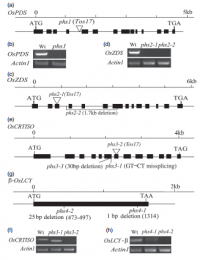 Figure 6.The sites of mutation and the expression of the pre-harvest sprouting (PHS) genes.(from reference [10]).
- To examine these candidate genes( including a PDS-like gene (phs1), a ZDS-like gene (phs2-1 and phs2-2), a carotenoid isomerase-like gene (phs3-1) and a β-LCY-like gene (phs4-1 and phs4-2) carried mutations in the respective mutants. The results show that a Tos17 was inserted in intron 4 of the putative OsPDS in phs1(Figure 6a). No OsPDS expression was detected by reverse transcription (RT)-PCR analysis in phs1(Figure 6b). The phs2-1 carried a Tos17 insertion in exon 3 of OsZDS, whereas phs2-2 had a 1.7-kb deletion started from intron 3 spanned to exon 7 (Figure 6c). No OsZDS expression was detectable in either mutant allele (Figure 6d).
- In phs3-1, a G-to-C transition was identified at position 1995 (the putative translation start codon is referred to as +1) of theOsCRTISOgene, which is predicted to be the donor site of intron 6 (Figure 6e). A Tos17 retrotransposon inserted in exon 7 of phs3-2 completely disrupts the function of CRTISO(Figure 6f).
- The riceb-OsLCY gene has no intron, and sequence analysis of phs4-1 mutant showed a 1-bp deletion at the 1314 bp starting from ATG, and the phs4-2 allele has a 25-bp deletion in 473–497 bp (the putative translation start codon is referred to as +1). The deletions caused a frame-shift and subsequently created a new stop codon that might result in immature translation (Figure 6g) and disrupt the normal function of theb-LCYgene. Expression analysis also showed that the b-OsLCY transcript was barely detectable in phs4 alleles compared with the wild type (Figure6h).
- Experimental results suggest that the impairment of carotenoid biosynthesis causes photo-oxidation and ABA-deficiency phenotypes, of which the latter is a major factor controlling the PHS trait in rice.

Knowledge Extension
- Cereals like rice (Oryza sativa), wheat (Triticum aestivum) and the millets, maize (Zea mays), ragi (Eleucine coracana) and sorghum Jowar (Sorghum vulgare) showed wide variation in their total carotenoid content, as well as β-carotene ( Table 1). The values of total carotenes ranged from zero (rice) to 1780 μg (maize) and similar variation was observed in the β-carotene content. In general, cereals were poor sources of β-carotene[10] .
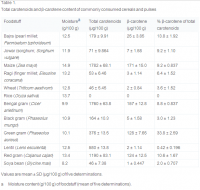 Table 1.Wide variation of total carotenoid content in cereals(from reference [9]).

Labs working on this gene
- University of Freiburg, Center for Applied Biosciences, D-79104 Freiburg, Germany.
- The Institute for Plant Sciences, Swiss Federal Institute of Technology, CH-8092 Zurich, Switzerland.
- Columbia College, Columbia University, New York, NY, USA.
- Institute for Plant Sciences, Swiss Federal Institute of Technology, CH-8092 Zurich, Switzerland.
- University of Freiburg, Center for Applied Biosciences, D-79104 Freiburg, Germany.
- State Key Laboratory of Plant Genomics and National Centre for Plant Gene Research (Beijing), Institute of Genetics and Developmental Biology, Chinese Academy of Sciences (CAS), Beijing 100101, China.
- Graduate University of the CAS, Beijing 100039, China.
References
- ↑ Vitamin Basics: β-carotene. [cited 2012 July 9]; Available from: http://www.vitamin-basics.com/index.php?id=35
- ↑ Antioxidants and Cancer Prevention: Fact Sheet. [cited 2012 July 9]; Available from: http://www.cancer.gov/cancertopics/factsheet/prevention/antioxidants.
- ↑ 3.0 3.1 Tan, J., Baisakh, N., Oliva, N., Datta, K. and Datta, S. K., Screening for β-carotene in the Seeds of Rice Cultivars(Manuscript in preparation); Available from:http://tejas.serc.iisc.ernet.in/currsci/may102003/1232.pdf
- ↑ 4.0 4.1 4.2 4.3 4.4 Xudong Ye et al., Science J.287,303-305(2000); Available from:http://www.sciencemag.org/content/287/5451/303.short
- ↑ 5.0 5.1 5.2 M. Schledzet al., Plant J.10, 781 (1996).
- ↑ 6.0 6.1 6.2 M. Bonket al., Eur. J. Biochem.247, 942 (1997).
- ↑ N. Misawaet al., Plant J.4, 833 (1993).
- ↑ 8.0 8.1 Joseph Hischberg. Carotenoid biosynthesis in flowering plants. Current Opinion in Plant Biology[J]. 4(3):210–218,2001.Available from: http://www.sciencedirect.com/science/article/pii/S1369526600001631
- ↑ 9.0 9.1 Bhaskarachary Kandlakunta et al.,Food Chemistry.106(11):85-89,2008.Available from:http://www.sciencedirect.com/science/article/pii/S0308814607005043
- ↑ 10.0 10.1 Jun Fang et al.,The Plant Journal(2008)54, 177–189. Available from:http://www.ncbi.nlm.nih.gov/pubmed/18208525

